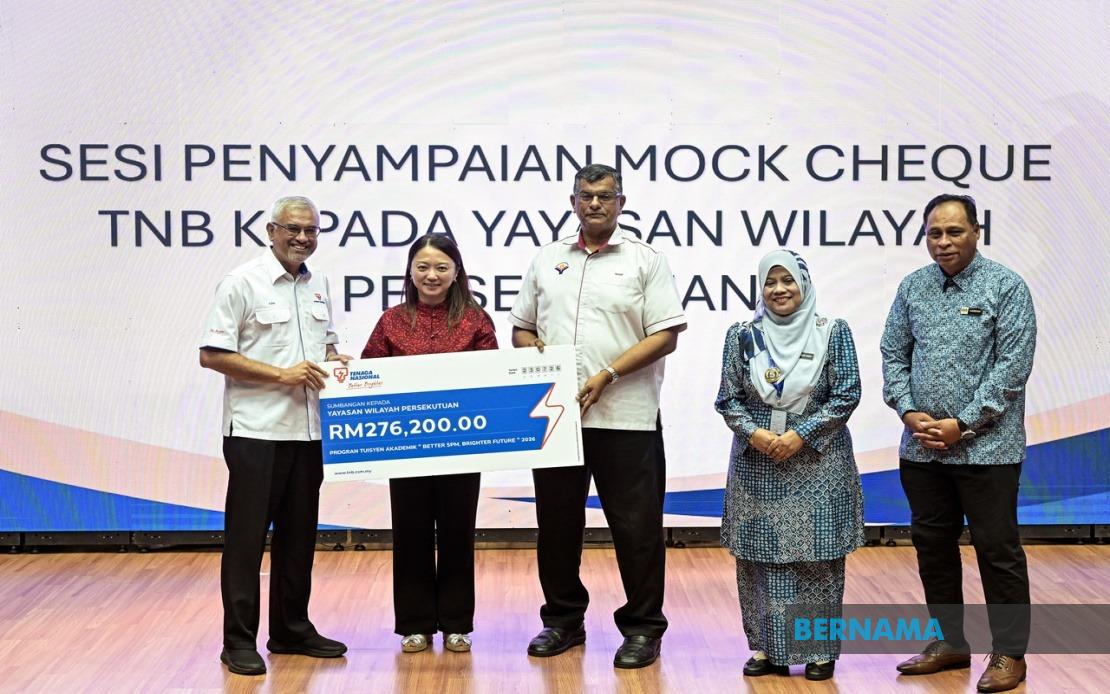
The Better SPM Brighter Future Programme has been launched to provide complimentary tuition to 1,600 Sijil Pelajaran Malaysia candidates preparing for their crucial final examinations across 40 secondary schools in Kuala Lumpur. The initiative, unveiled at Sekolah Seni Malaysia Kuala Lumpur, represents a concerted effort to level the academic playing field by removing financial barriers that often prevent lower-income students from accessing quality supplementary education.
Hannah Yeoh, the Minister in the Prime Minister's Department overseeing Federal Territories and chairperson of Yayasan Wilayah Persekutuan, emphasised that the programme aims to equip SPM candidates with thorough examination preparation without imposing additional costs on already-stretched household budgets. This approach acknowledges a persistent challenge in Malaysia's education system, where private tuition has become increasingly normalised yet remains prohibitively expensive for many families, creating a two-tiered academic advantage based on economic status.
The financial backbone of the initiative comes from Tenaga Nasional Berhad, which has contributed RM276,200 to YWP to operationalise the programme. This corporate partnership highlights an emerging trend of large Malaysian enterprises taking direct responsibility for addressing social inequities through targeted educational interventions. The funding model demonstrates how government agencies and private sector entities can collaborate effectively to deliver measurable social impact without diverting public funds.
Implementation of the programme is being handled jointly by YWP and the Kuala Lumpur Federal Territories Education Department, ensuring that the free tuition services integrate seamlessly with the existing school system. This collaborative structure allows for efficient resource deployment and leverages the department's existing networks and expertise in student assessment and academic planning across the capital's schools.
The curriculum focus centres on four critical subjects: Bahasa Melayu, English, History, and Mathematics. The selection of these particular subjects reflects careful consideration of their importance in the SPM examination structure and their role as foundation subjects that influence student progression into further education and employment pathways. Mathematics and English are particularly crucial for students pursuing science, technology, engineering, and mathematics disciplines, while Bahasa Melayu and History remain compulsory examination components that determine overall SPM achievement levels.
For Malaysian policymakers, the initiative carries significant implications regarding educational equity and social mobility. By targeting students during their final secondary years—a period that often determines their university access and career trajectory—the programme intervenes at a critical juncture. This timing is strategic; SPM results function as gatekeepers for tertiary education and skilled employment opportunities, meaning that enhanced examination preparation can generate long-term economic benefits that extend far beyond individual student outcomes.
The programme's scope, encompassing 40 schools across Kuala Lumpur, suggests an attempt to achieve meaningful coverage rather than token symbolic gestures. However, the quantum of 1,600 beneficiaries indicates this represents a targeted pilot rather than a comprehensive solution to tuition accessibility across the entire federal territory. This scale allows for careful monitoring of programme effectiveness and quality maintenance, providing valuable data for potential expansion to other regions facing similar educational equity challenges.
Hannah Yeoh also addressed broader public responsibility issues during the programme launch, reflecting on earlier remarks regarding cleanliness at Dataran Merdeka following the World Cup final screening. She clarified that her observations aimed to foster civic consciousness rather than apportion blame, emphasising that environmental stewardship should not be delegated exclusively to cleaning services or treated as imported labour's responsibility. This pivot to civic education illustrates how government figures increasingly link academic support initiatives to broader character development and national consciousness-building objectives.
The minister's emphasis on leading by example carries particular resonance in the Southeast Asian context, where educational outcomes are frequently shaped not solely by curriculum content but by the values and behavioural standards modelled by authority figures and adults. This holistic approach to student development—combining academic support with character formation—reflects evolving global understanding of education's purpose beyond examination success to encompass citizenship preparation and social responsibility.
Kuala Lumpur City Hall's commitment to maintaining Dataran Merdeka as an accessible public recreational space demonstrates recognition that civic infrastructure serves multiple functions simultaneously. The effort to balance accessibility with maintenance reflects urban governance challenges that Malaysian cities increasingly navigate, particularly in densely populated areas where recreational spaces experience intensive usage. This dimension adds context to the tuition initiative by situating it within a broader commitment to public goods and services that benefit the capital's residents comprehensively.
From a regional perspective, the Better SPM Brighter Future Programme offers a model potentially replicable across Southeast Asia, where tuition accessibility disparities mirror Malaysia's challenges. Singapore, Thailand, Indonesia, and the Philippines all grapple with similar inequities wherein economically privileged students access extensive supplementary education while disadvantaged peers struggle without such support. Malaysia's approach of corporate-government partnership funded by energy sector contributions could provide a template for other nations seeking sustainable solutions to educational equity challenges.
The initiative's success will likely depend on implementation quality, accessibility logistics for students across 40 schools, and the qualifications of tuition providers engaged through YWP. Effective monitoring mechanisms will be essential to ensure that free tuition translates into genuine academic advancement rather than merely providing classroom hours without substantial learning outcomes. Future expansion of the programme would benefit from baseline performance data comparing participant and non-participant SPM results, establishing evidence-based justification for scaling the intervention across other Malaysian states facing comparable educational equity pressures.

