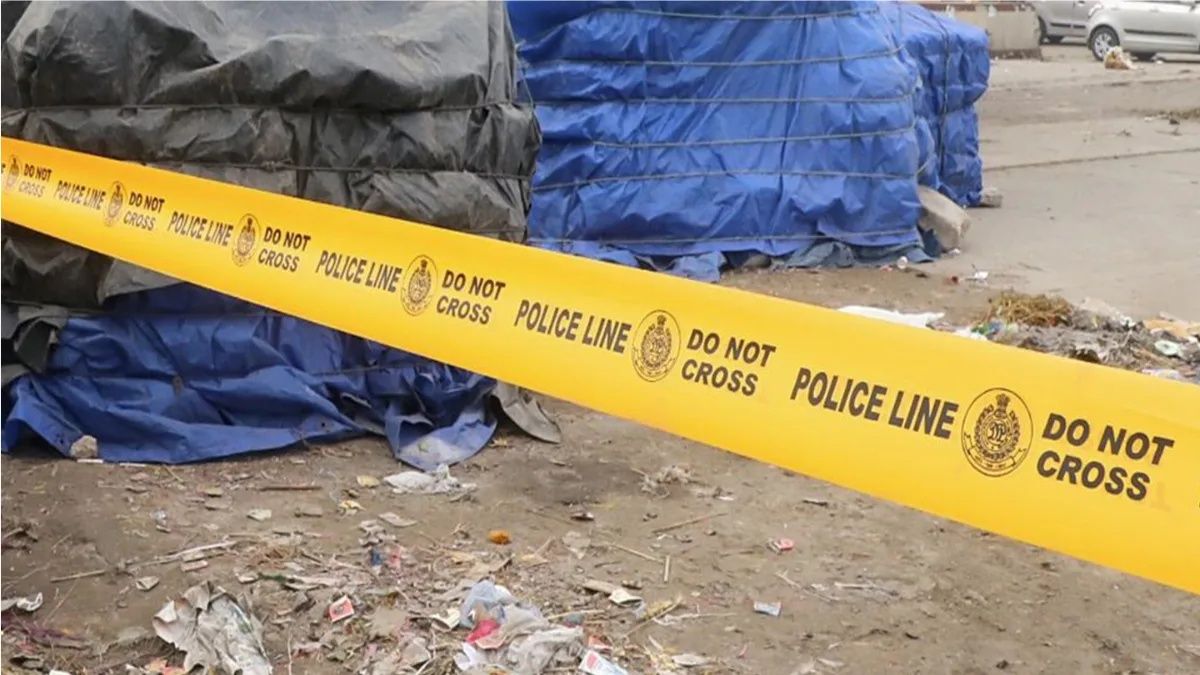
A tragic discovery in a rural pond in West Bengal's South 24 Parganas district on Sunday morning has reignited the volatile question of justice, community vigilantism, and police accountability in India's eastern states. The body of a 12-year-old girl, found in a sack near her home in the Baruipur area, has set off a chain of events that saw angry residents clash with authorities, block transportation routes, and allegedly lynch a suspected perpetrator — casting a spotlight on the breakdown of trust between communities and law enforcement when it comes to protecting vulnerable children.
According to the victim's family, the girl had ventured out on Saturday evening with the simple intention of purchasing food from a nearby shop. She never returned home. Her family later alleged that four individuals had forcibly taken her away. When she failed to appear the following morning, concerned relatives launched a desperate search. What they discovered floating in a pond near Suryapur — her body wrapped in a sack — would trigger a cascade of fury that engulfed the entire neighbourhood and exposed the raw tensions simmering within rural communities where child safety remains a persistent crisis.
The immediate aftermath of the body's discovery revealed the depth of public anger and the community's sense of abandonment. Hundreds of residents converged on the pond site, refusing for hours to permit police to remove the body for post-mortem examination. This obstruction reflected more than grief; it represented a collective frustration with a system perceived as slow-moving and ineffective. The residents' actions underscored a troubling paradox: while mob justice is illegal and dangerous, the desperation behind it often stems from genuine failures in institutional protection and timely investigation.
What began as a stationary protest rapidly escalated into a broader disruption of daily life. Road blockades paralysed the area for nearly five hours as residents burned tyres and damaged vehicles, their actions gaining an increasingly desperate edge. On the railway side, protesters blocked tracks at Suryapur station on the Sealdah-Namkhana section, suspending train services for approximately an hour — a significant disruption in a region where rail connectivity is crucial to commerce and daily commuting. The scale of the disruption underscored how deeply the community felt betrayed and how far residents were willing to escalate their actions to demand attention.
The situation deteriorated markedly during these protests when a local youth, allegedly spotted in the company of some suspects, was set upon by angry villagers and beaten to death. Police attempting a rescue faced fierce resistance as protesters hurled stones and continued their assault. The death — what officials are treating as a mob lynching — represents a dangerous threshold that the community had crossed, transforming legitimate outrage into extrajudicial violence. Several police officers sustained injuries during the clashes, with at least one requiring hospital admission. This collision between an aggrieved public and law enforcement highlighted the fragility of social order when institutional mechanisms fail to deliver swift justice.
Autocratic responses from government authorities attempted to restore calm and reassert state authority. Inspector General of Police (Presidency Range) Kankar Prasad Barui visited the troubled area and addressed residents through a public address system, pledging that no perpetrator would escape the law's reach and that the most severe punishments available would be pursued. His assurances regarding the post-mortem examination and investigation formed part of a broader appeal for residents to withdraw their blockades and restore normalcy. By early afternoon on Sunday, police persuasion had succeeded in convincing protesters to lift their road and rail blockades, allowing traffic and train services to resume.
West Bengal Chief Minister Suvendu Adhikari's involvement in the case, including a telephone conversation with the victim's father and an invitation to meet at state secretariat Nabanna on Tuesday, signalled that the state government viewed this as a matter demanding highest-level attention. Such gestures, while potentially meaningful to the bereaved family, also serve a broader political function in demonstrating responsiveness to public outrage. Yet these high-level interventions often overshadow the systemic deficiencies that allow such crimes to occur in the first place, and they do little to address the underlying failures in child protection, community policing, and investigation capacities.
By Sunday evening, the investigative picture had begun to crystallise, though incompletely. Two persons had been formally arrested in connection with the girl's alleged gang rape and murder, while a third suspect was apprehended by residents and handed over to authorities. This mixed approach to arrest — some through police investigation, others through community capture — illustrates the parallel accountability structures now operating in many rural Indian communities where formal law enforcement is viewed with suspicion. The girl's body was transported to Baruipur Sub-Divisional Hospital for post-mortem examination, a procedure that would determine the precise cause of death and gather forensic evidence.
The broader implications of this incident extend beyond Baruipur's boundaries and speak to a crisis of institutional legitimacy across South Asia. The willingness of communities to take justice into their own hands, the vulnerability of children in rural areas where oversight is minimal, and the chronic gap between public expectations and police performance form an interconnected problem that no single arrest or promise can resolve. For Malaysian readers observing developments in the region, this case illustrates the kinds of governance challenges that persist across South Asia — challenges including inadequate child protection mechanisms, corruption and inefficiency in police forces, and the desperate measures communities resort to when they lose faith in formal justice systems.
Security measures implemented in the aftermath — including increased police pickets and monitoring to prevent further violence — provide a short-term stabilisation mechanism rather than a solution to deeper problems. Investigators continued probing not only the circumstances of the girl's death but also the actions of those involved in attacking police during the protests, suggesting authorities are attempting to maintain a dual accountability framework. However, without meaningful reforms in how cases of sexual violence against children are handled, investigated, and prosecuted, without genuine community engagement in police work, and without addressing the social conditions that enable such crimes, Baruipur's tragedy will likely be followed by others in coming months and years.

