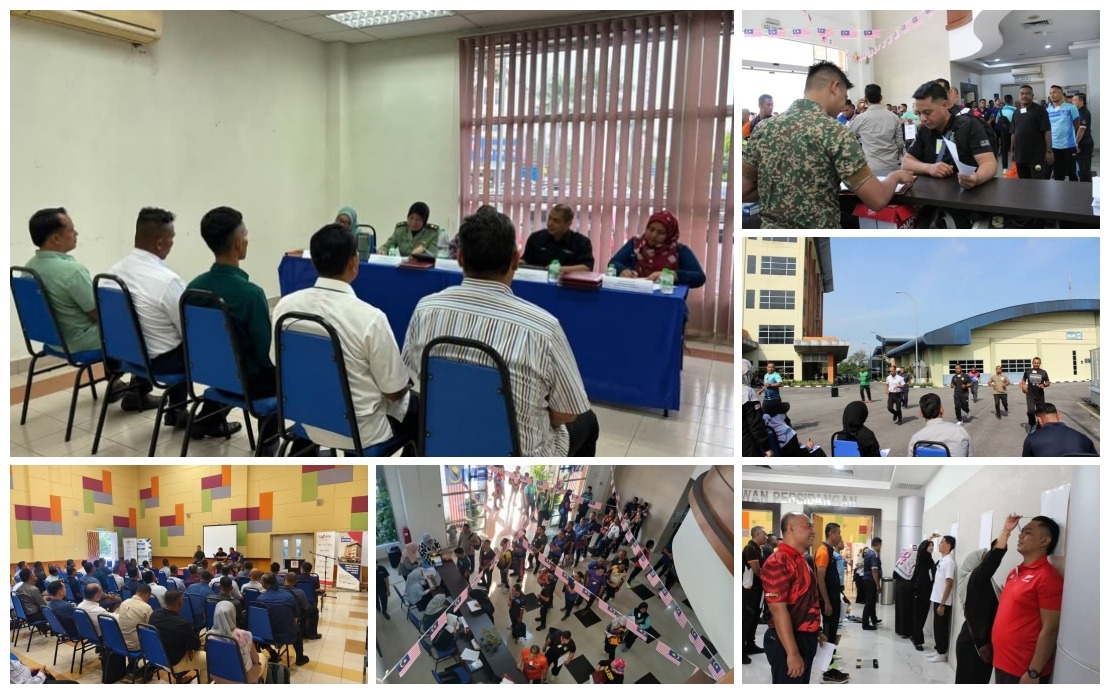
MARA has progressed further in its recruitment drive for Full-Time External Wardens at its MARA Junior Science Colleges (MRSM), with 147 former military personnel completing physical interview assessments last week. The selection process, conducted on consecutive days at the MARA Food Technology Incubator in Kepong, represents a significant step toward staffing residential colleges across the country with carefully vetted personnel who will assume residential supervisory duties from July 1 onwards.
According to MARA Chairman Datuk Dr Asyraf Wajdi Dusuki, the 147 candidates who attended the in-person interviews had already navigated a rigorous preliminary screening phase. Two successive rounds of online assessment narrowed the initial applicant pool considerably, ensuring that only the most promising former military personnel advanced to the physical evaluation stage. This multi-stage approach reflects MARA's commitment to appointing wardens of exceptional calibre who can meet the institution's exacting standards.
The physical interview session itself comprised three distinct assessment components designed to evaluate candidates holistically. Body Mass Index screening served as a health and fitness baseline, reflecting the physical demands of warden responsibilities. The Bleep Test, a widely recognised cardiovascular fitness assessment, provided measurable data on candidates' stamina and physical conditioning. Beyond physical metrics, face-to-face interviews allowed assessors to evaluate each candidate's character, communication skills, emotional intelligence, and alignment with MARA's institutional values. This comprehensive approach ensures that successful appointees possess both physical fitness and the interpersonal competencies essential for residential leadership roles.
The emphasis on former military personnel reflects a deliberate institutional strategy. Military backgrounds typically provide candidates with experience in discipline, hierarchical structures, duty-of-care responsibilities, and crisis management—qualities that translate readily into residential college environments. By drawing from this talent pool, MARA taps into individuals already accustomed to maintaining standards, managing group dynamics, and upholding institutional protocols. The decision also resonates with Malaysia's broader tradition of leveraging military expertise in civilian educational and administrative contexts.
Datuk Dr Asyraf Wajdi articulated a sophisticated vision of the warden role that extends considerably beyond conventional discipline enforcement. Wardens, he emphasised, must internalise and actively promote MARA's educational philosophy, which prioritises the development of well-rounded, values-driven citizens. This positioning frames wardens not merely as enforcers of rules but as mentors, role models, and surrogate parental figures within the residential community. Such conceptualisation acknowledges that students away from home require emotional support, guidance on personal development, and consistent exposure to institutional values—functions that transcend traditional disciplinary oversight.
The appointment initiative directly addresses several contemporary challenges within Malaysia's educational landscape. Bullying within residential schools remains a persistent concern, frequently escalating into serious incidents that traumatise victims and disrupt institutional environments. Similarly, disciplinary misconduct and broader social malaise—including substance abuse, gang affiliations, and interpersonal violence—continue to trouble school administrations nationwide. By strengthening the warden corps with carefully selected, well-trained personnel, MARA aims to create residential environments where such negative behaviours become less tenable, where intervention mechanisms function more effectively, and where students feel safer and more supported.
The implications for MRSM students are potentially transformative. Residential colleges thrive when their non-academic environment is orderly, purposeful, and psychologically secure. Strong warden leadership establishes the tone for peer relationships, institutional culture, and students' overall well-being away from home. Effective wardens become trusted figures to whom students turn during crises, creating safety nets that prevent minor difficulties from escalating into major problems. For MRSM's ambitious mission of developing Malaysia's future leaders and professionals, having wardens who genuinely understand pastoral responsibility, institutional values, and youth development represents a substantial competitive advantage.
Parallel to the male candidate interviews, MARA is advancing simultaneously with assessments of female former military warden candidates. The announcement that 162 women will undergo physical interviews in the following week demonstrates MARA's commitment to gender balance within residential leadership. This approach recognises that both male and female students benefit from having same-gender mentors and role models among residential staff, and that women's perspectives and leadership bring important dimensions to institutional culture and student well-being initiatives.
The July 1 commencement date indicates that MARA has aligned this recruitment cycle with the academic calendar, allowing new wardens to begin duties as the new academic year commences. This timing ensures continuity in residential management and allows newly appointed wardens to establish themselves during the critical initial weeks when new students arrive and institutional culture is established for the year. Staggering the start date with the academic cycle demonstrates institutional planning rigour.
For Malaysian parents evaluating residential secondary education options, MARA's visible investment in professionalising its warden recruitment sends a reassuring signal. The systematic, multi-stage selection process and the explicit articulation of wardens' expanded developmental role indicate that MARA takes seriously its responsibility for students' holistic growth. In an era when concerns about bullying, mental health, and student welfare dominate educational discourse, this emphasis on warden quality becomes a genuine differentiator in institutional quality.
The recruitment initiative also reflects broader regional trends in educational leadership development. Across Southeast Asia, elite residential institutions are increasingly professionalising their pastoral care functions, recognising that world-class academic programmes require equally sophisticated non-academic support systems. MARA's strategic focus on former military personnel with comprehensive assessment protocols positions the institution competitively within this regional landscape and reinforces its standing as a premier institution of national importance.

