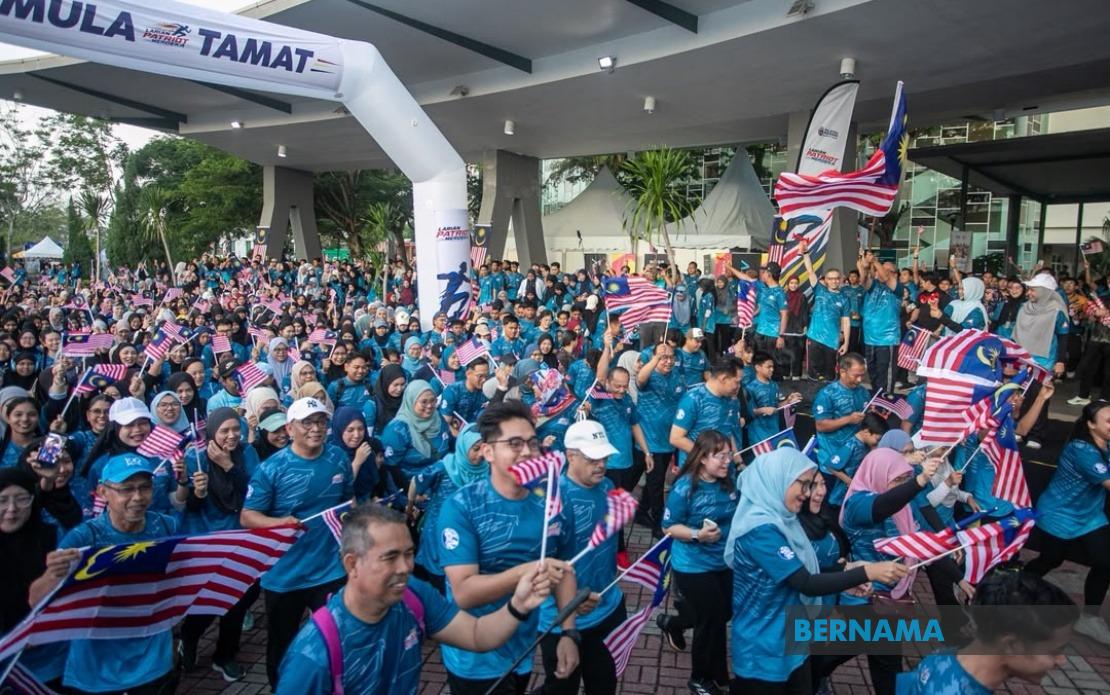
The grounds of the Sultan Azlan Shah Ministry of Health Training Institute in Ipoh came alive before sunrise on July 19 when roughly 2,000 Malaysians of all ages assembled for the Patriot Merdeka Run, an inaugural event designed to blend community engagement with nationalist sentiment as the nation prepares for its 2026 National Month celebrations. Families arrived in good numbers, with parents bringing children to participate in what organisers positioned as a celebration of unity and love for Malaysia ahead of the formal launch of the MPBKKJG 2026 campaign.
The morning's activities commenced with an energetic mass aerobics session that set the tone for the gathering, after which participants transitioned into a collective display of patriotism by waving the Jalur Gemilang in unison. This carefully choreographed opening underscored the event's dual purpose: to promote physical wellness whilst simultaneously reinforcing national identity through shared ritual and symbolic gesture. The deliberate emphasis on the national flag as a unifying emblem reflected broader strategic messaging around the 2026 celebrations, which will encompass both National Day and Malaysia Day commemorations.
Communications Ministry secretary-general Datuk Abdul Halim Hamzah officially initiated the fun run at 7.30 am, dispatching participants on a 2.5-kilometre route that featured prominent displays of the Jalur Gemilang along its entire length. The choice of early morning timing appeared intentional, capturing participants during daylight hours and creating an atmosphere conducive to family participation. Many runners and walkers embraced the patriotic theme through their attire, sporting outfits in the red, white, yellow, and blue colours characteristic of Malaysia's flag, adding visual spectacle to an otherwise straightforward community sporting activity.
The scene that unfolded throughout the morning reflected carefully cultivated community sentiment. Parents shepherded young children through the 2.5-kilometre distance whilst adult participants maintained an encouraging spirit, with spontaneous cheers exchanged between groups as they progressed. This intergenerational participation held deeper significance beyond mere fitness promotion; it embodied a deliberate strategy to embed nationalist values across age cohorts and family units, ensuring that patriotic messaging resonates from childhood through adulthood. The inclusive atmosphere—welcoming participants regardless of age, fitness level, or background—positioned the event as genuinely community-centred rather than exclusive or elite.
Organisers framed the Patriot Merdeka Run as serving a dual mandate: encouraging Malaysians to adopt healthier lifestyles whilst simultaneously leveraging community participation as a mechanism for fostering patriotic consciousness. This combination of public health promotion with nation-building reflects broader governmental strategies that integrate multiple policy objectives into single events, thereby maximising resource efficiency and public engagement. The run functioned as a platform for strengthening community bonds across demographic divides, creating opportunities for neighbours and strangers to interact within a framework of shared national purpose.
The event marks the opening salvo of celebrations commemorating Malaysia's independence, with the HKHM 2026 programme designed to extend across both National Day in August and Malaysia Day in September. Government organisers anticipate that such community-oriented programmes will cumulatively deepen public appreciation for the historical significance of independence whilst nurturing contemporary national unity. The Patriot Merdeka Run thus operates as the initial touchpoint in a broader campaign intended to elevate patriotic consciousness throughout 2026.
The timing of the Ipoh gathering carried additional weight given that Prime Minister Datuk Seri Anwar Ibrahim was scheduled to officiate the formal launch of the 2026 celebrations at 10 am the same morning. This proximity of community-level engagement to top-level political leadership suggested a carefully orchestrated approach wherein grassroots participation would precede and frame the Prime Minister's official remarks, creating a narrative arc from citizen activism to governmental endorsement. Such staging serves to position official leadership as responsive to, rather than determinative of, public patriotic sentiment.
For Malaysian readers and regional observers, the substantial turnout carries implications beyond ceremonial significance. The ability of government agencies to mobilise 2,000 participants at short notice demonstrates considerable organisational capacity and residual public goodwill towards official national initiatives. In an era characterised by increasing political fragmentation and declining trust in institutions across many democracies, Malaysia's apparent ease in convening large patriotic gatherings suggests either maintained faith in state institutions or effective use of community networks and incentive structures to encourage participation. The intergenerational character of attendance also indicates that patriotic sentiment transcends purely political divides, encompassing families prioritising shared national identity regardless of their partisan inclinations.
The Jalur Gemilang's prominent role throughout the morning—from the mass flag-waving to its display along the entire running route—reinforces the national flag as the primary symbolic medium through which Malaysians are encouraged to express patriotic identity. This emphasis on flags and symbolic nationalism reflects global patterns wherein governments utilise visual and material symbols to create emotional connection to abstract concepts of nation and belonging. The deliberate deployment of colour-coordinated attire among participants further amplified this symbolic dimension, transforming individual runners into collective visual representation of national colours and identity.
Looking forward, the success of the Ipoh gathering will likely influence the scope and frequency of patriotic events planned throughout 2026. Should organisers determine that community-level sporting events effectively mobilise patriotic sentiment and foster unity, expect similar runs, walks, and participatory activities to proliferate across Malaysia's major population centres over the coming months. Such events represent relatively low-cost mechanisms for generating positive media coverage and public goodwill, particularly when contrasted against more capital-intensive commemoration strategies.
The Patriot Merdeka Run ultimately embodies a pragmatic fusion of health promotion, community building, and nationalist sentiment-cultivation. By creating conditions wherein families voluntarily gather to exercise whilst displaying patriotic symbols, organisers achieved multiple objectives simultaneously. For participants, the morning offered opportunities for physical activity, family bonding, and public expression of national identity. For government agencies, the event demonstrated their capacity to mobilise public participation whilst advancing official narratives around 2026 celebrations. As Malaysia's independence commemoration year unfolds, similar community-centred initiatives are likely to form the backbone of broader celebratory programming.

