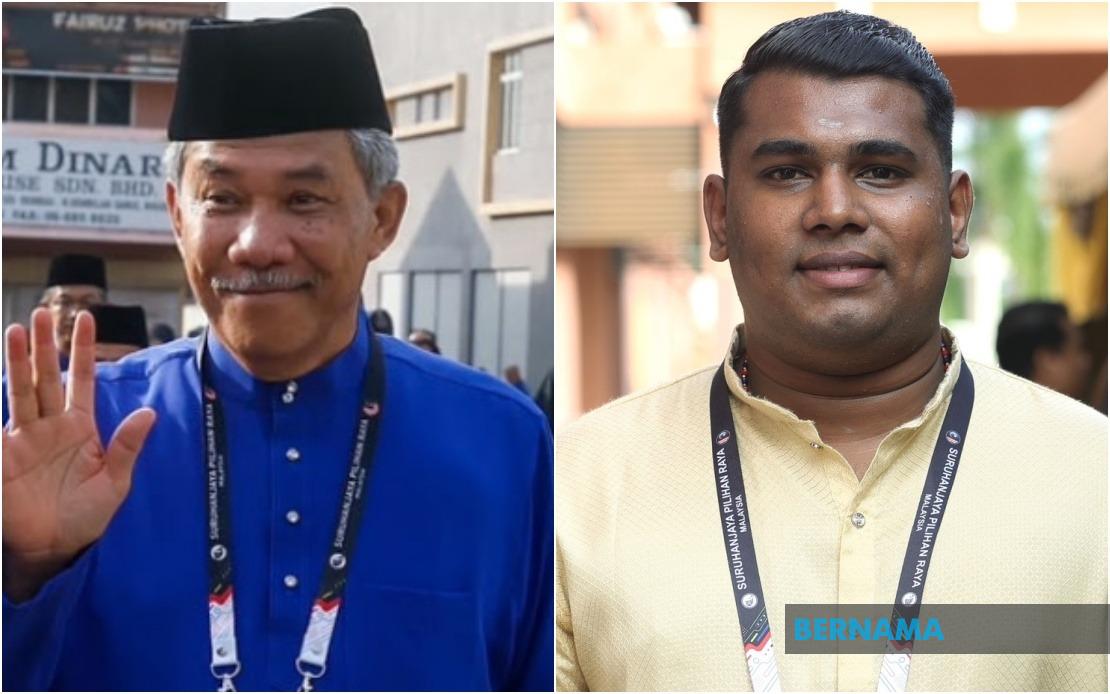
The Negeri Sembilan state election has brought generational diversity to the fore, with M. Leevineshwaraan, just 23 years old, setting a new benchmark as the youngest candidate in this year's poll. The Bersatu representative is fighting for the Sri Tanjung state seat in a five-candidate contest that will test his political mettle against more established opponents.
Leevineshwaraan's maiden electoral battle represents a moment of youthful ambition in Malaysian politics. His candidacy signals a shift towards younger voices competing in state-level politics, though the challenge before him is formidable. He must overcome the incumbent Datuk Dr G. Rajasekaran of Pakatan Harapan, who retained his seat in the previous election with a comfortable margin of 3,996 votes. This substantial buffer suggests that winning the Sri Tanjung seat will demand exceptional grassroots mobilization and persuasion from the newcomer.
The youth factor in Malaysian electoral contests has been gradually shifting. When Negeri Sembilan held its 15th state election in 2023, Muhammad Syakir Fitri Sadri held the distinction of being the youngest candidate at 25 years old, contesting as an Independent in the Paroi seat. Leevineshwaraan's emergence at 23 demonstrates that even younger political hopefuls are now willing to step into the arena, possibly reflecting greater engagement among the under-30 demographic in electoral politics.
Sri Tanjung forms one segment of the Port Dickson parliamentary constituency, where 19,590 registered voters are entitled to cast their votes. This represents a modest electorate by Malaysian standards, which could work either in favour of an energetic young candidate able to conduct intensive ground campaigns or against him if traditional voting patterns and community networks remain influential.
At the opposite end of the age spectrum, the 2024 election features two septuagenarian frontrunners. Datuk Seri Mohamad Hasan, deputy chairman of Barisan Nasional, and Abd Latif A Tambi from Pakatan Harapan are both 70 years old, making them the oldest candidates contesting this cycle. Mohamad is defending his Rantau seat in a straight two-way contest, while Abd Latif is similarly engaged in a direct race for the Gemencheh seat. Both constituencies carry substantial voter populations, with Rantau boasting 34,831 eligible voters within the Rembau parliamentary constituency and Gemencheh commanding 24,916 voters in the Tampin parliamentary constituency.
Comparatively, the previous state election in 2023 saw an older maximum age, with Bujang Abu, then 72 years old, standing as an Independent candidate. Notably, Bujang's absence from the current contest stems from administrative obstacles rather than voluntary retirement, having failed to furnish necessary documentation required by the Election Commission. This administrative barrier highlights how procedural requirements can reshape candidate pools independent of political preferences.
The election landscape also reflects persistent gender imbalances within Malaysia's electoral framework. Out of 103 total candidates contesting the state polls, only nine are women, representing roughly 8.7 percent of the field. While this marks marginal progress from the previous cycle, when eight out of 83 candidates were female, the progress remains glacially slow. Pakatan Harapan has fielded the highest female representation at four candidates, suggesting that coalition's greater commitment to gender diversity compared to its rivals.
These gender participation figures underscore broader challenges facing women's political representation in Malaysian state elections. Despite decades of advocacy and policy discussions around gender equity, women remain vastly underrepresented among candidates willing to contest electoral seats. The incremental improvement between cycles suggests systemic barriers continue to discourage female political participation, whether through party selection mechanisms, financial constraints, or cultural expectations surrounding women's political involvement.
The electoral calendar remains compressed, with the Election Commission scheduling early voting for July 28 and the main polling day for August 1. This accelerated timeline compresses the campaign period, potentially advantaging incumbents with established machinery and recognition over challengers like Leevineshwaraan who must build awareness and campaign presence rapidly. Early voting provisions offer flexibility to voters with prior commitments, though their utilization rates vary significantly across constituencies.
For Malaysian voters and political observers, the Negeri Sembilan election encapsulates broader trends reshaping the country's political participation. The emergence of younger candidates suggests growing willingness among the under-30 cohort to engage directly in electoral competition, potentially challenging established power structures. Simultaneously, the persistence of septuagenarians in competitive races and the marginal improvement in female candidacy reveal how entrenched certain patterns remain despite changing demographics and political discourse.
The contrast between Leevineshwaraan's youthful ambition and the senior experience of candidates like Mohamad Hasan frames a generational tension within Malaysian politics. Whether voters reward fresh perspectives and energy or continue preferring seasoned political operators will become apparent when Negeri Sembilan residents cast their ballots. This election cycle thus serves as a barometer for how receptive Malaysian electorates remain to political renewal versus continuity.

