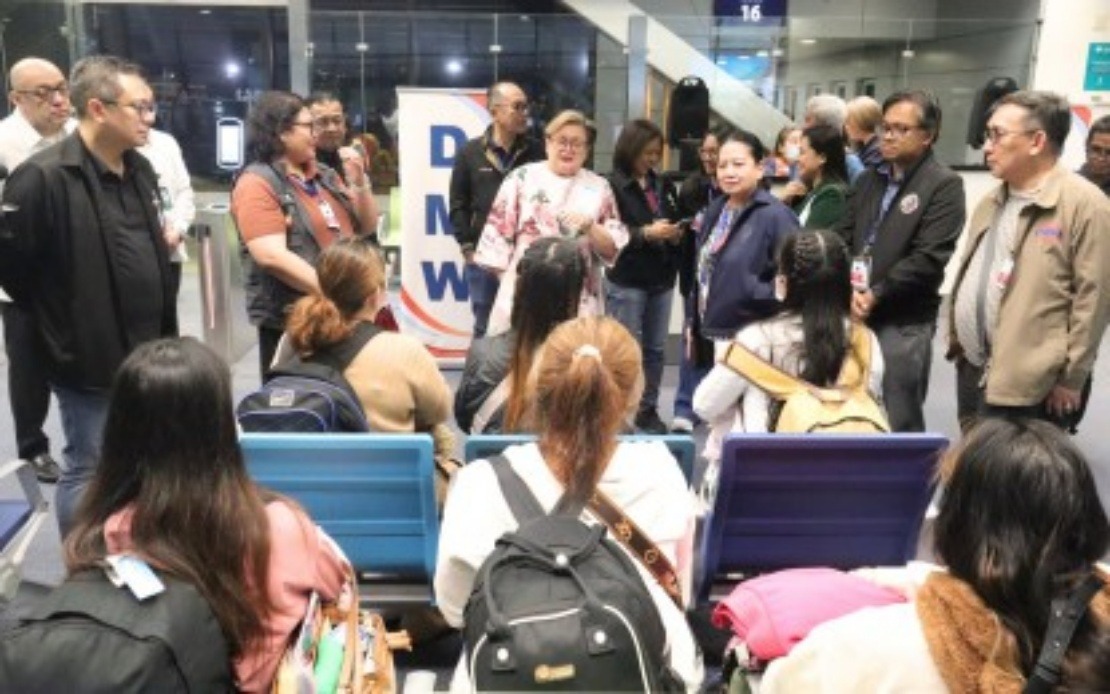
A group of 24 Filipinos who had been held in detention across Russia for approximately nine months touched down at Ninoy Aquino International Airport in two separate flights early Sunday morning, marking a significant diplomatic breakthrough secured through high-level presidential intervention. The returnees arrived via Philippine Airlines flights originating from Bangkok, Thailand, with six passengers clearing customs shortly after midnight on Flight PR737, followed by the remaining 18 individuals on Flight PR733 during the early morning hours. The successful repatriation culminated weeks of diplomatic efforts that came to fruition when President Ferdinand R. Marcos Jr raised the matter directly with Russian President Vladimir Putin during their bilateral summit on the margins of the ASEAN-Russia Commemorative Summit held in Kazan.
The arrival of the detainees represented a tangible result of presidential-level diplomacy, a tool increasingly wielded by Southeast Asian leaders seeking to protect nationals caught in precarious circumstances abroad. Foreign Affairs Secretary Maria Theresa Lazaro and Migrant Workers Secretary Hans Cacdac both attended the airport to formally welcome the repatriates, signalling the Philippine government's commitment to supporting its citizens abroad. The repatriation operation itself was a coordinated undertaking involving multiple government bodies, notably the Department of Foreign Affairs, the Department of Migrant Workers, and the Overseas Workers Welfare Administration, underscoring how complex migration issues often require institutional cooperation across borders and bureaucracies.
According to official accounts, the 24 Filipinos had been confined in the Russian city of Irkutsk, located in southeastern Siberia, without being formally charged with any offences. This circumstance raises troubling questions about their legal status and the procedural safeguards that should accompany detention in any jurisdiction. The extended period of confinement—stretching nearly nine months—without formal charges being lodged stands as a sobering reminder of the vulnerability many migrant workers face when employment promises lead them to unfamiliar legal systems with limited consular protection.
Evidence suggests that these individuals fell prey to illegal recruitment schemes that enticed them with promises of employment before arranging their transportation to Russia. Upon arrival, they were subsequently taken into custody ostensibly for immigration-related violations, though the circumstances surrounding their detention remain murky. This pattern reflects a broader regional concern about predatory recruitment networks that specifically target Southeast Asian workers, exploiting information asymmetries and desperation for employment opportunities. The sophistication of such schemes lies in their ability to operate across multiple jurisdictions, making investigation and prosecution challenging for any single nation.
The involvement of President Marcos in personally raising this matter during his summit with Putin illustrates both the diplomatic leverage available to elected leaders and the sometimes-necessary bypassing of routine channels to resolve urgent humanitarian situations. Marcos publicly thanked the Russian president and government for their cooperation in securing the release, language that reflects the diplomatic choreography required when seeking favours from another major power. For Philippine officials, the successful negotiation demonstrates their capacity to advocate effectively for citizens in distress, though it also underscores a harder truth: that individual cases often require presidential-level attention to move through foreign bureaucracies.
The repatriation process, while successful, represents just one phase of a longer journey for these 24 individuals. Government agencies have committed to providing comprehensive assistance and reintegration support to help the returnees rebuild their lives following their ordeal. This support framework is crucial, as detention abroad carries profound psychological and economic consequences that extend far beyond release. Many returning migrants face social stigma, damaged job prospects, and unresolved trauma that standard assistance programmes may struggle to address adequately.
Simultaneously, Philippine authorities have indicated that investigations into the recruitment and transportation mechanisms remain ongoing. Understanding how these individuals were recruited, who orchestrated the scheme, and how it operated across international lines will be essential for preventing similar incidents in the future. Such investigations typically reveal supply chains involving multiple actors—recruiters, brokers, transporters, and employers—each motivated by profit and protected by layers of deniability and distance. Breaking these networks requires sustained investigative effort and often international cooperation with law enforcement agencies in other countries.
For Southeast Asian readers, this case carries implications beyond the specific circumstances of these 24 individuals. The Philippines alone has millions of workers abroad, and Filipinos represent a significant portion of Southeast Asia's migrant workforce. The vulnerability demonstrated by this case—illegal recruitment, fraudulent employment offers, detention without proper legal recourse—reflects patterns documented across the region. Malaysia, Singapore, Thailand, and Indonesia have all grappled with recruitment scams targeting their nationals, suggesting this represents a systemic challenge rather than an isolated incident.
The successful intervention also highlights the asymmetries in power and protection that characterise migration within and beyond Southeast Asia. While President Marcos could leverage his office to secure release, millions of migrant workers lack such access to high-level advocacy. This disparity raises questions about how nations might establish more robust protections for vulnerable workers before they encounter such perilous situations. Enhanced pre-departure orientation, verification mechanisms for employment contracts, and strengthened coordination among origin and destination countries could all contribute to reducing vulnerability to recruitment fraud.
Looking forward, the repatriation offers several lessons for policymakers across Southeast Asia. First, it demonstrates that persistent diplomatic pressure, particularly at senior levels, can yield results even in complicated situations involving major powers. Second, it underscores the importance of inter-agency coordination within government to support citizens in crisis. Third, and perhaps most importantly, it illustrates the critical need for preventive measures that address recruitment fraud before citizens are transported to dangerous situations abroad. The successful return of these 24 Filipinos provides temporary relief, but durable solutions require addressing the underlying factors that make workers vulnerable to exploitation in the first place.

