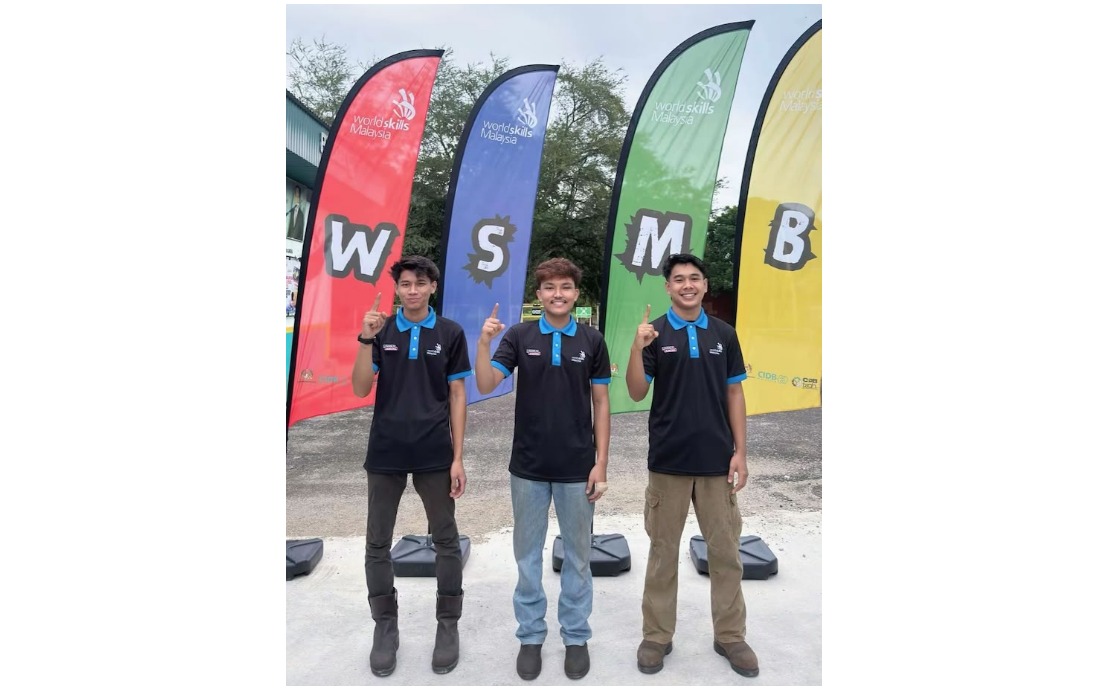
Since its inception in 1990 as the brainchild of fourth Prime Minister Tun Dr Mahathir Mohamad, WorldSkills Malaysia Belia has evolved into a cornerstone institution for developing skilled tradespeople in Malaysia's construction sector. Originally established as the Malaysian Skills Champion Competition, the initiative has undergone several strategic transformations, most notably becoming the Anugerah Tangan Emas Perdana Menteri from 1991 to 2006, before adopting the MySkills banner during 2007 to 2013, and finally settling into its current WSMB brand since 2014. This 36-year journey reflects Malaysia's changing approach to technical talent development and vocational excellence in an increasingly competitive regional economy.
The mechanics of WSMB centre on identifying outstanding competitors through rigorous assessment before channelling them into structured development and training programmes designed to prepare them for international representation. Malaysia's participation in the WorldSkills competition itself serves as a benchmark for quality, as selected WSMB champions undergo systematic preparation to compete against the world's best tradespeople. This pathway transforms domestic competition success into genuine international career advancement opportunities, creating visible incentives for young people considering technical careers.
Operationally, WSMB functions through partnerships with the Malaysian Construction Academy and CIDB Technologies, both carrying CIDB accreditation and operating training facilities that meet international specifications. This institutional infrastructure ensures participants encounter standardised equipment, processes and pedagogical approaches aligned with global industry practice rather than provincial variations. For construction sector employers across Southeast Asia, this consistency signals that Malaysian-trained workers possess comparable competency levels to their counterparts from established vocational nations.
Mohd Hafiz Dasahi, Chief Executive Officer of CIDB Technologies, frames WSMB not merely as a competition platform but as a deliberate mechanism for workforce transformation. His perspective highlights how current investment in talent development directly determines Malaysia's future competitive positioning in construction, manufacturing, oil and gas, energy and maritime sectors. This systems-thinking approach acknowledges that individual skill development cannot occur in isolation but must integrate with broader industry modernisation, particularly as digitalisation and advanced manufacturing techniques reshape demand across Southeast Asia's expanding middle income economies.
The assessment methodology employed in WSMB competitions reflects sophistication beyond simple technical execution. Zarulhakim Abdul Rahim, heading CIDB Technologies' Welding division, outlines evaluation criteria encompassing measurement precision, workmanship quality, procedural compliance, temporal efficiency, troubleshooting aptitude and occupational health observance. This multifaceted approach recognises that modern construction work demands not just technical proficiency but also adaptability, self-management, and commitment to continuous improvement. Participants consequently develop resilience and disciplined work habits alongside tangible welding competency.
Beyond technical skill acquisition, WSMB participants gain exposure to international technologies and processes unavailable in conventional workplace settings. This dimension proves particularly valuable for younger workers entering sectors where equipment rapidly cycles through technological upgrades. Zarulhakim emphasises how competition participation effectively bridges the gap between classroom learning and production-floor reality, enabling participants to approach employment with familiarity regarding contemporary industry standards rather than requiring extensive on-the-job orientation.
Industry participation demonstrates genuine commitment to the WSMB ecosystem. Companies such as Lincoln Energy and Vinxus Mark contribute welding equipment, consumables and technical expertise throughout competition cycles, transforming the event into collaborative workforce development rather than isolated academic exercise. Putra Faisal Ashraf Idris, a sales engineer with these firms, articulates corporate responsibility for talent cultivation, arguing that companies possess vested interest in ensuring adequate skilled labour supply. This industry-education partnership model creates alignment between training content and actual employment requirements, reducing the common friction point where graduates possess theoretical credentials but lack practical readiness.
Participant testimonies reveal how WSMB functions as practical pathway rather than abstract aspiration. Ahmad Syafie Dasuki, aged 20 from Tumpat, Kelantan, had already accumulated nearly two years of workshop experience in Terengganu before entering competition, illustrating how WSMB serves as advancement mechanism for workers already committed to construction trades. His participation enables progression from routine workshop tasks to sophisticated technical performance, ultimately positioning him for supervisory or specialist roles that command superior compensation and career stability.
Muhammad Fazran Md Rashid, currently employed at a Kedah welding company, approaches WSMB as deliberate skill enhancement strategy rather than resume credential accumulation. His emphasis on building self-confidence alongside technical competency identifies a crucial psychological dimension often overlooked in purely technical training narratives. Construction work, particularly welding in industrial contexts, demands assertiveness, decision-making authority and willingness to take responsibility for safety-critical outcomes. WSMB's competitive environment cultivates these attributes through structured challenge and expert evaluation.
For Mohd Sahmi Irfan Sulaimi from Terengganu, participation appeals not merely as immediate skill advancement but as investment in longer-term professional networks and career optionality. His observation that WSMB creates pathways connecting trainees with industry leaders, regulators and peers identifies how the competition functions as social infrastructure within Malaysia's construction ecosystem. The professional relationships formed during competition cycles become durable assets, particularly valuable in sectors where employer trust and personal recommendation often outweigh formal credentials in hiring decisions.
The broader significance of WSMB extends beyond individual career trajectories into regional labour market dynamics. As Southeast Asian economies compete for increasingly sophisticated manufacturing and infrastructure contracts, workforce quality becomes decisive competitive advantage. Countries with robust technical training ecosystems generate reputational benefits translating into enhanced bidding power for major projects, premium wage positioning for their workers, and attraction of higher-value manufacturing investments. Malaysia's commitment to WSMB reflects strategic appreciation for this reality.
Looking forward, WSMB faces evolving challenges as construction industries across Southeast Asia incorporate automation, artificial intelligence and advanced materials science. The competition framework must continually update technical content to reflect these transformations while maintaining accessibility for participants from modest socioeconomic backgrounds. Success in this balancing act will determine whether WSMB remains relevant development institution or becomes nostalgic remnant of pre-automation vocational training approaches.
The 36-year trajectory of WorldSkills Malaysia Belia ultimately represents institutional commitment to the principle that technical excellence, when properly cultivated and recognised, offers tangible pathways for social mobility and economic contribution. As Malaysia navigates middle-income transition and Southeast Asian integration deepens, this commitment to skilled trades development becomes increasingly consequential for regional competitiveness and inclusive economic growth.

