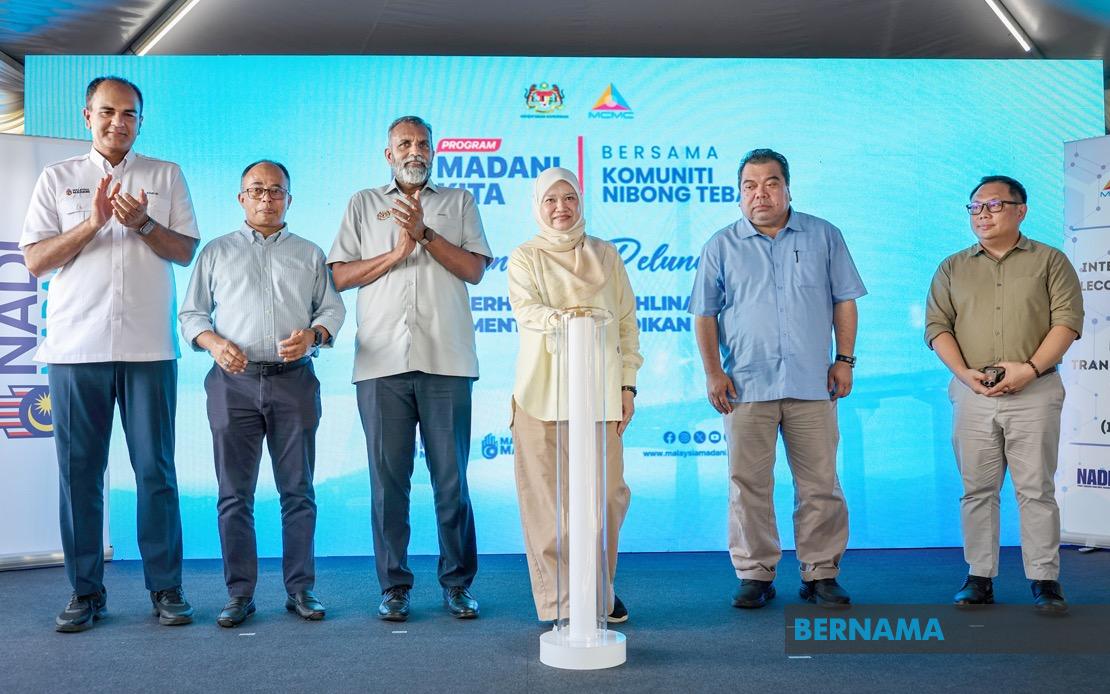
The Malaysian government is pursuing an ambitious expansion of its MADANI Kita initiative, with the Communications Ministry having established 41 programmes designed to transform how citizens interact with public administration. These initiatives represent a coordinated effort across multiple government departments to decentralise service delivery and create meaningful dialogue between officials and the communities they serve. The latest programme was launched in Nibong Tebal, with Education Minister and local MP Fadhlina Sidek officiating the event.
Coordinating the initiative is a collaborative framework involving three key institutions: the Community Communications Department, or J-KOM; the Malaysian Information Department, known as JaPen; and the Malaysian Communications and Multimedia Commission, or MCMC. These bodies work through the National Information Dissemination Centre, abbreviated as NADI, to pool resources and expertise. This institutional partnership reflects recognition that effective public engagement requires coordination across traditionally siloed agencies. By operating under unified NADI infrastructure, participating departments can share logistics, messaging strategies, and community outreach capabilities, reducing duplication and improving efficiency.
According to Mano Verabathran, the Communications Ministry's deputy secretary-general for Telecommunications Infrastructure, these programmes address a fundamental shift in public expectations. Citizens increasingly demand more than passive receipt of policy announcements; they seek tangible evidence that government initiatives deliver real benefits to their daily lives. The MADANI Kita model facilitates this by creating spaces where communities can observe government services in operation, understand implementation mechanisms, and provide feedback that shapes programme refinement. This direct interaction dissolves the abstraction that often characterises policy communication, allowing residents to connect government promises with concrete outcomes.
The engagement model accommodates several functions simultaneously. Members of the public gain deeper comprehension of policy frameworks and strategic initiatives through face-to-face explanations from responsible officials. These settings also permit citizens to pose detailed questions, seek personalized clarification on eligibility criteria or application procedures, and voice concerns or suggestions that officials might otherwise never encounter. The informal environment encourages participation from demographics who might avoid formal government offices, including younger citizens and those with limited literacy or technical proficiency. By meeting communities where they gather, rather than requiring visits to institutional facilities, MADANI Kita reduces structural barriers to civic participation.
Beyond information dissemination, the programmes emphasise experiential learning and skills development, particularly targeting youth engagement. Activities span technology education, professional skill-building, and community health initiatives. Rather than positioning youth as passive recipients of government messaging, the MADANI Kita model creates opportunities for young Malaysians to develop capabilities, collaborate with peers, and experience structured competition in supportive environments. E-sports components have proven particularly successful in attracting participation, recognising that digital gaming represents a significant cultural interest for younger cohorts. These activity-based elements transform what might otherwise be dry administrative presentations into dynamic community experiences that build goodwill and encourage repeat participation.
Recent programme metrics demonstrate substantial public appetite for these initiatives. The MADANI Kita Permatang Pauh event, held concurrently with the Penang International Halal Expo 2026 from July 24 through 26, attracted more than 17,000 attendees. This attendance figure suggests that strategic programme scheduling—linking government engagement activities to existing community events—significantly amplifies participation rates. By piggybackinging on established gatherings that already draw large crowds, MADANI Kita extends its reach to citizens who may attend for other reasons and encounter government services serendipitously. This approach proves more cost-effective than generating participation through standalone announcements.
For Malaysian citizens, the expansion of MADANI Kita programmes carries practical implications across multiple dimensions. Residents in states where programmes have been deployed gain improved access to information about government benefits, licensing procedures, and service eligibility requirements. Families seeking clarity about education policies, healthcare entitlements, or business registration processes can interact directly with informed representatives rather than navigating websites or telephone systems. Small business owners and entrepreneurs particularly benefit from direct access to officials from commerce and industry ministries, who can provide tailored guidance on applicable regulations and support schemes. Young people exploring career pathways or skill development opportunities encounter government-backed programmes and mentorship possibilities they might not discover through other channels.
The geographic expansion of MADANI Kita also reflects broader questions about equitable service distribution within Malaysia's diverse regions. Urban centres have traditionally enjoyed superior access to government facilities and information resources, while rural and smaller urban communities face greater distances and transportation challenges. By bringing programmes to secondary cities like Nibong Tebal in Penang, rather than concentrating resources in Kuala Lumpur, the initiative acknowledges that peripheral regions deserve equivalent public engagement opportunities. This decentralised approach also generates valuable feedback from communities with distinct economic structures, demographic profiles, and public service needs, informing more responsive policy design.
From a governance perspective, MADANI Kita represents evolving Malaysian administrative philosophy that prioritises citizen-centric service delivery over institution-centric processes. Traditional government service models require citizens to understand where to seek assistance and navigate bureaucratic structures independently. MADANI Kita inverts this burden by requiring government to anticipate citizen information needs and present services accessibly. This philosophical reorientation aligns with international best practices in public administration, where leading nations increasingly measure government performance through citizen satisfaction rather than purely institutional metrics. For Malaysia, which has invested significantly in digital governance infrastructure, MADANI Kita complements e-government initiatives by providing human elements that technology sometimes cannot replace.
The sustainability of 41 programmes across Malaysia does raise questions about resource requirements and institutional capacity. Maintaining consistent programme quality across multiple locations, sustaining participant interest through regular scheduling, and ensuring departmental representatives allocate time to engagement activities requires sustained budget allocation and leadership commitment. Government agencies must balance these public-facing activities against internal operational demands. Additionally, programmes will prove valuable only if citizens perceive that feedback generated influences actual policy adjustments; without demonstrated responsiveness, engagement activities risk appearing performative rather than genuinely consultative.
Looking forward, the MADANI Kita framework provides Malaysia with scalable infrastructure for democratic participation that extends beyond conventional voting mechanisms. As programmes mature and accumulate experience, organisers can refine activity design, improve marketing strategies, and expand to additional locations. Regional governments in other states may replicate successful elements, creating a nationwide network of government-citizen engagement opportunities. For Malaysian readers, this expansion signals that policymakers are recognising accessibility and dialogue as integral to effective governance rather than peripheral additions to administrative processes.

