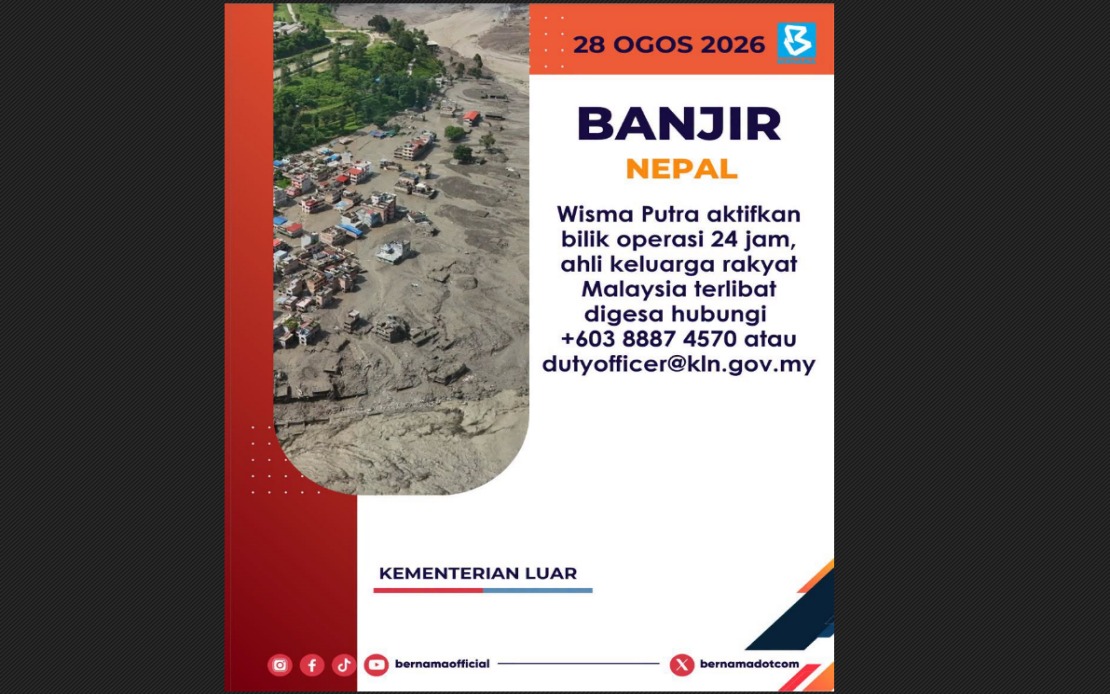
Malaysia's diplomatic services have shifted into emergency mode following unprecedented flooding in Nepal that has left 57 Malaysian nationals unaccounted for. The Foreign Ministry, known locally as Wisma Putra, confirmed on Friday that its Operations Room in Putrajaya is now functioning 24 hours daily to manage what has become one of the most serious incidents affecting Malaysian citizens abroad in recent years. The missing persons figure, compiled from urgent reports submitted by families, colleagues and employers as of late Thursday evening, represents a significant humanitarian challenge requiring coordinated regional diplomatic response.
The disaster struck Nepal's Rasuwa district on Wednesday morning, unleashing torrential floodwaters that have claimed more than 400 lives and left hundreds of foreign tourists and travellers unaccounted for across the country. The sheer scale of the tragedy has overwhelmed local response capabilities, with communications severed across much of the affected terrain and road networks rendered impassable by debris and water. For Malaysian families anxiously waiting for news, the situation remains deeply uncertain, as the full extent of casualties and missing persons continues to emerge amid the fog of crisis conditions.
Wisma Putra is pursuing multiple verification channels to establish the status of the missing Malaysians. Malaysian diplomatic missions stationed throughout the region are actively cross-referencing reports from concerned family members against information obtained directly from Nepalese authorities and relevant agencies. This verification process involves collaboration with Nepal's Foreign Ministry Emergency Response Team and the Nepal Tourism Board, reflecting the reality that many missing individuals may have been tourists or business travellers rather than residents. The ministry has acknowledged that it has not yet confirmed any Malaysian deaths, though notably it has also not confirmed any rescues either, highlighting the information vacuum that currently surrounds the situation.
A complicating factor in locating the missing persons is that some Malaysians may have entered Nepal through alternative routes. Wisma Putra has specifically noted that individuals could have travelled from neighbouring China or India into the affected zones, meaning that family members who have not yet reported their loved ones' presence to authorities face urgency in doing so. The ministry is appealing to anyone with relatives travelling anywhere across the broader Nepal region to immediately submit their details, recognising that the initial accounting of 57 missing persons may be incomplete as more families come forward with information over the coming hours and days.
To support the missing persons verification effort and assist Malaysian citizens caught in the disaster, Wisma Putra has established multiple communication channels. The ministry's Operations Room can be reached at +603 8887 4570 by telephone, while detailed inquiries should be sent to [email protected]. Additionally, Malaysia's Embassy in Kathmandu is accepting direct reports at [email protected]. The ministry is requesting that concerned parties provide comprehensive information including full names, passport numbers, specific travel itineraries, last known locations and working telephone contact details. This structured information-gathering approach enables diplomatic staff to match missing persons reports against survivor lists and hospital admissions, accelerating the identification process.
Nepal's rescue operations are being conducted under extraordinarily challenging conditions. With helicopter transport becoming the primary means of moving through the devastated areas, emergency responders are concentrating efforts on airlifting critically injured persons to major hospitals in Kathmandu while establishing temporary medical facilities in affected communities to treat less serious injuries. Police, security agencies, local authorities and volunteer residents continue systematic search operations despite ongoing risks, including the threat of secondary flooding as water levels remain dangerously elevated. The communications blackout affecting much of the region means that many Malaysians stranded in outlying areas may be unable to contact their families even if they have survived the initial disaster.
For Malaysian travellers and residents currently in Nepal, Wisma Putra has issued specific safety guidance. All Malaysians in the affected areas are advised to prioritise personal safety and strictly comply with instructions from local authorities. The ministry emphasises that conditions remain volatile, with evacuation operations continuing from locations deemed vulnerable to further flooding. This guidance reflects the reality that the disaster may not be concluded, and rescue operations will likely continue for several days as the full scope of destruction becomes apparent and search teams access previously unreachable areas.
The incident underscores the importance of Malaysia's e-Konsular registration portal, which enables Malaysians to pre-register their travel plans and maintain updated contact information with the Foreign Ministry. During crises of this magnitude, such registrations become invaluable for rapidly identifying citizens in affected regions and establishing communication with their families. The ministry is reminding all Malaysians travelling abroad to utilise this system, effectively creating a digital lifeline for crisis response when normal communication channels fail.
This Nepal emergency also highlights broader vulnerabilities in cross-border travel and disaster response in Southeast Asia and South Asia. As Malaysian tourism and business activity expands across the region, the potential for citizens to be caught in major crises increases. The coordination between Wisma Putra, Nepal's authorities, and potentially Thai and Indian diplomatic missions demonstrates the complex diplomatic choreography required when citizens of one nation face emergencies in another. For Malaysia specifically, the situation serves as a reminder of the Foreign Ministry's critical role in protecting citizens abroad and the resources required to maintain effective crisis response capacity.
Looking ahead, the coming days will be crucial in clarifying the status of the 57 missing Malaysians. Some may yet emerge from remote areas and reconnect with family and authorities, while others may be identified among rescued foreigners or in hospital wards. The systematic verification process being undertaken by Wisma Putra and its diplomatic partners is designed to convert the current uncertainty into concrete information. For the Malaysian families awaiting news, the round-the-clock operations at Wisma Putra represent a commitment to leaving no stone unturned in accounting for their loved ones during one of Nepal's worst natural disasters in recent memory.

