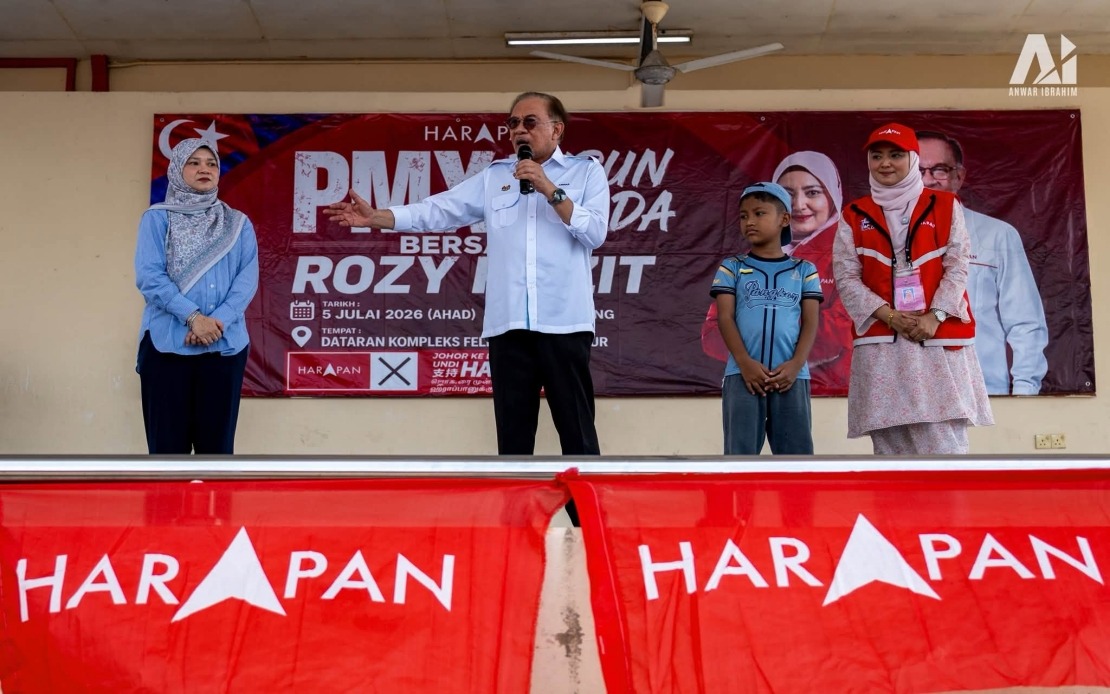
Prime Minister Datuk Seri Anwar Ibrahim has opened up about an unexpectedly profound moment during a recent visit to Felda Palong Timur in Segamat, when a nine-year-old boy managed to reach his hand through a crowd to shake hands with the nation's leader. The encounter, which lasted only moments on stage, left such a deep impression on Anwar that he subsequently dispatched an official to visit the child and present him with a bicycle as a token of the meeting's significance.
The story that moved the Prime Minister began with determination and love in rural Johor Bahru. Muhammad Afif Ikhwan's grandmother, Rosimah Mohammad, a 58-year-old resident of Kampung Pudu in Segamat, undertook a remarkable journey on a motorcycle through the winding tracks of an oil palm plantation. Her singular motivation was to give her grandson the precious opportunity to see and meet the Prime Minister in person—a dream that might have seemed impossibly distant to a rural family.
For families in Malaysia's rural plantation communities, opportunities to encounter national leaders can feel rare and distant. The effort Rosimah made underscores the symbolic importance of such moments, particularly for children growing up in these outlying areas. What may have appeared to observers as a fleeting handshake and brief stage appearance represented something far more significant to the boy and his grandmother: a tangible connection to the nation's highest office and a memory to treasure.
Anwar's reflection on the incident reveals the Prime Minister's awareness of the emotional weight carried by such encounters. In his Facebook post, he acknowledged that what appeared trivial to many—a child's desire to meet the Prime Minister—held profound meaning for Rosimah, compelling her to navigate challenging terrain on two wheels. This recognition speaks to a leader conscious of how his role extends beyond policy and governance into the realm of human connection and inspiration.
The gesture of sending someone to present Muhammad Afif with a bicycle demonstrates Anwar's commitment to transforming that brief moment into something more lasting and meaningful for the child. Rather than allowing the encounter to fade into memory, the Prime Minister took deliberate action to cement its importance and provide the boy with a tangible reminder of that day. For a nine-year-old in a rural setting, such an unexpected gift carries implications far beyond its material value—it represents recognition and validation.
Beyond the personal narrative, Anwar's public reflection carries broader implications for Malaysian politics and governance. By highlighting this story, he emphasizes values of compassion and humanity as central to leadership, counterbalancing the inevitable focus on policy challenges and national management. His assertion that busy leaders must never lose their capacity for human connection speaks to an understanding that governance ultimately concerns individual lives and aspirations across diverse communities.
The anecdote also illuminates rural Malaysian experiences that often receive limited attention in national discourse. Plantation communities such as those in Segamat represent a significant demographic, yet their stories and concerns frequently remain peripheral to mainstream political narratives. By elevating Muhammad Afif's journey and his grandmother's determination, Anwar brings visibility to the realities of families living in these areas, acknowledging their existence and dignity within the national fabric.
For young Malaysians in similar circumstances, the story carries motivational force. Anwar explicitly expressed his hope that Muhammad Afif would cherish the memory and allow it to inspire his continued educational pursuits and future contributions to his family, community, and nation. This articulation of expectation—that such moments should catalyze commitment to self-improvement and service—frames the encounter within a developmental narrative where inspiration translates into ambition.
The incident also reflects contemporary Malaysian political consciousness regarding the importance of accessibility and personal touch in leadership. In an era when political engagement increasingly occurs through digital platforms and formal settings, stories of direct human contact between leaders and citizens hold particular resonance. Rosimah's motorcycle journey through plantation tracks represents a determined effort to bridge the gap between rural communities and national power structures, a gap that remains substantive despite Malaysia's development.
The bicycle gift itself carries symbolic weight within Malaysian cultural and social contexts. For rural families with limited resources, such items represent not luxury but practical tools for mobility, education access, and childhood joy. That the Prime Minister ensured this gift reached Muhammad Afif suggests an understanding of what constitutes meaningful support for families in plantation communities.
This story emerges within Malaysia's ongoing development challenges, particularly regarding rural-urban disparities and ensuring that growth benefits reach all communities equitably. While a single bicycle and a handshake cannot resolve structural inequalities, they represent recognition and human acknowledgment that can precede and accompany broader policy initiatives. Anwar's public reflection suggests awareness that leadership involves both grand strategic vision and individual human moments that build social cohesion.
As Malaysia navigates complex economic and political terrain, narratives emphasizing human connection and compassion serve important social functions. They remind citizens that governance concerns itself with their individual aspirations and struggles, not merely aggregate statistics and policy outcomes. For Muhammad Afif and his grandmother, the encounter transcended the transactional nature of much political engagement, becoming instead a memory of recognition and care.
Moving forward, such stories gain importance as Malaysia addresses pressing development challenges while maintaining social stability and cohesion. The Prime Minister's decision to publicly reflect on this brief encounter, rather than allowing it to pass unremarked, demonstrates strategic recognition that leadership's moral dimension—its capacity to inspire and affirm human dignity—fundamentally matters to national resilience and citizens' sense of belonging within the political community.

