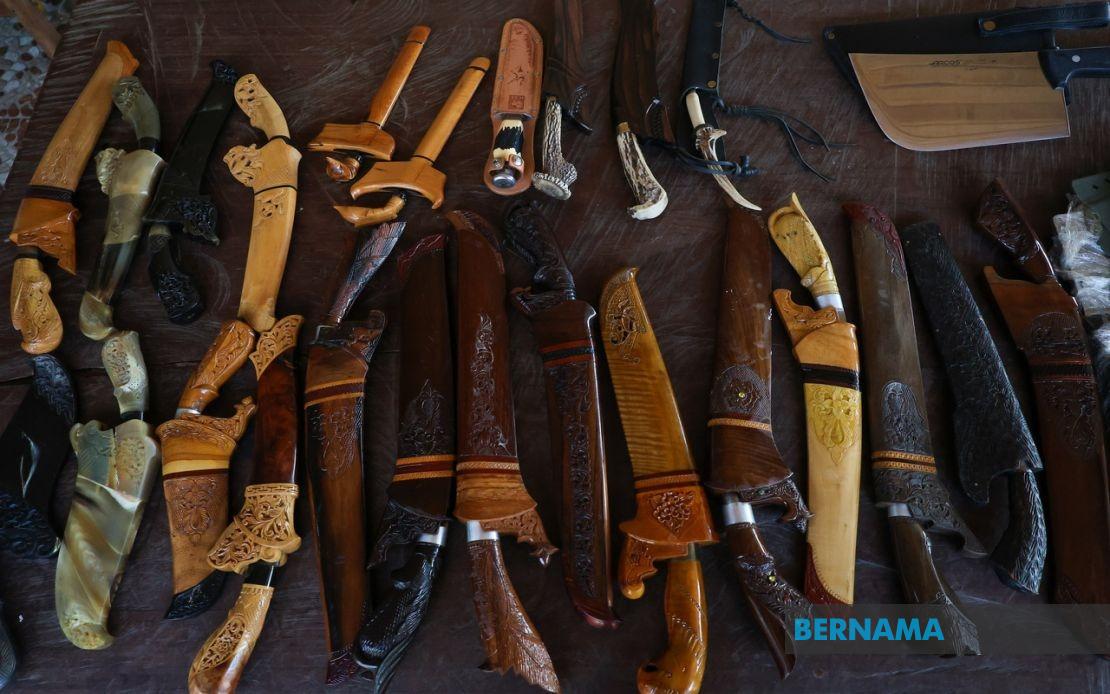
The bird-headed golok represents far more than a decorative weapon—it embodies a cultural memory that is slipping away as Kelantan's master blacksmiths grow older and fewer young people take up the craft. Ahmad, a 71-year-old custodian of this heritage, has emerged as an unlikely guardian of a tradition that once defined the sultanate's reputation for metalwork and artisanal excellence. His passion for preserving these pieces reflects a broader concern among cultural advocates that without deliberate intervention, an entire body of knowledge and artistic expression could vanish within a generation.
The distinctive bird-shaped hilt of traditional Kelantan blades serves both practical and symbolic purposes. Beyond providing ergonomic comfort during use, the motif connects contemporary craftwork to the sultanate's historical past, specifically referencing the Petalawali bird figures that adorned the royal boats of the Kelantan Sultanate. These vessels once carried significant ceremonial and administrative importance, making the bird design a living link to maritime heritage and courtly tradition. Ahmad recognises this significance keenly, understanding that each blade carries layers of meaning that extend beyond its function as a weapon.
The core challenge Ahmad articulates—that knowledge disappears when craftsmen pass away—cuts to the heart of why traditional skills are vulnerable in modern Malaysia. Unlike standardised industrial production, blacksmithing knowledge exists largely in the hands and minds of practitioners. Techniques for tempering metal, shaping hilts, and carving decorative elements have been transmitted orally and through apprenticeship for centuries. When a master blacksmith dies without training successors, those specific refinements and personal innovations are lost permanently. Ahmad's observation that handcrafted pieces have become increasingly valuable precisely because they reflect the maker's unique identity underscores how irreplaceability drives both monetary and cultural worth.
Ahmad's journey into weapon collection began two decades ago through a fortuitous partnership with a blacksmith friend who taught him the fundamentals of hilt and scabbard making. This entry point shaped his later appreciation for the craft and motivated his systematic acquisition of pieces. Today his collection encompasses more than 100 traditional and modern weapons valued at approximately RM20,000, sourced from diverse geographical origins including Germany, Sweden, Denmark, England, the United States, Japan, China, Spain and Portugal. This international range reveals how Kelantan's blacksmithing tradition has intersected with global weapon-making practices, creating a hybrid heritage that reflects centuries of trade and cultural exchange.
Among his most treasured acquisitions are specimens that showcase regional artistry: a knife featuring a deer-antler hilt sourced from Sarawak demonstrates indigenous material use, while a keris crafted from black kemuning wood with a golden kemuning wood hilt exemplifies the sophisticated woodworking that complements metalwork in traditional blade-making. These pieces tell stories about resource availability across Malaysian territories and how craftsmen adapted to local materials while maintaining aesthetic and functional standards. The provenance of each item in Ahmad's collection represents a decision point—a moment when Ahmad judged a particular work worthy of preservation.
Preserving antique weapons demands meticulous environmental management that most casual collectors overlook. Ahmad maintains his collection in a dedicated cabinet, conducting thorough inspections every three months and systematically applying protective oils to blade surfaces. This regimen combats Malaysia's humid tropical climate, which accelerates oxidation and corrosion on metal surfaces. Such dedication reflects understanding that preservation is not a one-time action but an ongoing commitment requiring knowledge of materials science and conservation principles. For collectors nationwide, Ahmad's methodology offers a practical blueprint for protecting similar heritage pieces in private hands.
The financial dimension of Ahmad's collecting reveals telling attitudes about cultural preservation. Despite repeated interest from collectors willing to purchase individual pieces, Ahmad has consistently refused to sell any items from his collection. His rationale—that these weapons were created by now-deceased blacksmiths whose craftsmanship cannot be replicated—elevates preservation above personal profit. This stance distinguishes Ahmad from collectors motivated primarily by investment returns. His decision treats the collection as a public trust rather than private property, acknowledging that heritage items carry obligations beyond ownership.
Kelantan's blacksmithing tradition faces structural challenges that extend beyond individual craftsmen. Younger Malaysians increasingly pursue formal education and urban employment rather than apprenticing in trades that demand years of training and offer uncertain income prospects. The romanticisation of craft work in global markets has not translated into sustainable local economic models that would incentivise skill transmission. Technical schools and government initiatives have attempted to intervene, but market forces and social mobility aspirations continue pulling talent away from traditional sectors. Ahmad's concern about knowledge loss reflects this systemic imbalance.
The path forward that Ahmad envisions—innovation paired with identity preservation—requires nuanced policy thinking. Digital documentation of techniques, establishment of heritage workshops that blend tourism with training, and targeted subsidies for apprenticeships represent potential mechanisms. However, such interventions risk commodifying traditions or reducing living practices to museum exhibits. Ahmad's implicit argument is that Malaysia must find ways to make blacksmithing economically viable and culturally valued among younger generations, not merely as nostalgic heritage but as relevant craft expression.
Beyond Kelantan, this collector's efforts speak to Malaysia's broader cultural vulnerability. Numerous traditional crafts—batik-making, woodcarving, textile weaving—face similar succession crises. Ahmad's visible commitment to stewardship raises uncomfortable questions about whether private collectors, enthusiasts and advocates can adequately bear responsibility for national heritage, or whether governments must assume more active roles. His collection represents knowledge salvaged from the margins, preserved through personal dedication rather than institutional support—a model that works until the collector can no longer maintain vigilance.

