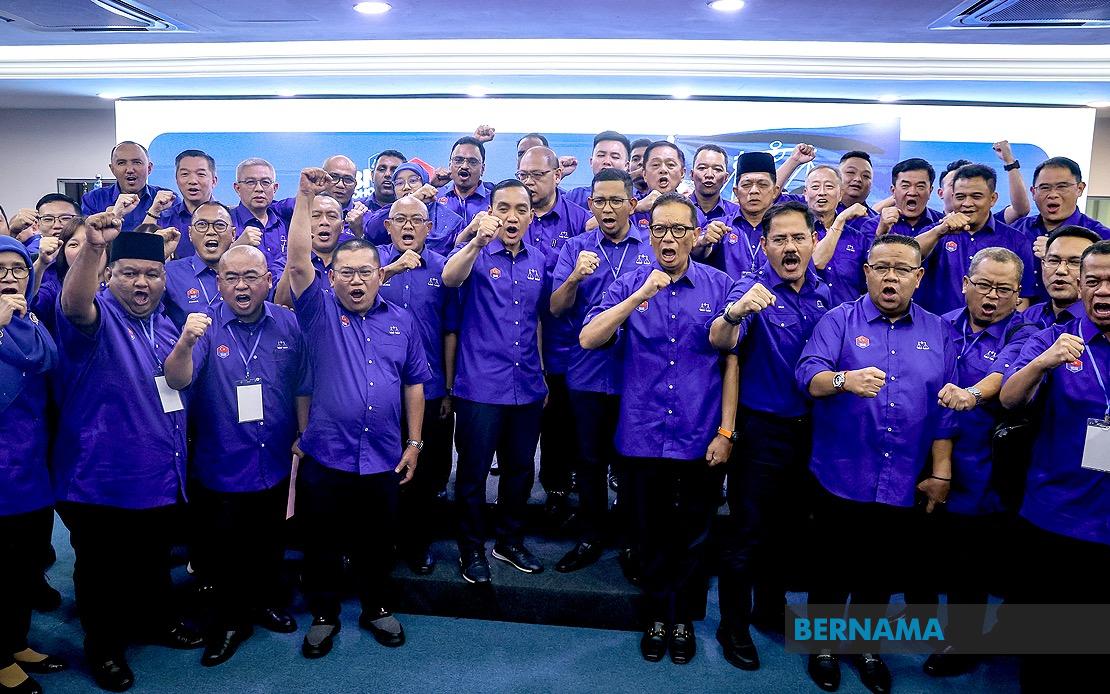
The Johor branch of Barisan Nasional has formally presented its comprehensive candidate slate for the forthcoming state election, spanning all 56 legislative constituencies with a blend of seasoned figures and fresh contenders. The announcement came during a formal ceremony in Johor Bahru, where coalition leadership outlined its strategic positioning for the electoral contest ahead. The composition reflects the traditional power-sharing arrangement among the three component parties, with UMNO supplying the largest contingent of candidates to contest the seats allocated to the ruling alliance.
Johor Barisan Nasional chairman Datuk Onn Hafiz Ghazi presided over the candidate unveiling, revealing a lineup anchored by 37 UMNO representatives, 15 candidates from the Malaysian Chinese Association, and four nominees from the Malaysian Indian Congress. This distribution maintains the established formula that has governed coalition politics in the state for decades. Onn Hafiz emphasised that the selection process carried the explicit endorsement of national BN chairman Datuk Seri Dr Ahmad Zahid Hamidi, underscoring the hierarchical approval structure within the coalition hierarchy. The formal blessing from the apex of party leadership signals confidence in the chosen candidates and attempts to project organisational unity heading into the campaign period.
Among the most significant placements is the nomination of former health minister Datuk Seri Dr Adham Baba to contest the Pasir Raja seat, marking his return to electoral politics in his traditional stronghold. Adham's appointment carries considerable symbolic weight, as he represents a tier of senior federal experience now being mobilised at the state level. His previous tenure in Pasir Raja spanning two consecutive election cycles between 2008 and 2018, combined with his two terms representing the Tenggara federal constituency from 2004 to 2008 and again from 2018 to 2022, establishes him as a seasoned political operator in the region. His dual role as Tenggara UMNO division chief reinforces his organisational standing within party structures, positioning him as a stabilising presence in this critical constituency.
The incumbent Menteri Besar will personally defend his Machap seat, continuing his direct involvement in state assembly politics alongside his executive responsibilities. Onn Hafiz's decision to contest reflects confidence in his personal political standing and the performance of his administration. The Machap constituency, which he secured during the 2022 election, serves as his direct electoral base and maintains the convention of the chief minister holding a state assembly seat. This arrangement ensures his continued presence in the legislative chamber and preserves his electoral mandate alongside his executive position, a practice that has become standard in Malaysian state politics.
The announcement brought significant changes to the representation of several constituencies, most notably in Benut, where former Menteri Besar Datuk Seri Hasni Mohammad was not retained as a candidate despite holding the incumbent assemblyman position. Hasni's non-nomination represents a notable transition in the district's political representation, ending his tenure as the area's state representative. In his place, the coalition has positioned UMNO working secretary Datuk Mohd Sumali Reduan to contest the Benut seat. This substitution reflects evolving internal party calculations regarding candidate suitability and electoral viability, with party strategists apparently concluding that Reduan presents a stronger prospect for retaining the constituency.
The continuity rate among previous executive council members demonstrates the coalition's confidence in its incumbent administrative tier, with nine of ten former exco members who contested in the 2022 election being renominated for the upcoming polls. This retention strategy suggests satisfaction with the performance of these officials in their previous portfolios and reflects the practical advantage of incumbency in state legislative contests. The sole exception involves Khairin-Nisa Ismail @ Md On, the former State Women, Family and Community Development Committee chairman, who will not be renominated to defend the Serom seat. Her exclusion represents an unusual departure from the general pattern of retention, potentially indicating internal reassessment of candidate viability or strategic repositioning within certain constituencies.
Onn Hafiz utilised the candidate announcement ceremony to impart guiding principles for the ensuing campaign period, characterising nomination not as a privilege or reward but as a sacred trust demanding rigorous ethical conduct. His remarks emphasised that selected candidates bear responsibility for upholding party values and maintaining professional standards during the campaign. The Menteri Besar specifically advocated for candidates to conduct their electoral activities with courtesy, respect and prudence, framing such conduct as consistent with established values within Johor society. These directives carry significance beyond mere protocol, as they establish the tone for campaign conduct and attempt to inoculate the coalition against charges of impropriety during the heated electoral period.
The strategic composition of the candidate lineup reflects calculations regarding constituency dynamics, incumbent performance, and regional political considerations across Johor's diverse districts. The allocation of UMNO's preponderance of seats aligns with its status as the dominant party within the coalition and reflects the distribution of constituencies considered winnable for the ruling alliance. The retention of nine previous executive councillors suggests the administration's assessment that these individuals have developed sufficient political capital and administrative credibility within their constituencies to warrant continued representation. This pattern of continuity, punctuated by selective changes like the Benut situation, indicates a deliberate balancing act between rewarding incumbency and introducing competitive dynamics that party strategists believe will energise campaign efforts.
For Malaysian political observers, this candidate announcement represents the coalitional positioning heading into a contest that will test BN's control of Johor, a state that has served as the political bedrock for UMNO historically. The inclusion of senior figures like Adham Baba signals an attempt to leverage experienced federal-level politicians to reinforce state-level campaigns and provide gravitational weight to the ruling coalition's narrative. The continuation of Onn Hafiz as a direct contestant alongside his menteri besar responsibilities maintains the tradition of executive leadership grounded in legislative representation. The changes introduced, particularly the Benut decision, hint at internal calculations regarding performance assessments and constituency-level electoral dynamics that party strategists have evaluated in determining optimal candidate selection.
Looking ahead, the announced lineup will be tested against opposition candidates during the campaign period, with the composition of this slate setting parameters for the competitive dynamics that will unfold. The balance between retaining proven incumbents and introducing new candidates reflects an attempt to project both stability and renewal simultaneously. For regional observers tracking Malaysian politics, this candidate announcement provides crucial insight into how the ruling coalition perceives current political dynamics and constituency-level challenges heading into electoral competition. The decision to position individuals like Adham Baba and Onn Hafiz in specific constituencies represents considered judgments about where experience and seniority will generate electoral advantage for the BN coalition.

