The African Union's Peace and Security Council has delivered a forceful message rejecting external meddling in Sudan's escalating crisis, emphasising that outside powers must respect the nation's sovereignty and allow Khartoum to chart its own political course. During high-level discussions in the Sudanese capital on Sunday, the council's rotating chair Mohamed Khaled, an Algerian diplomat, made clear that foreign interference only serves to inflame the conflict rather than resolve it, signalling continental resolve to shield Africa's affairs from international power plays that have historically complicated the continent's peacebuilding efforts.
The statement came during a diplomatic visit where Khaled and his delegation met Sudan's Sovereignty Council Chairman Abdel Fattah al-Burhan at the presidential palace in Khartoum. The gathering underscored the African Union's intention to position itself as a principal mediator in Sudan's turmoil, a role that carries particular significance given the continent's need to demonstrate institutional capacity in managing its own crises without external pressure. Khaled characterised the discussions as constructive, noting that they encompassed critical dimensions including peace prospects, security arrangements, and pathways toward restored stability in a nation increasingly fractured by prolonged warfare.
Parallel to the AU's warnings about foreign interference, the council issued an equally stark caution against the establishment of competing administrative structures or shadow governments that could fragment Sudan's territorial integrity and state authority. Such parallel entities—whether sponsored by foreign actors or emerging organically from the conflict—threaten to dissolve whatever remains of the central government's legitimacy and institutional coherence. The council recognised that institution-building must occur through unified mechanisms rather than competing power centres, a principle fundamental to post-conflict reconstruction across the region.
The path forward, according to Khaled's framing, hinges on inclusive national dialogue coupled with genuine political reconciliation among Sudan's fractured elite and civil society. Rather than imposed external settlements, the African Union advocates for internally-driven solutions that incorporate diverse stakeholder voices and produce outcomes reflecting the Sudanese people's own aspirations for their nation's future. This emphasis on local ownership represents a departure from earlier international engagement models that prioritised external actors' geopolitical interests over Sudanese agency.
Sudanese Prime Minister Kamil Idris assured the delegation that intra-Sudanese negotiations would commence imminently, signalling that despite the devastating conflict consuming the nation, political actors retain appetite for dialogue-based resolution. The government's recent relocation of administrative functions back to Khartoum—itself damaged by fighting but remaining symbolically significant—was welcomed by the AU as a critical step toward restoring functional state institutions. Restoring governmental capacity to deliver basic services, maintain order, and provide public goods represents an essential precondition for meaningful peacebuilding, distinguishing temporary ceasefire arrangements from durable political settlements.
The conflict gripping Sudan since April 2023 emerges from fundamental disagreements about integrating the paramilitary Rapid Support Forces into the national armed forces—a structural reform intended to strengthen governmental authority but triggering violent resistance from military elements opposed to relinquishing autonomous command. Rather than settling this institutional question through negotiation, both the army and the RSF have resorted to prolonged military confrontation that has devastated the nation's infrastructure, social fabric, and economy while claiming tens of thousands of lives according to independent estimates.
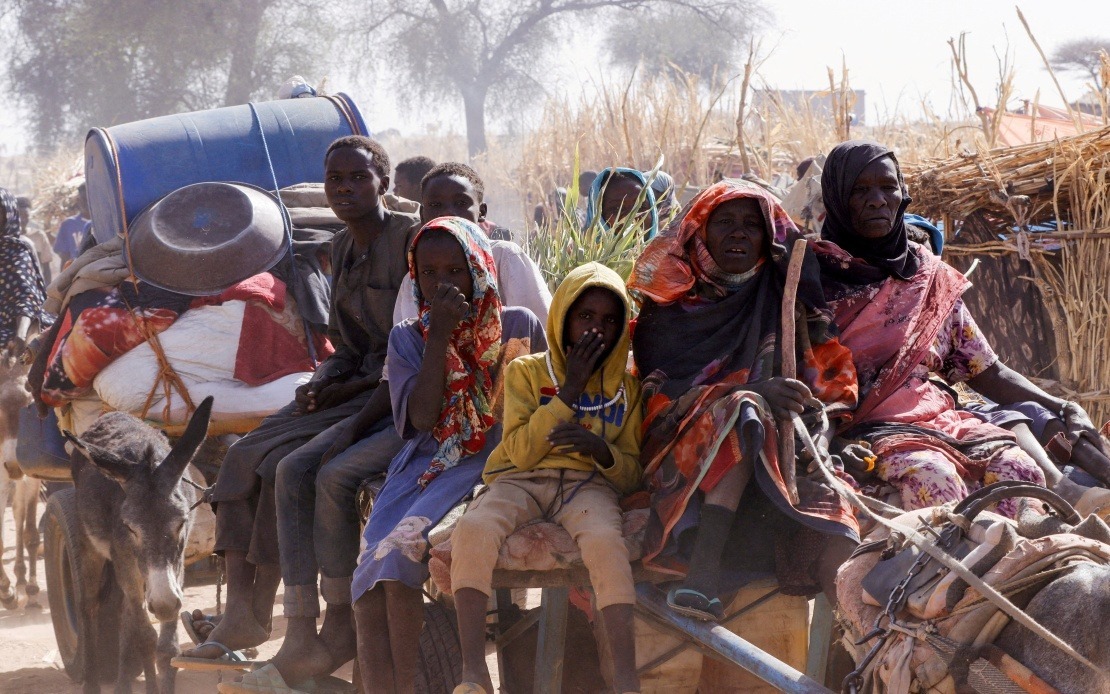
The humanitarian toll mirrors the conflict's severity: approximately thirteen million Sudanese have been displaced from their homes, generating unprecedented refugee flows toward neighbouring countries including Egypt, Chad, and South Sudan. This mass displacement threatens regional stability by straining host nations' resources, creating humanitarian corridors that organise across borders, and generating complex questions about repatriation and eventual national reconstruction. For Malaysia and Southeast Asian nations with humanitarian interests, Sudan's crisis exemplifies contemporary displacement challenges that demand coordinated international responses transcending the African continent.
The African Union's emphasis on inclusive governance reform and constitutional development through authentic popular processes addresses root grievances that have characterised Sudanese politics for decades. The council's call for a genuinely consultative transitional framework leading to free and fair elections represents an aspirational commitment to democratic principles, though realising such ambitions amid active warfare and fractured state capacity presents formidable practical obstacles. Nevertheless, articulating such principles from continental institutions signals that Sudanese reconstruction cannot occur through military dominance alone but requires political legitimacy anchored in broader consent.
For regional observers, the AU's positioning itself as Sudan's principal international interlocutor raises questions about the effectiveness of continental institutions in mediating member state conflicts, particularly when powerful external actors harbour competing interests in Sudan's outcome. The council's strong language rejecting foreign interference implicitly acknowledges that multiple international powers maintain their own Sudan strategies, creating a complex diplomatic environment where the AU must navigate between respecting its own principles and accommodating the influence of more powerful external actors. How successfully the continent manages this balancing act will substantially determine whether Sudan's crisis becomes a model for African-led solutions or remains a cautionary tale about continental limitations.

