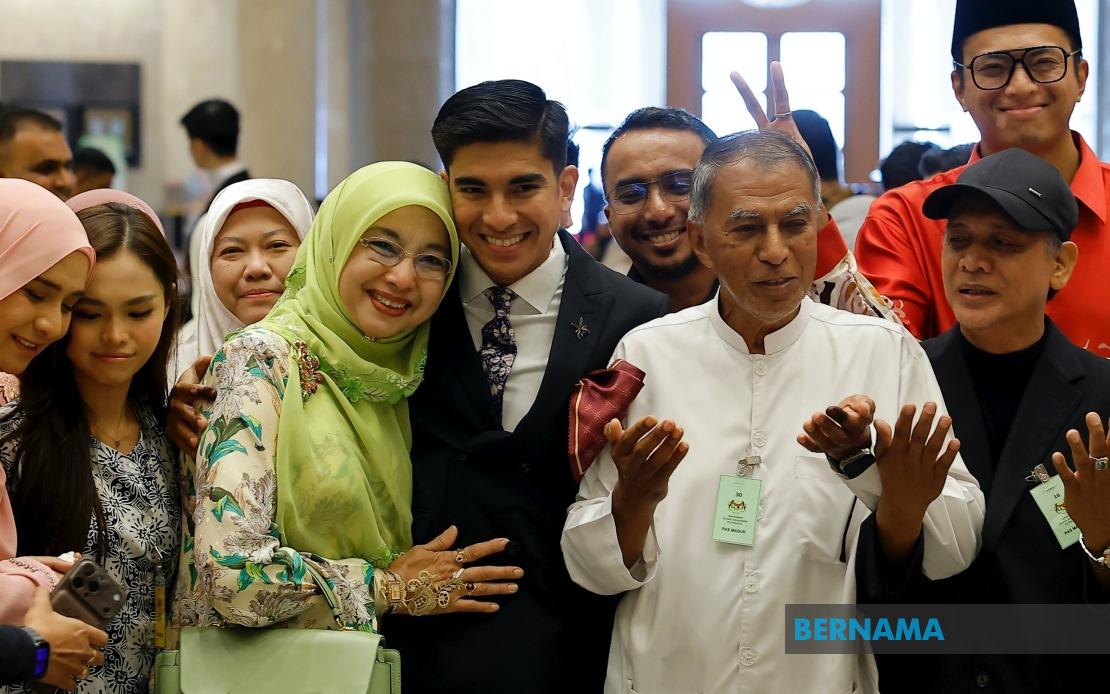
The Muar Member of Parliament Syed Saddiq Syed Abdul Rahman emerged victorious from a prolonged courtroom struggle on Wednesday when the Federal Court upheld his acquittal on all charges, bringing closure to what he described as a defining chapter that tested his resolve and faith in Malaysia's institutional framework. The 33-year-old politician, who is also a former youth and sports minister, performed a sujud syukur—a prostration of gratitude to God—alongside his family members following the court's decisive ruling, marking a significant personal vindication after half a decade of legal uncertainty.
The charges from which Syed Saddiq was exonerated involved four separate counts related to criminal breach of trust, misappropriation of property, and money laundering. These allegations centred on the handling of funds belonging to Angkatan Bersatu Anak Muda, commonly known as Armada, a youth-focused political organisation. The protracted nature of the case had extended well beyond typical litigation timelines, subjecting the Muar lawmaker and his immediate family to sustained public and legal scrutiny that few political figures in Malaysia have endured with such persistence.
Speaking to journalists in the Palace of Justice lobby in Putrajaya, Syed Saddiq reflected on the broader significance of his acquittal beyond personal vindication. He emphasised that the outcome reinforced his conviction that institutional integrity and adherence to fundamental principles ultimately find validation through the judicial system. His comments underscored a broader narrative about the independence and reliability of Malaysia's legal apparatus—an institution he characterised as foundational to the nation's stability and development trajectory. For a politician who has faced criminal jeopardy, such sentiments carry particular weight as they suggest restored confidence in the judicial mechanisms that determined his fate.
The former minister articulated a philosophy forged through his lengthy ordeal, asserting that maintaining dignity, integrity, and unwavering commitment to one's convictions constitutes the most durable strategy even when circumstances appear overwhelming. This perspective resonates beyond his individual case, offering broader commentary on political resilience and institutional trust during periods of challenge. Syed Saddiq's language suggested that his extended legal battle had crystallised his understanding of why Malaysian institutions merit continued belief and investment, despite their occasional failings or perceived limitations.
Looking toward his immediate future, Syed Saddiq indicated that he intends to step back from intensive political engagement to concentrate on rebuilding his personal life and family relationships. The six-year legal process had inevitably imposed emotional and relational costs that extended far beyond courtroom proceedings. He acknowledged that while he maintains his membership in MUDA, his political party, he requires temporal and psychological space to address matters postponed during the litigation period. This included wedding plans that had been deferred, given the circumstances surrounding the ongoing charges.
Despite his stated need for political reprieve, Syed Saddiq confirmed his commitment to fulfilling his parliamentary obligations as the elected representative for Muar. His statement that he would proceed directly to Parliament following his remarks at the Palace of Justice demonstrated an intention to balance personal recovery with legislative responsibilities. He additionally flagged plans to organise a gathering specifically for his Muar constituents, suggesting that local engagement remains a priority even as he navigates this transitional period in his political trajectory.
Syed Saddiq indicated that his family, particularly his parents, had encouraged him to proceed with personal milestones that had been constrained by legal pressures. This parental endorsement carries cultural and personal significance in Malaysian context, signalling familial solidarity and restoration following an extended period of uncertainty. The younger generation of Malaysian politicians has frequently found that legal challenges reverberate through family structures, affecting not merely the individual accused but extending to immediate relations who absorb secondary consequences of prolonged court battles.
The defence counsel representing Syed Saddiq, Datuk Hisyam Teh Poh Teik, expressed appreciation toward the judicial panel and acknowledged the confidence placed in the legal team throughout the protracted proceedings. Such acknowledgments from counsel often reflect the intensity of work required to navigate complex financial crime allegations through multiple court levels, culminating in Federal Court determination. The lawyer's gratitude toward the judges carried implicit recognition that the legal team's advocacy had successfully articulated defences sufficient to secure complete acquittal rather than partial exoneration or conviction on reduced charges.
The prosecution's response, delivered through Deputy Public Prosecutor Datuk Wan Shaharuddin Wan Ladin, indicated openness to accepting the court's decision while reserving position on potential further appeals. His statement that the Attorney General would determine whether to pursue review proceedings suggested that prosecutorial options remained theoretically available, though the Deputy Public Prosecutor's tone implied acceptance of the outcome. Such measured prosecutorial responses typically indicate that legal grounds for appeal or review were limited, and that the crown's case had been substantially undermined by judicial reasoning.
From a broader Malaysian political perspective, Syed Saddiq's acquittal carries implications for the country's political landscape and perceptions of judicial independence. The case had originated during a period of significant political turbulence and institutional questioning, and its resolution may influence broader confidence in Malaysia's capacity to adjudicate serious criminal allegations fairly and thoroughly. For members of the legislature facing criminal prosecution, the extended timeline and ultimate vindication may either encourage legal challenges to unfounded charges or contribute to anxiety about the duration of such proceedings.
The case also reflected generational dynamics within Malaysian politics, as Syed Saddiq represents a younger cohort of political actors who entered public life during periods of institutional questioning and reform demands. His resilience through the legal ordeal, coupled with his emphasis on institutional integrity and principle-driven conduct, positions him as a figure whose experience may influence how younger Malaysian politicians approach challenges to their authority and reputation. The acquittal provides vindication that sustained adherence to proclaimed principles can produce positive outcomes even through prolonged institutional processes.
Looking forward, Syed Saddiq's declared intention to temporarily withdraw from intensive political activity suggests that the Malaysian political landscape will experience reduced visibility from the Muar representative in coming months. This withdrawal contrasts with alternative responses some politicians adopt following acquittal—immediate return to prominence and advocacy. Instead, Syed Saddiq's preference for personal recalibration suggests that the six-year ordeal has left marks requiring intentional healing and reorientation. Whether his temporary retreat extends to longer-term political repositioning remains to be determined as circumstances evolve.

