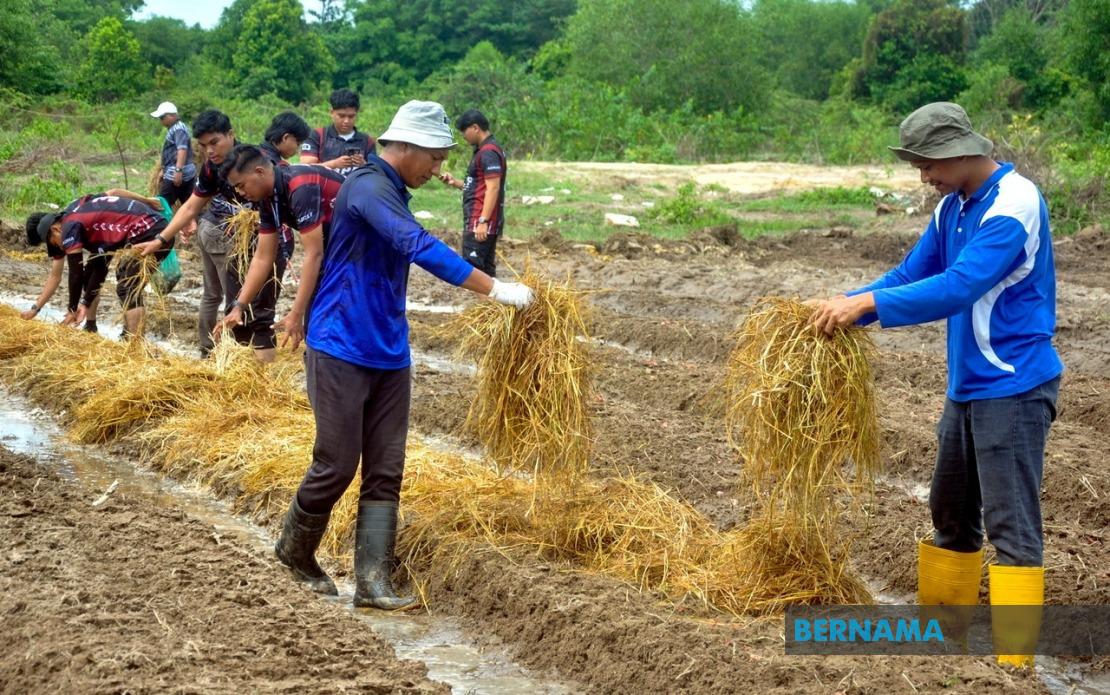
Malaysia's push to strengthen its agricultural workforce through technical and vocational training is showing measurable progress, with government data revealing a significant uptick in graduate employment. The Ministry of Agriculture and Food Security reported that 76 per cent of agricultural TVET graduates found work in 2024, a substantial jump from the 61 per cent employment rate recorded in 2018. This improvement underscores growing momentum in channelling trained workers into farming and related activities, yet the figure masks deeper structural challenges within an ageing sector struggling to attract youth.
The findings emerged from the Graduate Outcomes of Agricultural TVET in Malaysia report, unveiled at a stakeholder engagement session in Putrajaya. Developed jointly by KPKM and PNB Research Institute following a memorandum of understanding inked in September 2025, the comprehensive study analysed employment trajectories, income patterns, and entrepreneurial participation among agricultural TVET programme alumni. The research provides rare granular insight into how Malaysia's agricultural training system is performing in real-world job markets, offering policymakers concrete evidence about programme effectiveness and sector dynamics.
Despite the encouraging upward trajectory, the 76 per cent employment rate sits noticeably below the 95 per cent average achieved across all TVET disciplines nationally. This 19-percentage-point gap signals that agricultural TVET faces distinctive headwinds compared to construction, manufacturing, hospitality, and other trades. The disparity raises questions about sector competitiveness, graduate expectations, and whether training curricula sufficiently align with industry realities. For Malaysian policymakers fixated on boosting TVET participation as an alternative to university education, the agricultural lagging becomes particularly significant given the sector's strategic importance to food security.
Financial returns present an intriguing bright spot in the employment picture. Graduates pursuing agricultural careers earned approximately RM100 more monthly than peers working in non-agricultural sectors, a meaningful differential that could shift young people's career calculus. More strikingly, agricultural entrepreneurs reported substantially higher incomes than TVET graduates running non-farm businesses, suggesting that farming and agribusiness ventures offer genuine wealth-building potential. These findings challenge a persistent narrative that agriculture represents low-wage, low-status work, positioning the sector instead as capable of delivering competitive remuneration to graduates willing to embrace entrepreneurship.
Yet demographic realities threaten to undermine these encouraging trends. The study documented that one in two farm workers has reached age 40 or beyond, painting a portrait of an ageing workforce with limited generational succession. Youth participation has declined consistently over the past decade, reflecting broader cultural shifts wherein younger Malaysians gravitate toward urban employment, white-collar careers, and perceived prestige over agricultural work. This structural imbalance poses an existential challenge to food production capacity, as an ageing workforce gradually exits the sector without sufficient younger workers entering to replace them or drive innovation and productivity improvements.
Geographic concentration presents another constraint on agricultural TVET's reach. The study revealed pronounced clustering of programme graduates in Sabah (15 per cent), Kedah (14 per cent), and Sarawak (13 per cent), yet major agricultural heartlands remain inadequately represented. States such as Johor, Pahang, and Perak—traditional powerhouses of palm oil, rubber, rice, and livestock production—have not been fully mobilised to leverage TVET graduate pools. This mismatch between training distribution and agricultural production geography suggests either inadequate programme promotion in key states, insufficient local industry engagement, or graduate mobility patterns that don't align with regional employment opportunities.
Addressing these systemic gaps, KPKM outlined six strategic policy directions aimed at realigning agricultural TVET with contemporary sector needs. The strategy emphasises customising programme expansion to reflect state-specific agricultural profiles rather than applying uniform national blueprints. Success metrics should shift from training completion rates toward genuine employment and income outcomes directly relevant to agricultural work. The ministry also flagged entrepreneurship risk mitigation, proposing mechanisms to reduce barriers facing TVET graduates launching agribusiness ventures. Embedding entrepreneurial and market-oriented skills throughout curricula rather than as peripheral add-ons represents a fundamental pedagogical reorientation.
The proposed policy framework further stresses strengthening graduate exposure to entire agricultural value chains, moving beyond farm-level production toward processing, distribution, branding, and export dimensions. Such exposure could unlock opportunities in agricultural technology, supply chain management, and food safety—domains where TVET graduates might command premium wages and find deeper professional satisfaction. Enhanced industry collaboration features prominently, recognising that employers, farmer associations, and agribusiness corporations must shape training content to remain responsive to market demands and emerging opportunities in precision agriculture, climate adaptation, and sustainability.
These initiatives align squarely with Malaysia's overarching policy architecture for agricultural development. Deputy Prime Minister Datuk Seri Dr Ahmad Zahid Hamidi, chairing the National Technical and Vocational Education and Training Council meeting where findings were presented on June 4, situates this work within the National Food Security Policy 2030 and National Agro-Food Policy 2021-2030 (DAN 2.0). The government's strategic pivot toward food self-sufficiency and import substitution makes agricultural workforce development increasingly urgent, particularly as climate change, supply chain disruptions, and geopolitical tensions threaten global food systems.
For Southeast Asian countries observing Malaysia's TVET evolution, these dynamics offer instructive lessons. Regional nations face comparable challenges attracting youth to agriculture amid rapid urbanisation and shifting aspirations. The Malaysian experience suggests that employment gains, while welcome, prove insufficient without simultaneously addressing demographic decline, geographic mismatches, and sectoral prestige deficits. Equally important, evidence that agricultural entrepreneurs earn more than non-farm business owners counters prevailing biases, potentially reshaping youth perceptions if effectively communicated through education systems and media campaigns.
The path forward requires sustained commitment beyond policy pronouncements. Implementing the six strategic directions demands investment in curriculum redesign, faculty development, industry partnership infrastructure, and graduate support services. Success metrics must extend beyond placement statistics to track income trajectories, business sustainability, and sector retention rates over multi-year periods. As Malaysia pursues food sovereignty and positioning TVET as pathway to prosperity, the agricultural sector's capacity to attract, retain, and develop young talent will prove decisive. The 76 per cent employment figure, encouraging as it appears, represents merely the entry point—genuine success requires transforming agriculture's institutional and cultural standing within Malaysia's education and economic systems.

