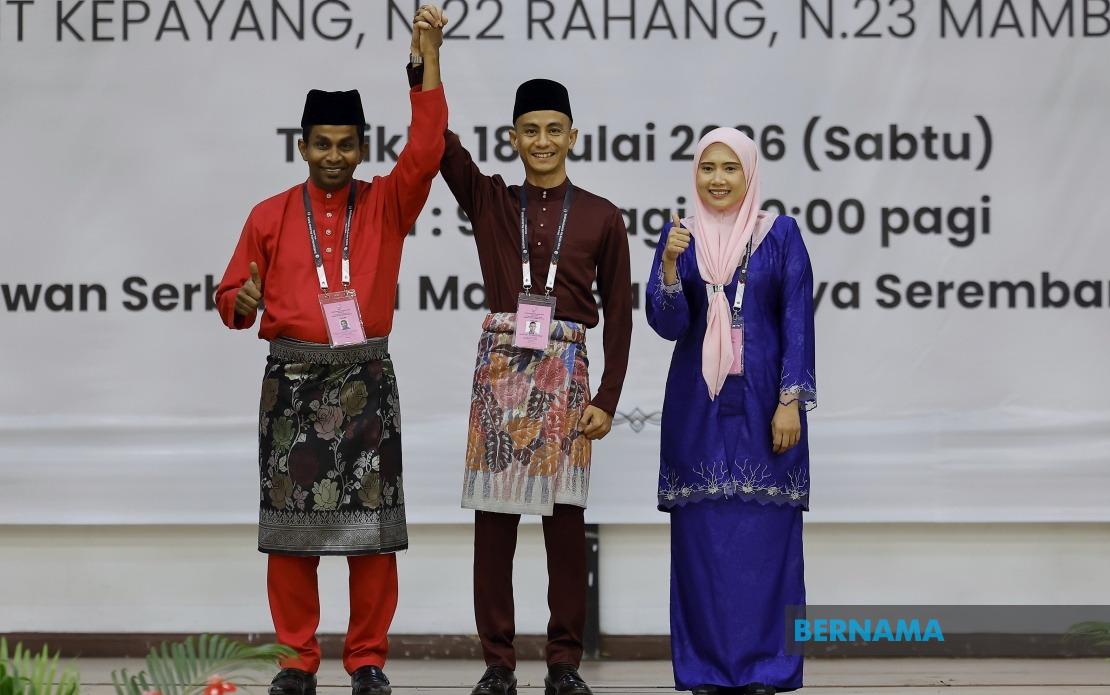
Datuk Ahmad Faez Abdul Razak, contesting his first state election as Pakatan Harapan's candidate from PKR in the Labu state seat, has committed himself to managing the delicate equilibrium between rapid industrialisation and preserving community interests. Speaking after nomination day for Negeri Sembilan's 16th state election, the property developer articulated his vision for a constituency experiencing unprecedented transformation, acknowledging both the opportunities and challenges that explosive growth presents to established residential areas.
The 32,884-strong electorate in Labu faces a three-cornered contest in this round, with Ahmad Faez challenging the incumbent Mohamad Hanifah Abu Baker of Bersatu and barisan Nasional candidate Siti Nur Umaira Hasim. Mohamad Hanifah secured the seat in 2023 with a relatively narrow 1,640-vote margin over PH-PKR's previous champion Datuk Ismail Ahmad, who garnered 10,021 votes, suggesting the constituency remains politically competitive. The narrowness of that victory indicates that while the Bersatu assemblyman holds the advantage of incumbency, the ground remains fertile for a resurgent opposition challenge.
Ahmad Faez's extended presence in the constituency—nearly three years of ground engagement—positions him as a candidate who has invested time in understanding local grievances and aspirations. His narrative emphasises familiarity with residents' concerns and a demonstrated track record of accessibility, elements increasingly valued by Malaysian voters who expect their representatives to maintain genuine community connections beyond campaign periods. This foundation of prior engagement may prove valuable in a seat where the previous election demonstrated marginal preferences.
The candidate's professional background as a property developer presents both an asset and a potential vulnerability. While Ahmad Faez argues that his sectoral expertise equips him to oversee development that respects community character, critics might question whether a property sector figure can authentically champion the interests of communities potentially displaced or disrupted by expansion. His framing—that balanced development requires expertise to navigate competing interests—represents a bid to reposition the narrative around his professional identity from potential conflict of interest to practical competence.
Central to Ahmad Faez's manifesto commitment is the establishment of dedicated youth facilities, particularly a community centre and recreational hub. This focus addresses a tangible gap in local amenities and resonates with broader Malaysian concerns about youth engagement and social cohesion. The specificity of this pledge—rather than vague promises—suggests campaign research has identified youth disengagement as a priority concern among Labu voters, reflecting demographic shifts in the constituency.
The Malaysia Vision Valley development corridor, encompassing 11,000 to 12,000 hectares of Labu land designated for industrial and residential projects, represents both the opportunity and the test case for Ahmad Faez's governance philosophy. This sprawling initiative promises employment creation and economic stimulus, particularly valuable in a state seeking to diversify beyond traditional sectors. However, large-scale industrial development in residential areas frequently generates friction around pollution, traffic congestion, noise, and environmental degradation—concerns that require proactive political management rather than passive acceptance.
Ahmad Faez's explicit acknowledgment that development presents "challenges" requiring careful balancing suggests awareness of these tensions. Rather than marketing growth as unambiguous progress, his positioning concedes that residents deserve protection from negative externalities. This rhetorical approach differs from earlier development-at-all-costs messaging, reflecting evolved voter expectations around sustainability and quality-of-life considerations. Whether his platform will translate into concrete protections—such as enforced environmental standards or compensation mechanisms—remains unclear, but the framing itself indicates responsiveness to constituent sentiment.
The timing of this contest intersects with broader Malaysian political realignment. Negeri Sembilan's return to opposition control under Pakatan Harapan in recent cycles reflects national dissatisfaction with Barisan Nasional governance, yet the fragmentation evident in Labu—with Bersatu holding the seat as an erstwhile coalition partner—demonstrates the volatility of contemporary Malaysian politics. Ahmad Faez's challenge to unseat an incumbent from a fractious governing coalition mirrors struggles playing out across multiple constituencies, where voters appear willing to punish inconsistency.
The electoral roll comprises 32,869 ordinary voters plus 15 police personnel and spouses, giving the constituency a stable and well-defined voting population. Early voting is scheduled for July 28, with polling day on August 1, providing a compressed campaign window that rewards candidates with existing ground organisations. Ahmad Faez's claim of extended grassroots engagement suggests PH's preparedness to mobilise supporters efficiently within this timeframe.
Ahmad Faez's mixed emotions about his electoral debut—happiness tempered by nervousness—project authenticity in an environment where voters increasingly scrutinise candidate sincerity. His express optimism regarding growing public support, paired with his assertion that state government initiatives have strengthened public confidence, positions him as riding a broader momentum shift favouring the incumbent coalition. Whether this assessment reflects genuine polling data or aspirational positioning will become evident through campaign momentum.
The Labu contest exemplifies challenges facing urban and peri-urban Malaysian constituencies navigating rapid transformation. Candidates must convince voters they can deliver development benefits—jobs, infrastructure, amenities—while protecting established communities from disruption. Ahmad Faez's platform centres on this balancing act, but implementation will determine whether his pledge to harmonise growth with community welfare proves substantive or merely rhetorical. For Negeri Sembilan voters, this state election offers an opportunity to assess whether political representation can effectively mediate between development imperatives and quality-of-life preservation.

