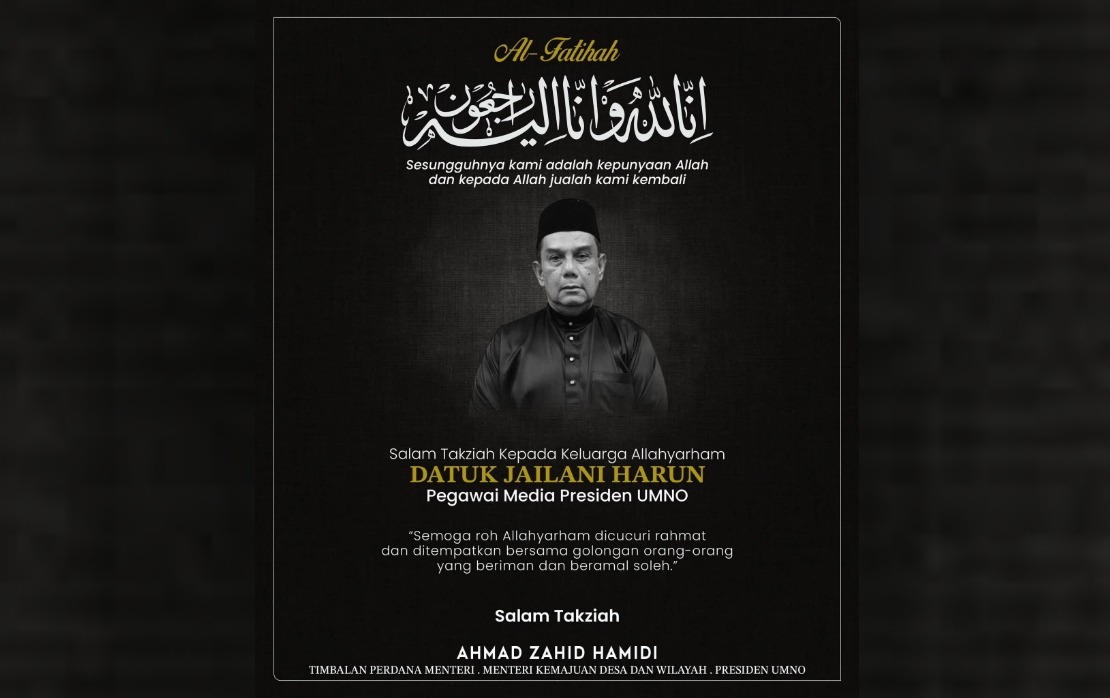
Deputy Prime Minister Datuk Seri Dr Ahmad Zahid Hamidi has extended his condolences to the bereaved family of Datuk Jailani Harun, a respected journalist and communications professional who served at the UMNO President's Office, following his death on July 7. The UMNO president announced the passing through a Facebook post, sharing reflections on his final moments with the departed and the emotional toll of witnessing his condition at Serdang Hospital.
Ahmad Zahid had made an early morning visit to Serdang Hospital where Jailani was receiving treatment. In his post, the Deputy Prime Minister characterised the late Jailani as an individual distinguished by kindness, humility and the deep respect he had garnered throughout his professional life. The encounter left a visible emotional impression on Ahmad Zahid, who remarked on the deterioration he witnessed and his own lingering hope that a miraculous recovery might still transpire against all odds.
Ultimately, Jailani Harun succumbed to his illness at 11.34 am at the hospital. He was 66 years old. His lengthy career spanning journalism and media coordination had positioned him as a familiar and valued figure within UMNO circles and Malaysia's broader political communication landscape. The loss represents the passing of someone who had navigated the intersection of media and politics during several decades of Malaysia's contemporary history.
In his condolence message, Ahmad Zahid employed language rich in religious sentiment, invoking Islamic blessings and prayers for the deceased. He sought divine forgiveness for any transgressions Jailani may have committed during his lifetime, prayed for God's mercy to encompass him, and expressed the hope that the Almighty would grant him a place among the faithful and the virtuous in the afterlife. Such expressions reflect the common practice among Malaysian political and religious leaders of honouring the deceased through Islamic supplication.
The Deputy Prime Minister's statement emphasised the emotional weight of the loss, acknowledging the grief that would inevitably envelope Jailani's immediate family members. He appealed for divine intervention to bestow upon them the emotional resilience and spiritual fortitude necessary to navigate the difficult period of bereavement that lay ahead. His words underscored the acknowledgment that losing a beloved family member represents a profound disruption to the fabric of household life and emotional wellbeing.
Arrangements for the funeral proceeded according to Islamic customs and practices. Jailani's burial was scheduled to take place at the Alam Damai Muslim cemetery in Cheras, with the committal ceremony planned for after the asar prayers. This timeline provided family members and friends with a narrow window to complete necessary preparations and gather for the funeral rites. The choice of burial location in the Cheras area reflected either his family's long-standing connections to the neighbourhood or their selection of an established Muslim burial ground in the Kuala Lumpur metropolitan region.
Jailani Harun's career positioned him at the nexus of Malaysian politics and media, roles that have grown increasingly demanding and complex in the digital age. As a former journalist, he brought professional understanding of news gathering and reporting conventions to his subsequent work as a media officer. This combination of backgrounds made him a bridge figure between the political establishment and the media fraternity, a position requiring diplomatic acumen and nuanced communication skills.
The passing of individuals who have spent decades in political communications often prompts reflection within Malaysian political circles about institutional memory and the continuity of relationships that bind the media, government, and party structures together. Jailani's long tenure in such positions meant he had accumulated extensive experience navigating the delicate balance between transparency and discretion that characterises effective political communications in a parliamentary democracy.
Ahmad Zahid's personal visit to the hospital before Jailani's passing demonstrates the degree of regard in which he was held within the UMNO leadership. Such gestures carry symbolic significance in Malaysian political culture, signalling respect and personal connection. The Deputy Prime Minister's willingness to visit and subsequently to memorialize Jailani through a public statement underscores the individual's standing within the party hierarchy and his impact on those with whom he worked.
The death of longstanding political communications professionals like Jailani Harun often goes unremarked upon in broader public discourse, despite their substantial influence on how political messages are crafted and disseminated to Malaysian audiences. These individuals work behind the scenes, shaping narratives and managing the flow of information between political principals and the public. Their passing represents not merely personal loss but also the disappearance of institutional knowledge and relationships that cannot be easily replicated or transferred.
For Malaysian readers, such obituary notices serve as quiet reminders of the complex machinery that sustains political communications and the individuals whose careers, though less visible than those of elected politicians, fundamentally shape public understanding of political events and decisions. Jailani Harun's life reflected a particular moment in Malaysian journalism and political history when the boundaries between media professionals and political operatives were more fluid than they have subsequently become.

