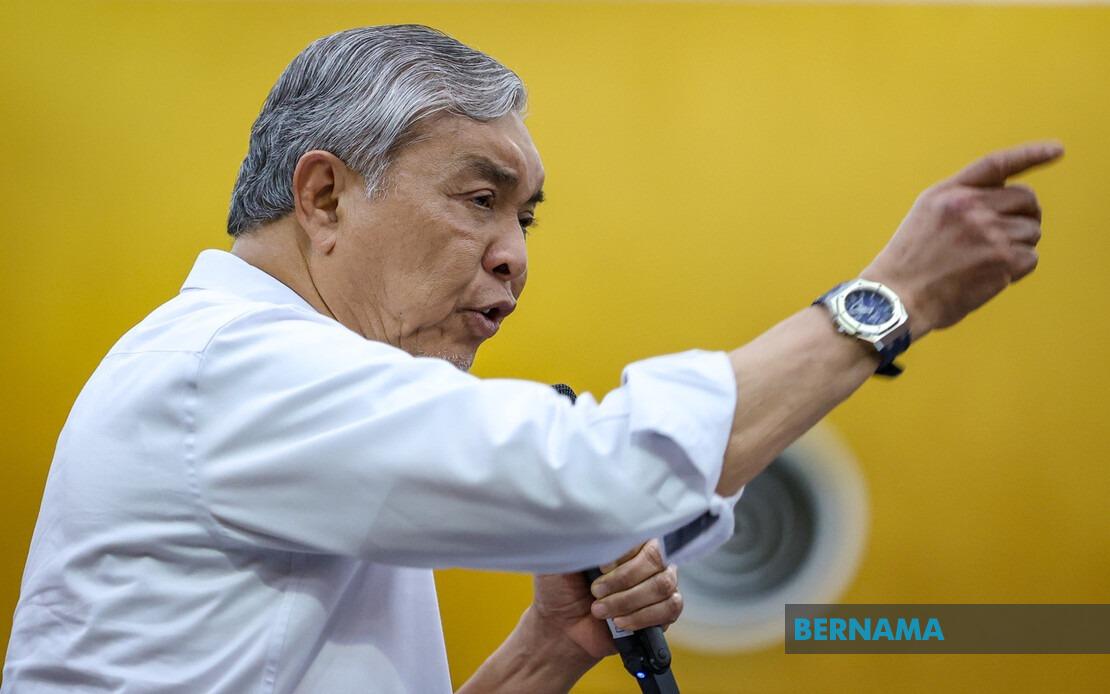
Deputy Prime Minister Datuk Seri Dr Ahmad Zahid Hamidi has unveiled a significant educational initiative aimed at strengthening Malaysia's emerging student leadership cadre. Speaking in Johor Bahru on July 9, he proposed that Student Representative Councils (MPP) across the nation's higher education institutions be given access to specialized training programmes combining leadership development with political education. The proposal reflects growing recognition among policymakers that young campus leaders require comprehensive understanding of democratic processes and the broader political context shaping national governance.
The deputy prime minister's suggestion carries particular weight given his dual role as head of government and chairman of Barisan Nasional, positioning the proposal as both an administrative and political priority. Ahmad Zahid articulated a vision where student council members emerge from their roles with sophisticated grasp of how electoral systems function, how political parties operate, and how civic participation influences national direction. Such grounding, he argued, would equip this generation to navigate increasingly complex governance challenges and contribute more effectively to democratic discourse regardless of their future career paths.
Crucially, Ahmad Zahid indicated the federal government's willingness to shoulder financial responsibility for these courses, contingent on applications from interested MPPs nationwide and formal approval from Higher Education Minister Datuk Seri Dr Zambry Abd Kadir. This funding commitment removes a potential barrier to implementation and signals serious intent behind the proposal. The offer suggests these would not be optional enrichment activities but funded components integrated into student leadership development, potentially reaching hundreds of institutions and thousands of young leaders annually across Malaysia's university system.
The deputy prime minister drew upon personal experience to frame his argument about youth political engagement. Recounting his own activism as a student leader at Universiti Malaya, Ahmad Zahid emphasized that political involvement need not begin in youth but awareness certainly should. He articulated a nuanced position distinguishing between active participation in political parties and informed citizenship, suggesting that while eighteen-year-old voters and first-time voters need not commit to partisan engagement, they bear responsibility for understanding the political landscape affecting their futures.
This distinction proves significant for Malaysian context. Youth voter turnout and political understanding have long concerned democratic practitioners and observers. By positioning political literacy as prerequisite rather than invitation to activism, Ahmad Zahid reframes the conversation away from recruitment toward civic education. The approach acknowledges that not all young people will pursue political careers or party membership while maintaining that democratic health requires broadly distributed understanding of how political systems function and how electoral choices carry consequences.
The proposal arrives at a particularly resonant moment. Ahmad Zahid delivered his remarks as Johor state prepared for a closely watched electoral contest on the following Saturday, with fifty-six state seats in contention. The timing underscores how immediate political contests intersect with longer-term institutional development. While the Johor election represented a discrete electoral moment, the educational framework Ahmad Zahid advocated would address systemic questions about generational political socialization spanning years beyond any single campaign.
Student councils occupy distinctive institutional positions within Malaysian higher education. As forums where undergraduates govern their own affairs and interact with university administration, these bodies provide authentic practical experience in organizational leadership, democratic decision-making, and advocacy. Enhancing their members' understanding of broader political contexts would deepen both the quality of campus governance itself and the preparation these future professionals receive before entering workforce and society. Campus leaders frequently become community figures, professionals, and sometimes political figures themselves, making their formative leadership experiences consequential.
The proposed curriculum emphasis on democracy and national political landscape addresses observable gaps in Malaysian civic education. While schools provide constitutional knowledge, fewer structured opportunities exist for university students to develop sophisticated understanding of how political parties function, how government institutions interact, or how contemporary policy debates developed. Student council members, typically more engaged than peers, would constitute ideal participants for such expanded education, potentially becoming multipliers who share learning within their own constituencies.
Ahmad Zahid's emphasis on informed voting deserves particular attention within Malaysia's electoral context. He stressed that eighteen-year-olds and first-time voters must recognize voting as consequential civic action rather than mere procedural exercise, with individual ballots aggregating into determining party fortunes and policy directions. This messaging carries implicit critique of voter apathy or disengagement while avoiding heavy-handed exhortation toward particular partisan choices. The framework allows government to invest in voter sophistication without accusation of promoting partisan interests.
Implementing such courses raises practical questions about curriculum development, instructor qualification, and institutional coordination. The proposal would require collaboration between government, Higher Education Ministry, universities, and student organizations to design content that serves educational rather than propaganda purposes. Successfully executed, such training could enhance democratic culture; poorly designed, it risks accusations of ideological instruction. The framework Ahmad Zahid outlined requires careful implementation architecture to maintain credibility.
From regional perspective, Malaysia's approach to student political education has implications beyond national borders. Southeast Asian democracies grapple collectively with youth disengagement from politics, polarized discourse, and varying media literacy regarding political information. If Malaysia successfully implements structured political education for campus leaders, the model could offer lessons for neighboring nations addressing similar concerns about intergenerational democratic participation and informed citizenship.
The proposal ultimately reflects understanding that democratic systems require continuous generational renewal and that institutional health depends on young people developing sufficient political sophistication to navigate governance complexities. By focusing on student leaders particularly, the initiative targets individuals positioned to influence peers and communities. Success would mean a cohort of university graduates entering professional life with deeper comprehension of political processes, more deliberate civic engagement, and greater capacity to contribute constructively to national conversation during a critical period of Malaysian governance evolution.

