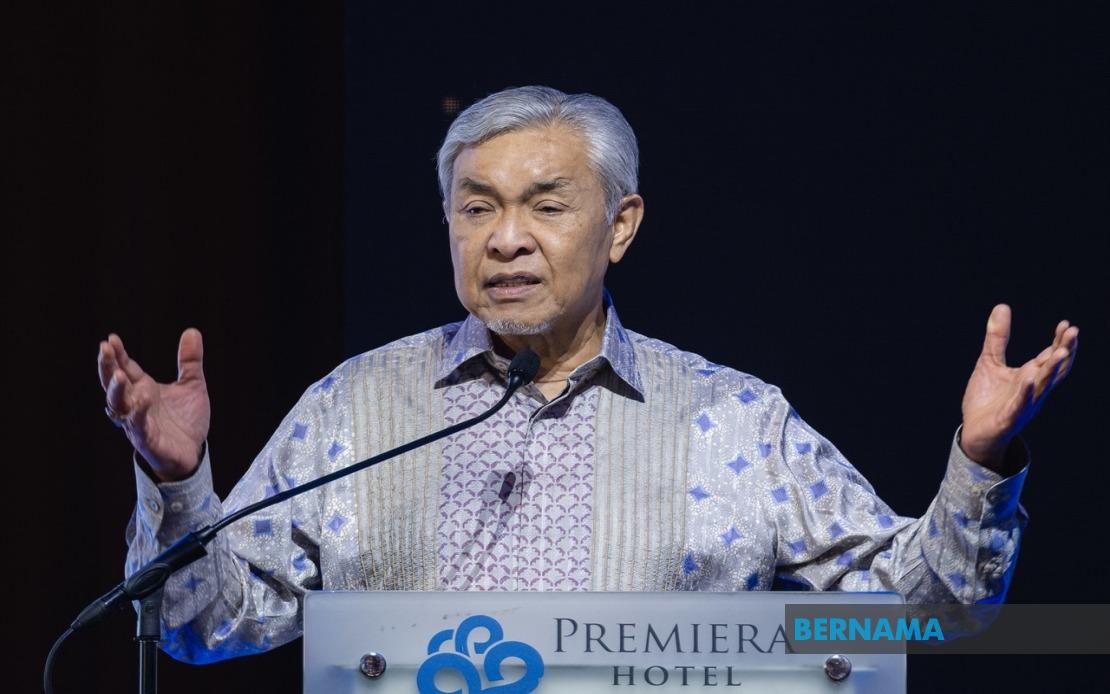
Deputy Prime Minister Datuk Seri Dr Ahmad Zahid Hamidi has signalled that Budget 2027 may accommodate proposals for constructing additional rural roads across Sabah and Sarawak, particularly in areas that remain disconnected from major towns. Speaking after attending an awards ceremony at the Ministry of Rural and Regional Development (KKDW) in Kuala Lumpur on June 29, Ahmad Zahid indicated that the government recognises the infrastructure gap in East Malaysia and is prepared to evaluate such requests through the budget cycle ahead.
As the Minister overseeing rural and regional development matters, Ahmad Zahid emphasised that road infrastructure expansion remains a core responsibility of his portfolio. The ministry has maintained that its mandate encompasses the construction and upgrading of rural thoroughfares specifically designed to bridge isolated communities with established townships and residential hubs. This foundational principle underscores the government's continued commitment to reducing geographical barriers that have historically constrained economic participation and social mobility in peripheral regions.
The deputy prime minister's remarks come amid ongoing discussions within federal corridors about infrastructure priorities for East Malaysia. Sabah and Sarawak have long pressed for enhanced connectivity, viewing improved road networks as essential prerequisites for agricultural development, resource extraction, and tourism expansion. The two states, which collectively represent roughly a quarter of Malaysia's land area yet account for a smaller proportion of development spending, stand to benefit considerably from renewed attention to their transport infrastructure needs. Ahmad Zahid's statement suggests that the government may be responding to these longstanding appeals.
However, Ahmad Zahid added a crucial caveat: final approval and implementation of any new road projects remain contingent upon compliance with established procedures and standards set by the Ministry of Finance and the Public Works Department (JKR). This procedural checkpoint reflects standard government practice, ensuring that all proposed expenditures undergo rigorous financial scrutiny and technical evaluation before advancement. The requirement that projects clear these institutional gates indicates that while the government is open to Sabah and Sarawak's infrastructure requests, their realisation will depend on meeting stringent administrative requirements rather than political commitment alone.
The ministry will elaborate on proposal specifics once consultations with relevant stakeholders have concluded, Ahmad Zahid indicated. This consultation phase represents an important procedural stage during which technical departments, state authorities, and local representatives can provide input on project scope, feasibility, and alignment with broader development objectives. The iterative nature of this process underscores how major infrastructure decisions in Malaysia typically involve multiple layers of institutional review and negotiation across government agencies and regional governments.
Beyond the immediate question of rural road funding, Ahmad Zahid articulated a broader philosophical reorientation for the rural development ministry. He called for the adoption of what he termed a "new discipline" within KKDW, one that fundamentally reassesses programme effectiveness and resource allocation. Specifically, he advocated discontinuing initiatives that fail to generate tangible community benefits whilst simultaneously scaling up proven successes and expediting slower-moving programmes that nevertheless show promise. This performance-based approach represents a departure from traditional bureaucratic practice, where programmes often persist regardless of efficacy once they have been established.
This strategic pivot reflects growing government acknowledgment that rural development extends far beyond constructing physical infrastructure. Ahmad Zahid stressed that the ministry must work towards establishing comprehensive ecosystems capable of generating sustainable income streams and employment opportunities for rural populations. This conceptual broadening recognises that roads, whilst necessary, are insufficient in themselves; their value multiplies when combined with supporting economic activities, market access, and skills development. For East Malaysia particularly, this integrated approach becomes crucial, as improved connectivity will drive limited benefit unless accompanied by initiatives supporting agricultural commercialisation, small business development, and skills training.
The deputy prime minister also addressed the need for wholesale transformation within government service delivery mechanisms. He argued that public sector reform encompasses far more than digitising existing processes or transitioning from paper-based to electronic systems. Instead, authentic modernisation requires fundamental shifts in institutional mindset, organisational willingness to take decisive action, and receptiveness to operational change. This observation carries particular relevance for rural development agencies, which often grapple with resource constraints, geographic dispersal challenges, and the complexity of coordinating across multiple stakeholder groups.
Ahmad Zahid urged KKDW personnel to embrace continuous professional development, foster innovation within their respective roles, and maintain rigorous standards of integrity and transparency. These exhortations reflect an understanding that institutional excellence ultimately depends upon individual agency and commitment amongst civil servants. By emphasising personal responsibility and professional growth, he articulated a management philosophy that empowers frontline workers whilst holding them accountable for outcomes. For rural development, where field officers often work in challenging conditions with limited supervision, this culture of self-directed improvement and ethical conduct becomes particularly important.
The implications of Ahmad Zahid's position reverberate across Sabah and Sarawak, where rural constituencies have persistently advocated for greater infrastructure investment. The commitment to consider new road projects within Budget 2027's parameters suggests that the government views East Malaysian development as a priority, even as it navigates competing budgetary demands across peninsular Malaysia. For residents of remote communities lacking reliable road access, such undertakings represent potential catalysts for economic transformation and improved service delivery. However, the emphasis on procedural compliance and institutional approval processes counsels against assuming rapid implementation, as technical and financial assessments may extend timelines considerably.
The announcement also reflects broader regional dynamics within Malaysia's federation. Both Sabah and Sarawak have utilised infrastructure deficits as leverage points in federal-state negotiations, and Ahmad Zahid's acknowledgment of these needs may represent an attempt to address longstanding grievances whilst reinforcing Kuala Lumpur's commitment to inclusive national development. For ordinary Malaysians in peripheral rural areas, the government's stated openness to funding requests signals that persistence in advocacy can yield policy responsiveness, even if implementation ultimately depends on multiple institutional checkpoints and budgetary constraints.

