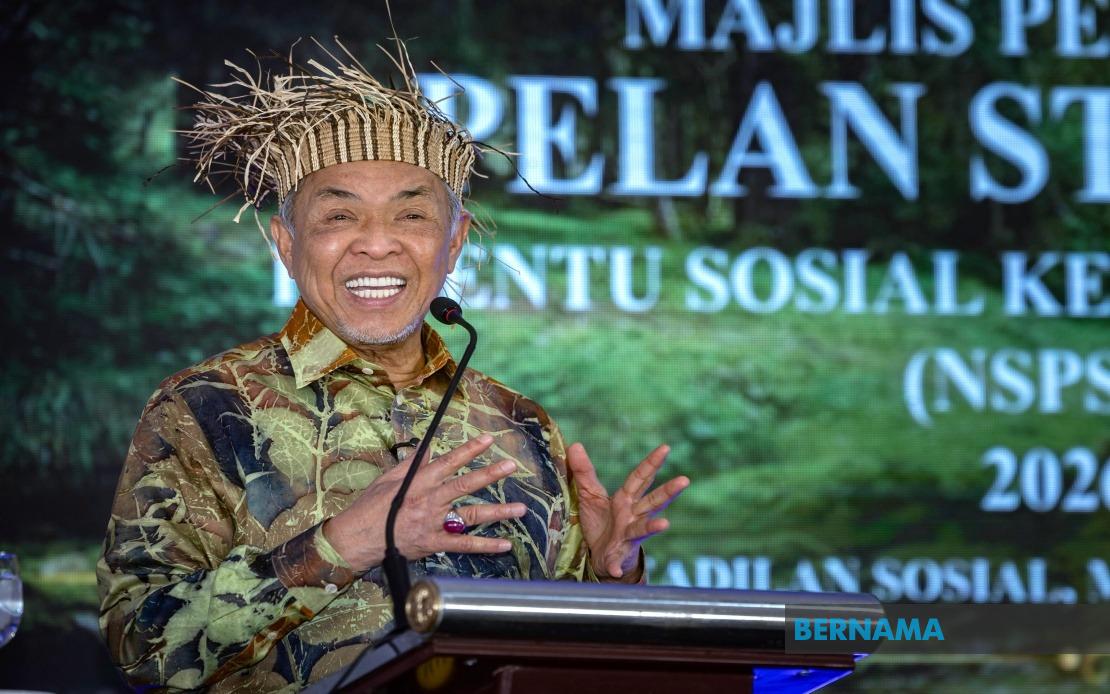
Deputy Prime Minister Datuk Seri Dr Ahmad Zahid Hamidi has appealed to Malaysians to offer prayers for the speedy recovery of Prime Minister Datuk Seri Anwar Ibrahim, who is convalescing following a minor surgical intervention. Speaking in Gerik after launching a health initiative, Ahmad Zahid conveyed the nation's collective wishes for the Prime Minister's return to full duty, emphasising the importance of public solidarity during this period.
According to Ahmad Zahid, Anwar had notified him of the impending medical procedure during a conversation on Tuesday, August 4. The Deputy Prime Minister expressed confidence that the Prime Minister would require only a brief recovery window before resuming his full range of executive responsibilities. He framed the situation as a routine medical matter requiring standard post-operative care, suggesting there was no cause for broader national concern.
The Prime Minister's Medical Team, led by Datuk Dr Asri Ranga Abdullah Ramaiah, confirmed that Anwar underwent an elective laparoscopic surgical procedure to address a para-umbilical hernia. This minimally invasive technique represents standard practice in contemporary abdominal surgery, allowing for smaller incisions and faster healing compared to open surgical approaches. The procedure was conducted successfully under the management of a specialised medical team, with the operation proceeding without complication.
During his period of absence, Ahmad Zahid has assumed responsibility for chairing Cabinet meetings, ensuring governmental continuity. This delegation of authority represents standard constitutional practice in Malaysian governance, whereby designated deputies assume executive functions during the Prime Minister's temporary incapacity. The arrangement underscores the depth of Malaysia's institutional structures and succession planning at the highest levels of government.
Anwar is currently undergoing physiotherapy as part of his post-operative rehabilitation protocol. The medical team continues to provide close monitoring to ensure his recovery progresses optimally. Such therapeutic interventions are routine following laparoscopic procedures, aimed at restoring strength and mobility whilst minimising the risk of complications. The emphasis on supervised medical care reflects international best practices in post-surgical patient management.
Ahmad Zahid's public appeal for prayer represents a culturally resonant approach to addressing health matters affecting national leadership. In the Malaysian context, where diverse religious and spiritual traditions coexist, such calls for collective prayer serve both a spiritual and symbolic function—affirming national unity and shared concern for the wellbeing of elected leaders. The gesture acknowledges the intersection of personal health with public interest in a system where executive continuity depends on the fitness of the head of government.
The timing of the surgical intervention, during what appears to be a planned medical engagement rather than an emergency, suggests Anwar and his medical advisers determined the procedure could be safely scheduled within Malaysia's governmental calendar. The advance notice to Ahmad Zahid indicates coordination between the Prime Minister's office and key ministerial figures to ensure seamless operational continuity. Such planning demonstrates mature institutional management of health contingencies affecting top-tier leadership.
From a regional perspective, the incident illustrates how modern Southeast Asian democracies manage the intersection of leadership health and public governance. Malaysia's approach of transparent communication regarding the Prime Minister's condition, coupled with clear delegation of authority, contrasts with opacity in some regional counterparts. The public disclosure through official medical channels and ministerial statements builds public confidence in institutional stability during leadership transitions, however temporary.
The para-umbilical hernia, whilst minor in medical terms, required intervention to prevent potential complications. Such conditions, whilst not immediately life-threatening, can deteriorate if left untreated, potentially causing more serious health episodes. Anwar's decision to undergo elective repair during his tenure reflects prudent health management and a proactive approach to maintaining physical fitness for the demands of high office. This measured approach to preventive healthcare demonstrates awareness of the rigorous physical and mental demands placed on Malaysian Prime Ministers.
The deployment of physiotherapy indicates a comprehensive recovery strategy extending beyond mere surgical success. Post-operative physical rehabilitation accelerates functional restoration and reduces recovery time, potentially allowing the Prime Minister to resume duties within the anticipated timeframe. The structured approach to recovery reflects modern medical understanding of how active rehabilitation can minimise downtime whilst ensuring safe return to full operational capacity.
For Malaysian observers, this situation reinforces the importance of institutional depth within the executive branch. Ahmad Zahid's assumption of Cabinet chair duties demonstrates that governmental functions continue uninterrupted regardless of temporary absences by the Prime Minister. Such institutional robustness provides reassurance to investors, international partners, and citizens that Malaysia's governance structures can weather brief leadership transitions without disruption to policy implementation or administrative function.
The incident also highlights evolving transparency standards in Malaysian governance regarding leadership health matters. Rather than allowing speculation or rumour to circulate, official confirmation through medical and ministerial channels establishes factual clarity. This approach, increasingly common in mature democracies, contrasts with historical periods when health issues affecting leaders were shrouded in secrecy, often generating unfounded public anxiety and conspiracy theories.

