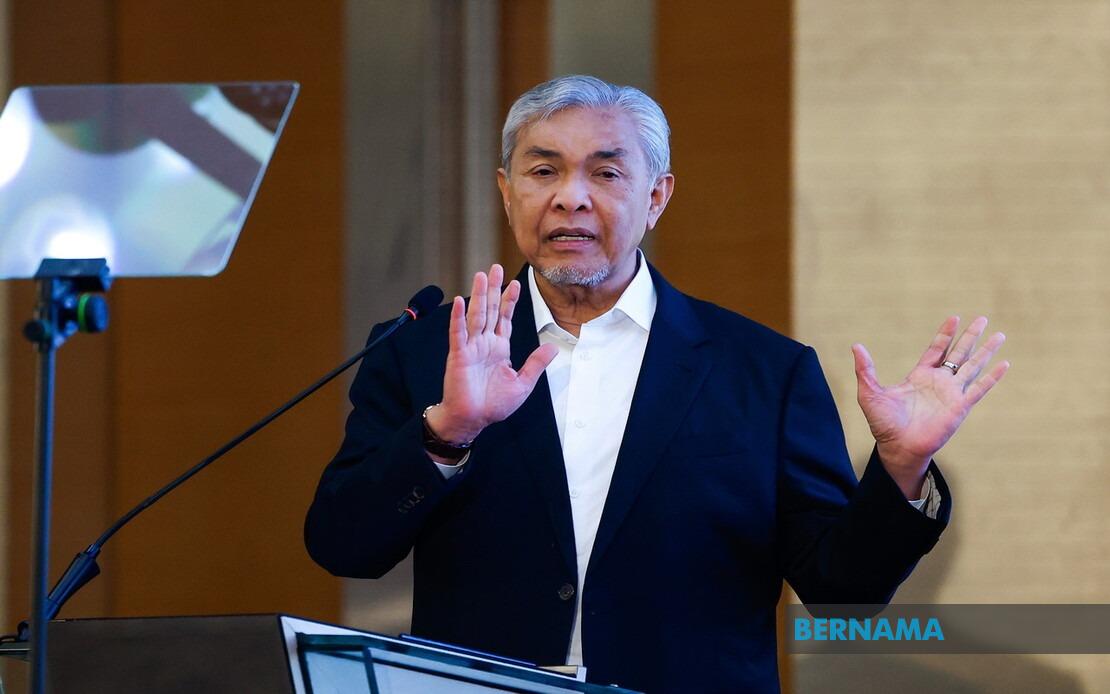
Deputy Prime Minister Datuk Seri Dr Ahmad Zahid Hamidi has reinforced calls for political decorum during Negeri Sembilan's upcoming state election, emphasising the need to respect the institution of the monarchy and steer clear of contentious issues commonly labelled as the 3R matters—race, religion, and royalty. His remarks, made in Seremban on July 27, underscore a palace directive that has set the tone for what the ruling establishment expects from all competing coalitions as they pursue votes across the state.
The Negeri Sembilan Palace had previously issued guidance asking contesting political parties to avoid dragging the royal institution into their campaign messaging and public speeches. This move reflects a broader concern within Malaysia's constitutional framework about maintaining the sanctity of the monarchy's position in the nation's political system. Ahmad Zahid's public endorsement of the palace's position signals that the federal government views adherence to these boundaries as non-negotiable, regardless of political affiliation or electoral ambitions.
Barisan Nasional, the coalition for which Ahmad Zahid serves as chairman, has sought to position itself as a defender of institutional integrity. By declaring that BN has never weaponised 3R matters in campaign material, the deputy prime minister appears to be drawing a line between his coalition's approach and that of potential rivals. This distinction carries weight in Malaysian electoral politics, where voter perception of a party's respect for constitutional institutions often influences campaign narrative and voter sentiment.
The defence of the Malay Rulers and their constitutional position forms a central pillar of Malaysian political tradition, particularly within Peninsular Malaysia. Ahmad Zahid's specific mention of safeguarding the institution of the Undang Yang Empat—Negeri Sembilan's paramount ruler—demonstrates an understanding that state-specific royal institutions command deep loyalty among residents. By framing respect for these institutions as a matter of principle rather than mere campaign etiquette, he elevates the issue beyond electoral mechanics to constitutional principle.
Palace directives on campaign conduct have become increasingly common in recent election cycles across Malaysia, reflecting heightened sensitivity about the monarchy's position in national discourse. Such guidance typically emerges from a desire to maintain constitutional stability and prevent political competition from deteriorating into attacks on fundamental institutions. The explicit nature of the Negeri Sembilan Palace's statement suggests that organisers anticipated potential pressure on these boundaries and chose to establish clear expectations from the outset.
Ahmad Zahid's framing of the palace's reminder as a beneficial clarification rather than a constraint suggests confidence that BN's campaign approach already aligns with institutional respect. However, the public nature of his comments also signals to opposition parties that federal authorities are monitoring campaign compliance with these guidelines. The tone of his statement—measured but firm—indicates that breaches of this understanding would be viewed as violations of an agreement made under the auspices of the monarchy itself.
In parallel remarks, Ahmad Zahid also addressed speculation about tensions between Barisan Nasional and Perikatan Nasional, asserting that no meaningful dispute exists between the two coalitions. He characterised their relationship as rooted in mutual understanding rather than conflict, which may carry implications for how Negeri Sembilan's campaign unfolds if both coalitions field candidates across multiple seats. The emphasis on a stable relationship between BN and PN could reflect an informal understanding about campaign intensity or potential post-election cooperation arrangements.
The gathering where Ahmad Zahid made these remarks—the Negeri Sembilan Entrepreneurs Gathering Programme—provided a platform for reaching business-minded voters who often concern themselves with political stability and institutional predictability. His appearance alongside Deputy Rural and Regional Development Minister Datuk Rubiah Wang and MARA chairman Datuk Dr Asyraf Wajdi Dusuki presented a united federal government front, suggesting that palace guidelines and campaign conduct form part of broader coordination among government entities during election periods.
For Malaysian voters and observers, particularly those in Negeri Sembilan, the emphasis on respecting constitutional boundaries during campaigns reflects an enduring characteristic of the nation's political system: the monarchy's protected position transcends electoral competition. While parties may disagree fiercely on economic policy, developmental priorities, or governance approaches, the framework within which such disagreements occur remains bounded by respect for royal institutions. This arrangement has proven resilient across multiple election cycles, despite occasional tensions.
The repetition of these guidelines through official statements suggests they may not be universally accepted across all political actors. Opposition parties and newer entrants into the electoral arena might test these boundaries, either deliberately or through miscalculation, making Ahmad Zahid's public reinforcement of expectations functionally important. By speaking as both the deputy prime minister and BN chairman, he carries dual authority in these pronouncements—one rooted in constitutional position, the other in electoral leadership.
Looking forward, the Negeri Sembilan state election campaign will unfold within these established parameters, with all parties formally bound by the palace's guidance and Ahmad Zahid's reinforcement of it. Compliance monitoring and public commentary on campaign conduct will likely focus partly on whether the 3R red lines remain respected. Any perceived violations could become campaign issues themselves, generating negative coverage for offending parties among voters who value institutional deference and constitutional propriety.
The interplay between palace guidance, federal government reinforcement, and coalition campaign strategy in Negeri Sembilan exemplifies how Malaysia's hybrid political system balances competitive democracy with constitutional protection of the monarchy. Ahmad Zahid's statements serve simultaneously as campaign positioning for BN and as official clarification of institutional boundaries—a dual function that reflects the complexity of Malaysian electoral politics where constitutional stability remains as much a campaign concern as economic performance or social policy.

