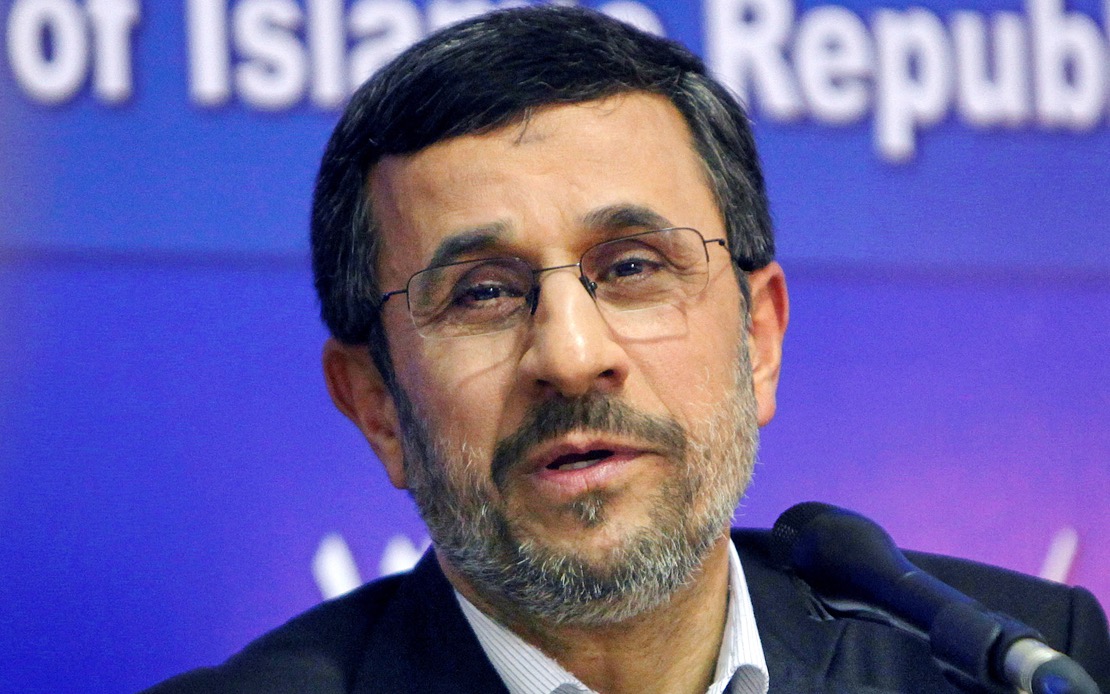
Former Iranian President Mahmoud Ahmadinejad has launched a sharp denial of allegations published by The New York Times claiming that Israel's Mossad intelligence service attempted to recruit him as part of a broader scheme to topple Iran's government, and has rejected assertions that he remains under house arrest. Speaking through his office on Tuesday in Istanbul, Ahmadinejad characterised the reporting as fabricated disinformation designed to manipulate public opinion and sow discord within Iranian political circles.
The controversy centres on a New York Times investigation published Monday, which alleged that Israeli intelligence operatives made contact with the former president on multiple occasions in recent years, including during trips abroad to Budapest, and that Mossad allegedly compensated him for housing and travel expenses. The newspaper's account suggested this initiative formed part of a wider Israeli strategy aimed at orchestrating regime change in Tehran following initial military strikes against senior Iranian officials, with the ultimate goal of positioning Ahmadinejad as a potential alternative leadership figure.
Ahmadinejad's office issued a formal statement rejecting these claims wholesale, insisting that the New York Times had fabricated its account to support what officials described as "absurd" allegations. The statement specifically challenged the assertion that the former president is confined to his residence, characterising this claim as foundational to the newspaper's broader narrative and therefore equally unsubstantiated. Officials emphasised that all allegations promoting conspiracy theories about Mossad recruitment efforts should be dismissed entirely.
The New York Times reported that the alleged recruitment efforts reached a critical juncture in late February, during the initial phases of heightened US-Israeli military action against Iran. According to the newspaper's sources, which included American officials briefed on the operation, Israeli intelligence allegedly attempted to extract Ahmadinejad from Tehran on February 28 as part of a coordinated plan that would install him as Iran's new leader following the government's collapse. The report detailed that an Israeli airstrike struck his residential compound on that date, causing damage to structures housing his security personnel and destroying an armoured vehicle.
The narrative presented by the Times becomes particularly elaborate at this juncture. The newspaper cited testimony from four senior Iranian officials who claimed that a black Peugeot automobile arrived at the strike site shortly after the bombardment and transported Ahmadinejad to an undisclosed secure location within Iranian territory. The vehicle, according to American and Iranian sources quoted by the publication, was allegedly operated by Mossad operatives conducting the extraction.
This alleged incident represents a dramatic escalation in the alleged covert relationship between Israeli intelligence and the former Iranian leader. Should the New York Times account be accurate, it would suggest that the recruitment effort evolved from preliminary contact and financial incentives into an active military extraction operation, indicating either extreme confidence in Ahmadinejad's willingness to cooperate or desperation to remove him from Iranian soil before he could face harm.
Ahmadinejad's recent public reappearance has itself become newsworthy within Iranian political discourse. Last week, the former president, who held office from 2005 to 2013, attended the funeral ceremony of Iran's Supreme Leader Ali Khamenei, marking his first visible public engagement since the commencement of the US-Israeli conflict. This appearance itself carries significant political weight in Iran, where visibility and attendance at state functions often carry symbolic importance regarding an individual's standing within the system.
The timing of the New York Times report and Ahmadinejad's subsequent denial intersects with broader geopolitical tensions in the Middle East. Iran has faced military pressure from Israeli and American forces, and allegations of covert recruitment efforts targeting Iranian political figures would represent a sophisticated dimension of what Iran characterises as foreign intervention in its internal affairs. For Malaysian readers and Southeast Asian observers, such claims underscore how regional powers employ intelligence services as instruments of foreign policy, particularly when seeking to influence political transitions in strategically significant nations.
Ahmadinejad's categorical rejection of these allegations should be understood within the context of Iranian domestic politics and international relations. His office's decision to frame the New York Times as a purveyor of deliberately false information designed to create internal division reflects broader accusations levelled by Tehran against Western media outlets, which Iranian officials frequently characterise as extensions of foreign intelligence interests. This rhetorical positioning appeals to nationalist sentiment within Iran and dismisses critical scrutiny as external propaganda.
The broader implications for regional stability remain significant. Should Israel indeed have conducted recruitment efforts targeting senior Iranian figures, this would indicate a high-risk strategy predicated on the assumption that Iran's political system could be destabilised through covert intelligence operations combined with military pressure. The alleged February extraction attempt, if it occurred, would represent one of the most dramatic phases of such an operation. Conversely, should Ahmadinejad's denials prove accurate, the New York Times report would constitute either misinformation or a misinterpretation of intelligence briefings.
For observers in Malaysia and the Southeast Asian region, these developments illustrate the complex intelligence operations that regional powers conduct beyond their borders, the ways in which media reporting shapes geopolitical narratives, and the challenges of verifying claims about covert activities where both governments have strong incentives to either confirm or deny allegations selectively. The controversy also underscores how strategic competition between major powers manifests through attempts to influence the political trajectories of nations occupying critical geographic and geopolitical positions.
The dispute between Ahmadinejad's office and the New York Times remains fundamentally unresolved at present, with no independent verification emerging regarding either the Mossad recruitment efforts or the alleged February extraction. As the situation continues to develop, both Iran and Israel maintain their historical patterns of neither confirming nor denying specific intelligence operations, leaving observers dependent on journalistic investigations and official statements whose accuracy cannot be independently confirmed without access to classified intelligence materials.

