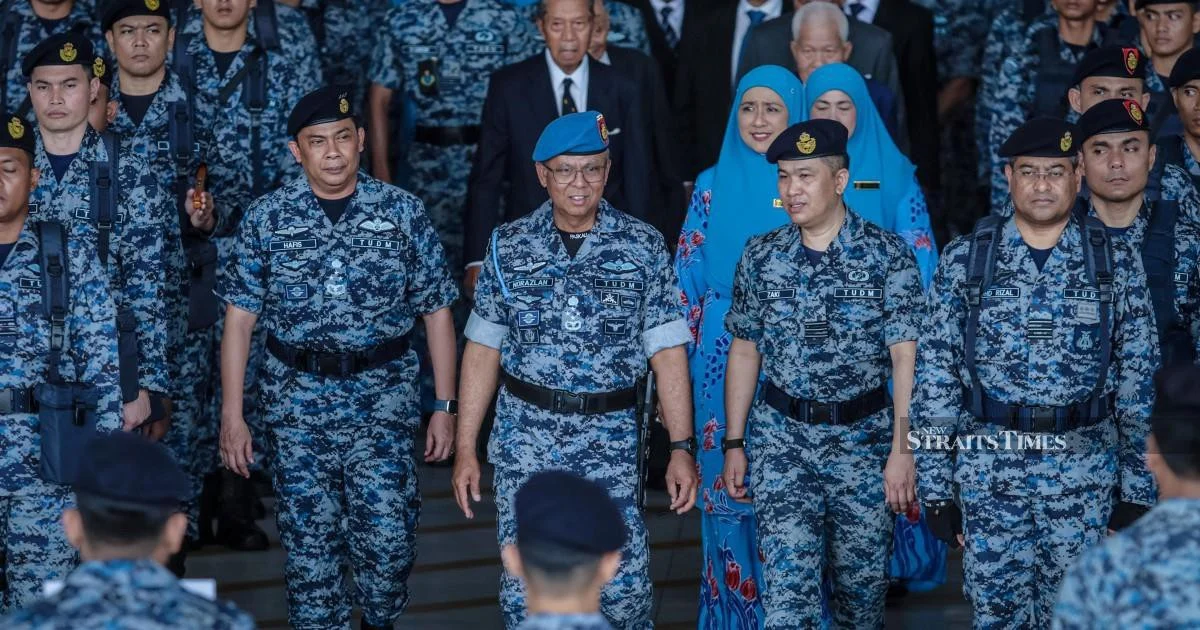
The Royal Malaysian Air Force's chief of staff has underscored the escalating importance of aerial defence in safeguarding the country's maritime corridors, signalling a strategic shift in how the armed forces approach regional security challenges. General Tan Sri Muhamad Norazlan Aris made the remarks at an official engagement in Subang, reflecting a broader reassessment within military circles about the vulnerabilities of Malaysia's extensive sea lines. His comments arrive at a moment when regional maritime disputes, changing power dynamics, and increased naval activity have prompted defence establishments across Southeast Asia to reassess their capabilities and deployment strategies.
Malaysia's geographic position as a major maritime trading nation makes the protection of its sea lanes a matter of paramount national interest. The country sits astride crucial shipping lanes through the Strait of Malacca and surrounding waters, channels through which trillions of dollars in global trade flows annually. Any disruption to these routes carries profound economic consequences not only for Malaysia but for the broader region and the international community. The vulnerability of these passages to various threats—from piracy and smuggling to potential military confrontation—has long occupied the attention of Malaysian policymakers, but the RMAF chief's emphasis suggests an intensification of this concern.
Airpower provides distinct advantages in maritime surveillance and rapid response that surface vessels alone cannot match. Aircraft can cover vast areas swiftly, conduct real-time reconnaissance, and intercept potential threats with speed that ground-based or sea-based assets struggle to replicate. For a nation with Malaysia's geographic span and limited naval resources relative to its territorial waters, leveraging air capabilities represents a rational force-multiplication strategy. The RMAF's role in maritime patrol and reconnaissance has been steadily upgraded over recent years, though budgetary constraints have sometimes limited the pace of modernisation.
The regional geopolitical landscape that prompted these remarks reflects genuine shifts in the balance of power across Southeast Asia. The increasing assertiveness of major powers, ongoing territorial disputes in the South China Sea, and the emergence of new security challenges have created an environment where maritime security concerns occupy centre stage. Malaysia, despite maintaining careful diplomatic balance between major powers, cannot insulate itself from these broader currents. The frequency of incidents involving foreign military vessels operating in or near Malaysian waters, while varying, demonstrates the contested nature of Southeast Asian seas.
Investment in air capabilities carries strategic implications beyond mere hardware acquisition. It signals to regional and international audiences that Malaysia takes its maritime defence seriously and possesses credible deterrent capacity. This perception matters significantly in waters where prestige and the demonstration of control remain important elements of geopolitical competition. A nation perceived as unable or unwilling to defend its maritime interests invites greater encroachment and challenges to its sovereignty. Conversely, demonstrated capability—whether through visible patrols, modern aircraft, or trained personnel—can discourage adventurism and establish respect for maritime boundaries.
The RMAF's modernisation programmes have attempted to address capability gaps, though funding remains a persistent challenge. Acquisition of new patrol aircraft, upgrade of existing fleets, and expansion of surveillance systems represent significant capital expenditures in an era of competing budgetary demands. Malaysia's defence budget must balance maritime security investments against requirements for ground forces, civil defence, counterterrorism operations, and domestic security needs. These competing priorities create difficult trade-offs that military planners navigate annually.
Regional air forces face similar dilemmas, creating opportunities for coordinated approaches to maritime security. Several Southeast Asian nations have developed bilateral or multilateral arrangements for intelligence sharing, coordinated patrols, and training exchanges. Enhanced cooperation on maritime surveillance and airspace management could distribute the burden of protection across multiple nations sharing interest in stable sea lanes. Such arrangements, when successful, enhance overall regional security without requiring any single nation to bear unsustainable defence costs.
The technological dimension of modern airpower has expanded beyond traditional aircraft capabilities. Unmanned systems, satellite surveillance, coastal radar networks, and integrated command-and-control systems now form the backbone of sophisticated maritime monitoring. Malaysia's investment in these modern systems, while gradual, reflects recognition that future maritime security depends on interconnected technological networks rather than individual platforms. Interoperability with allied forces and standardisation of equipment facilitate more effective regional cooperation.
The chief's remarks also implicitly acknowledge that Malaysia's maritime challenges extend beyond simple naval defence into broader security dimensions. Drug trafficking, illegal fishing, people smuggling, and terrorism all pose threats through maritime routes. These transnational challenges require integrated responses combining military capabilities with civilian agencies, intelligence operations, and international cooperation. Airpower contributes to addressing these multifaceted threats by providing surveillance, rapid deployment, and enforcement capacity.
Looking forward, Malaysia's strategic calculations regarding maritime security will likely continue evolving. The pace of technological change, shifting regional alignments, and emerging security threats ensure that defence planners cannot regard current capabilities as adequate for future requirements. The Air Force chief's emphasis on airpower's critical role signals institutional acknowledgement of these evolving challenges and reinforces the necessity of sustained investment in aerial capabilities. For Malaysia's broader national interest in maintaining secure, stable maritime routes, such strategic clarity at the highest military levels provides essential guidance for defence policy formulation in coming years.

