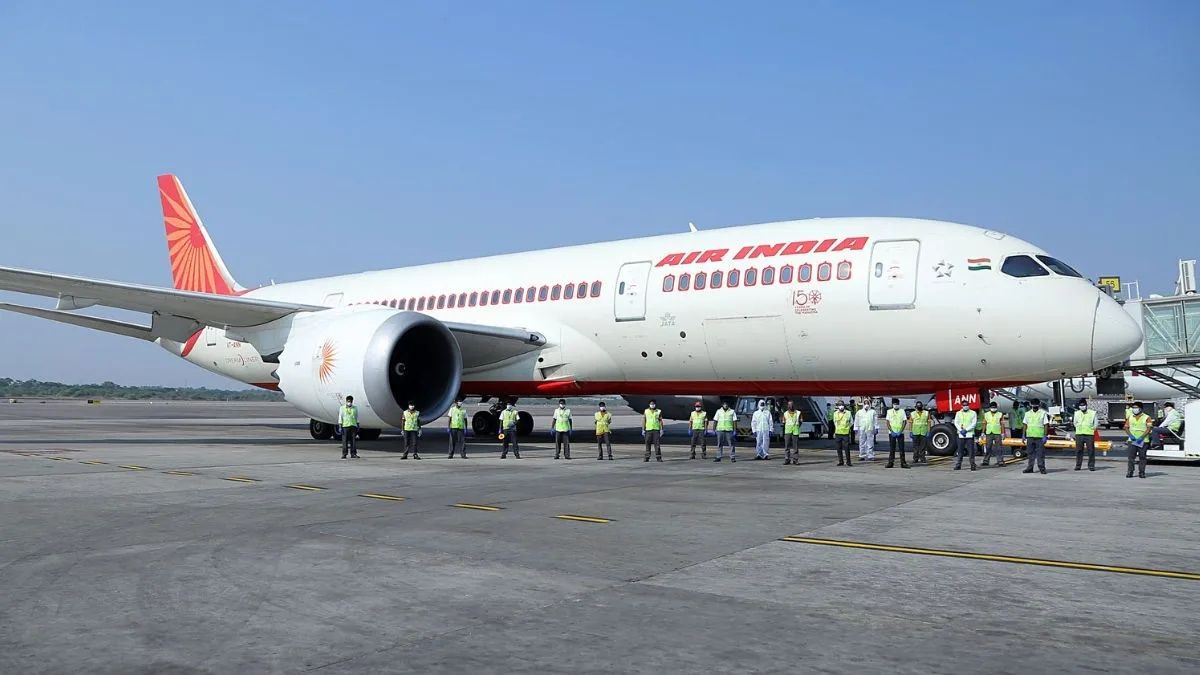
An Air India service operating the Delhi-Amritsar route inadvertently entered Pakistani airspace on Monday evening following a malfunction in its navigation systems, authorities confirmed this week. The Airbus A321 aircraft, designated Flight AI-463, departed Indira Gandhi International Airport in New Delhi at 9:18 pm and encountered technical difficulties shortly after takeoff that compromised its ability to maintain the correct flight path. The navigation system failure caused the plane to drift westward across the International Border, triggering alerts from Pakistani air traffic control authorities who immediately initiated contact with the Indian flight crew to flag the unauthorised airspace incursion.
The incident underscores the critical importance of real-time coordination between South Asian aviation authorities despite the region's complex geopolitical dynamics. Pakistani air traffic controllers swiftly notified the pilots of their position and the airspace violation, enabling prompt corrective action. The flight crew responded immediately by adjusting their heading and guiding the aircraft back across the border into Indian territory without further incident. According to senior airport officials, the navigation system anomaly was contained and controlled throughout the brief intrusion, and no safety risks emerged during the period when the aircraft occupied Pakistani airspace.
However, the technical complications that began over the International Border did not conclude once the aircraft returned to Indian territory. As Flight AI-463 approached Sri Guru Ram Dass Jee International Airport in Amritsar around 10:30 pm, the airport was contending with unusually heavy traffic congestion that prevented immediate landing clearance. Air traffic controllers at Amritsar lacked an available landing slot and, faced with operational constraints, instructed the flight to return to Delhi rather than hold in a holding pattern. This second diversion meant the aircraft retraced its journey southward to the capital, where it landed safely approximately an hour later for mandatory technical inspections and system diagnostics.
The extended operational disruption highlighted how a single technical fault can cascade through multiple stages of a flight operation, compounding delays and passenger inconvenience. Ground engineers at Delhi conducted comprehensive checks of the navigation systems to identify the precise nature of the malfunction and verify the aircraft's airworthiness for continued service. The technical inspection process extended through the early morning hours, during which Air India worked to obtain necessary operational clearances from civil aviation authorities before permitting the aircraft to resume its journey.
After receiving formal approval to continue operations, Flight AI-463 departed Delhi once again in the early hours of Tuesday morning and completed its journey to Amritsar, where it finally touched down at approximately 2:20 am on Tuesday—nearly four hours behind its originally scheduled arrival time. Passengers endured a significantly extended journey that involved two unscheduled diversions and multiple landings, though the airline ultimately brought the flight to its intended destination safely. The protracted delay exemplified how technical issues affecting critical aircraft systems can disrupt schedules across an entire route network and demonstrate the necessity of prioritising safety over schedule adherence.
Neither Air India nor the Directorate General of Civil Aviation (DGCA), India's primary aviation regulator, has publicly disclosed detailed technical information regarding the specific nature of the navigation system failure or the underlying causes. Both organisations have characterised the event in communications with officials as a technical anomaly that required investigation and remediation. Aviation authorities have launched a formal investigation to establish the precise circumstances that led to the route deviation, including whether the malfunction stemmed from onboard system failure, external interference, or procedural factors.
The incident arrives approximately one month after a Pakistan International Airlines flight briefly penetrated Indian airspace due to severe adverse weather conditions. On that occasion, Indian air traffic control personnel identified the unauthorised entry and worked with the PIA flight crew to guide the aircraft back to its designated route. That earlier occurrence demonstrated that airspace incursions in South Asia, while uncommon, can arise from varied causes including weather-related navigation challenges, and that cooperation between neighbouring air traffic control systems remains essential for managing such situations safely.
The seamless coordination demonstrated between Indian and Pakistani aviation authorities during both incidents reflects the maturation of regional air traffic management protocols despite the broader security environment. Air traffic control systems operate under international standards administered by the International Civil Aviation Organization (ICAO), which mandate cooperation and information-sharing between nations to ensure safe passage of aircraft across international borders. These frameworks have proven effective in de-escalating potential crises and ensuring that technical incidents do not escalate into diplomatic incidents or security concerns.
For passengers and airlines operating in South Asia, these incidents underscore the critical infrastructure challenges that aviation authorities navigate daily in a densely populated region with complex airspace arrangements. Navigation system reliability remains paramount in modern commercial aviation, and airlines invest extensively in redundant systems and predictive maintenance protocols to prevent the types of failures that occurred on Flight AI-463. The investigation findings will likely yield recommendations for enhanced pre-flight checks or modifications to aircraft systems to prevent recurrence of similar technical anomalies.

