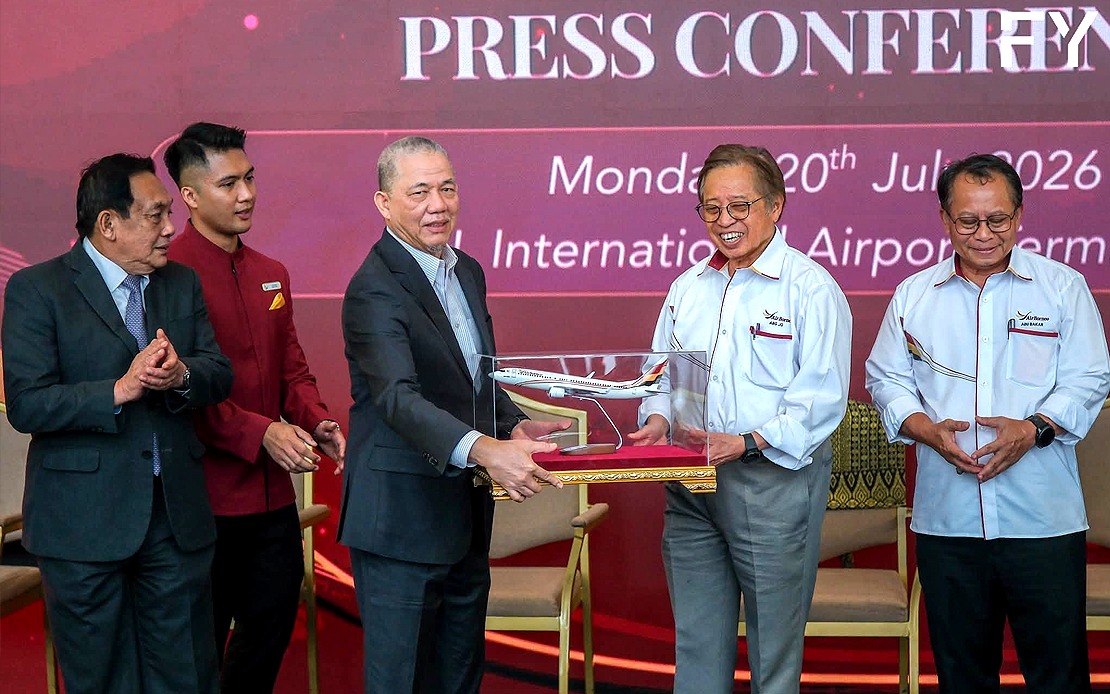
Sarawak has taken a significant step towards addressing one of the region's most persistent travel challenges by launching AirBorneo Airways, the state government-owned carrier that began operations with a symbolic inaugural flight from Kuching to Kuala Lumpur International Airport on July 20. The establishment of this airline represents an ambitious intervention in Malaysia's aviation sector, where rural connectivity and pricing have long frustrated travellers and hindered economic development in eastern Malaysia. Deputy Prime Minister Datuk Seri Fadillah Yusof outlined the initiative as a carefully considered response to public concerns, pledging that the carrier will deliver more competitive fares alongside improved transparency and passenger amenities without sacrificing operational standards.
The timing of AirBorneo's launch carries symbolic weight within Sarawak's political narrative. Commencing operations just two days before the Sarawak Day celebration on July 22, the inaugural flight carried Sarawak Premier Tan Sri Abang Johari Tun Openg and a delegation of state ministers, underscoring the venture's significance as a marker of the state's development trajectory. This positioning reflects a broader strategic vision articulated by state leadership: that AirBorneo functions not merely as a commercial enterprise but as a demonstration of Sarawak's capacity for autonomous economic decision-making and self-directed growth, particularly in critical infrastructure sectors where federal or private-sector solutions have historically left regional needs unmet.
Airfare pricing in Sarawak has emerged as a contentious issue affecting both tourism promotion and business competitiveness. The state's geographic position and reliance on air transport for connecting dispersed communities across Borneo have made aviation costs a central concern for residents, entrepreneurs, and policymakers. By establishing a state-owned carrier, Sarawak's government aims to inject competitive pressure into a market where limited route capacity and high operational costs have traditionally driven ticket prices beyond levels accessible to ordinary travellers. The carrier's entry into the Kuching-KLIA route, one of Malaysia's busier domestic connections, represents a direct challenge to existing operators and an early test of whether state ownership can translate into tangible fare reductions.
Fadillah emphasised that AirBorneo extends beyond the conventional airline model to embody a strategic investment in the state's economic foundations. He articulated the Premier's vision of using enhanced air connectivity to unlock latent opportunities across multiple economic sectors. Tourism stands foremost among these: improved intra-state and inter-state connectivity could substantially boost visitor arrivals and facilitate the development of secondary destinations beyond established hubs. Trade and investment sectors stand to benefit from reduced transportation costs and improved scheduling reliability, both factors that influence business location decisions and supply-chain feasibility. Regional development opportunities emerge through enhanced accessibility to interior areas, potentially supporting agriculture, resource extraction, and small-scale manufacturing in previously marginal regions.
The airline's commitment to maintaining rural air services represents a particularly crucial dimension for Sarawak's dispersed population. Remote communities, particularly in interior divisions, depend entirely on air connectivity for medical referrals, essential goods, and economic participation. Previous reliance on profit-driven carriers has left these communities vulnerable to service cutbacks or unsustainable fare escalations. By embedding rural service obligations within AirBorneo's operational mandate, the state seeks to ensure that connectivity expansion benefits peripheral areas rather than concentrating services on high-yield routes. This approach reflects recognition that aviation infrastructure operates as a genuine public good in Sarawak's geography, where road networks remain underdeveloped and water transport carries seasonal limitations.
The strategic rationale for state ownership in aviation has gained currency across Southeast Asia as regional governments recognise the sector's importance for economic integration and development. Sarawak's move aligns with precedents elsewhere in the region, though it distinctly emphasises the state's assertion of autonomous control over critical infrastructure. The airline effectively represents a counter-strategy to market concentration, where a handful of dominant carriers have wielded significant influence over pricing and service availability. By directly participating in the aviation market, Sarawak's government positions itself to influence outcomes more directly than would be possible through regulation alone, while simultaneously capturing any financial benefits that market operations generate for reinvestment in state priorities.
Operational challenges will ultimately determine whether AirBorneo fulfils its mandate. Competing against established carriers with greater scale, accumulated capital, and brand recognition requires sustained competitive advantages, whether through pricing power derived from lower financing costs, operational efficiencies from focused route management, or service differentiation. The airline must simultaneously navigate the complexities of fleet acquisition, crew recruitment and training, maintenance infrastructure development, and regulatory compliance. Malaysia's civil aviation sector operates under stringent safety and operational standards administered by the Department of Civil Aviation, requirements that impose significant compliance costs irrespective of the carrier's ownership structure or geographic focus.
The financial sustainability question merits careful consideration for Malaysian policymakers observing this experiment. State-owned airlines globally have exhibited mixed performance records, with numerous carriers requiring ongoing government subsidies to offset operational losses. Whether AirBorneo can achieve profitability while maintaining affordable fares—particularly on routes to remote areas where passenger volumes remain low—remains unproven. The airline's viability may ultimately depend on access to patient capital willing to tolerate extended break-even periods while the carrier builds market presence and develops operational efficiency. This consideration becomes especially important given Malaysia's broader fiscal constraints and competing demands on government resources.
For Malaysian travellers and the regional economy more broadly, AirBorneo's emergence introduces competitive dynamics that could benefit the market. Should the carrier successfully undercut existing operators on major routes, competitive responses may drive broader fare reductions across the sector. Conversely, if the airline struggles operationally or proves unable to match competitors' service reliability, passengers might experience service disruptions or airport delays stemming from an additional operator within already-congested regional air space. Tourism operators throughout Sarawak and neighbouring Sabah are monitoring closely, recognising that airfare costs directly influence destination competitiveness against alternatives elsewhere in Southeast Asia.
The carrier's launch also raises questions about broader aviation policy coordination across Malaysia. Sarawak's unilateral establishment of a state airline, while within the state's constitutional authority, occurs within a national context where federal aviation policy and the operations of federal carriers like Malaysia Airlines and AirAsia intersect with state initiatives. The Department of Civil Aviation must ensure that competitive dynamics between carriers do not compromise safety standards or airport operational efficiency, while federal authorities navigate the political dimensions of appearing to support or constrain a state-driven initiative. These coordination challenges will likely emerge as AirBorneo expands its network and operational footprint.
Looking forward, AirBorneo's success will be measured against multiple, sometimes competing criteria. Travellers will focus on fares and reliability; the state government will evaluate financial performance and economic development contributions; and the aviation sector will observe competitive implications and market concentration trends. The airline's inaugural Kuching-KLIA flight represents a meaningful beginning, but the extended test of whether state ownership can sustainably deliver affordable aviation services in Malaysia's competitive market environment remains ahead. For Sarawak specifically, the venture encapsulates broader aspirations for economic autonomy and development control, making the airline's trajectory consequential far beyond aviation sector analysis.

