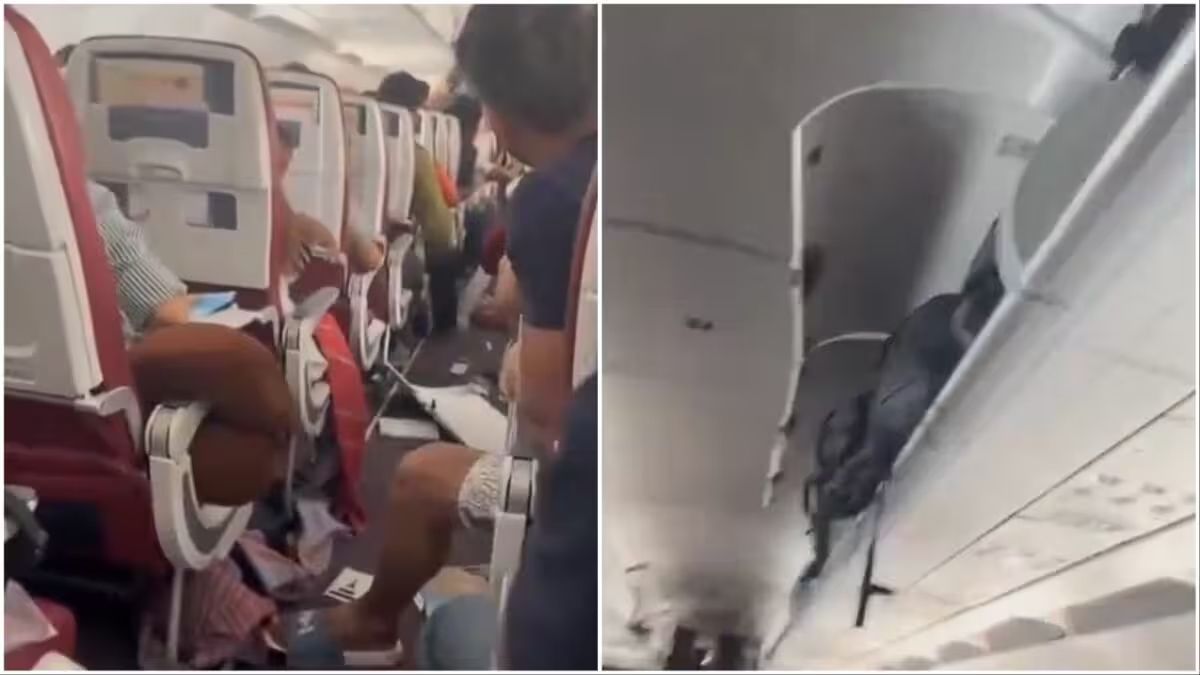
Airbus announced on Monday that it would send a team of specialists to New Delhi on Tuesday to lend technical expertise to the ongoing investigation into an Air India flight that experienced a harrowing mid-air incident on August 4. The aircraft, an Airbus A320 operating as Air India's service from Phuket in Thailand to the Indian capital, descended approximately 300 feet before the crew regained control and landed the plane safely, though not before 17 passengers and crew members sustained injuries requiring hospitalisation.
The involvement of Airbus underscores the complexity of the investigation being conducted by India's Aircraft Accident Investigation Bureau, which has formally classified the occurrence as a Serious Incident. While the precise sequence of events remains under scrutiny, the investigation has taken on added urgency following preliminary drug screening results for the chief pilot that apparently warrant further confirmatory analysis. Both pilots have been temporarily removed from flight rosters pending completion of the inquiry, reflecting standard protocol in incidents of this severity.
According to Air India's initial statement, the A320 was carrying 137 passengers and eight crew members when it suddenly lost altitude. The carrier pledged full cooperation with investigating authorities and confirmed that it had immediately notified the aircraft manufacturer. Indian newspapers reported that the flight had experienced several technical irregularities in the moments preceding the altitude loss, though neither Air India, civil aviation authorities, nor Airbus have officially confirmed these accounts or provided detailed technical explanations to the public.
The pharmaceutical screening of both pilots conducted after landing revealed results for the pilot-in-command that require further laboratory confirmation, according to India's aviation ministry. The samples have been sent for analysis, and the findings of that confirmatory testing have not yet been released publicly. This element of the investigation has drawn significant attention, as any indication of substance impairment would represent a critical factor in understanding how the incident occurred and whether procedural failures contributed to the emergency.
Airbus's technical assistance represents a crucial resource for Indian investigators, as the manufacturer possesses detailed knowledge of the A320's systems, flight control architecture, and potential failure modes. An Airbus spokesperson emphasised that the company is providing comprehensive technical support to the relevant authorities and actively collaborating with Air India to facilitate the investigation. The company indicated that further information would be released as the probe advances, though no timeline was specified.
The incident has compounded Air India's recent operational and reputational challenges at a particularly difficult juncture for the airline. In June 2025, Air India Flight 171, a Boeing 787 Dreamliner operating from Ahmedabad to London, crashed during takeoff with catastrophic consequences. The accident killed all but one of the 242 passengers and crew aboard, as well as 19 people on the ground. That disaster represented one of India's deadliest aviation accidents and severely damaged public confidence in the carrier's safety record.
Considering Air India's broader operational trajectory, the August altitude loss occurs against a backdrop of disruptions stemming from geopolitical instability in the Middle East, which has forced route adjustments and operational constraints across the region's aviation sector. These compounding pressures have tested the airline's organisational resilience and recovery capabilities, even as it attempts to restore its market position and reputation among both domestic and international travellers.
In recognition of the magnitude of Air India's institutional challenges, the airline last week appointed Tewolde Gebremariam, former chief executive of Ethiopian Airlines, to lead its management team as new chief executive. Gebremariam's appointment signals the airline's commitment to comprehensive organisational reform and operational improvement. His experience in managing operations at a major African carrier—and particularly his track record at an airline operating in a complex regional environment—may bring fresh perspectives to Air India's operational governance and safety culture.
For Malaysian and Southeast Asian observers, the Air India situation carries implications beyond the immediate incident. Regional aviation networks depend fundamentally on the reliability and safety standards of major carriers operating across the region. Air India operates numerous routes connecting India to Malaysia, Singapore, and Thailand, making its operational health a matter of regional concern. The investigation's findings will likely influence safety protocols and maintenance standards across airlines operating similar aircraft platforms throughout Southeast Asia.
The investigation remains ongoing, with both Airbus's technical assessment and the confirmatory drug testing results expected to provide critical insights. Whether the incident stemmed from technical malfunction, procedural error, crew incapacity, or some combination of factors will shape future regulatory responses and potentially influence pilot training and substance-testing protocols across Indian aviation. The cooperation between Indian authorities, Air India, and Airbus demonstrates the collaborative approach increasingly essential when addressing complex aviation safety matters in an interconnected regional aviation ecosystem.

