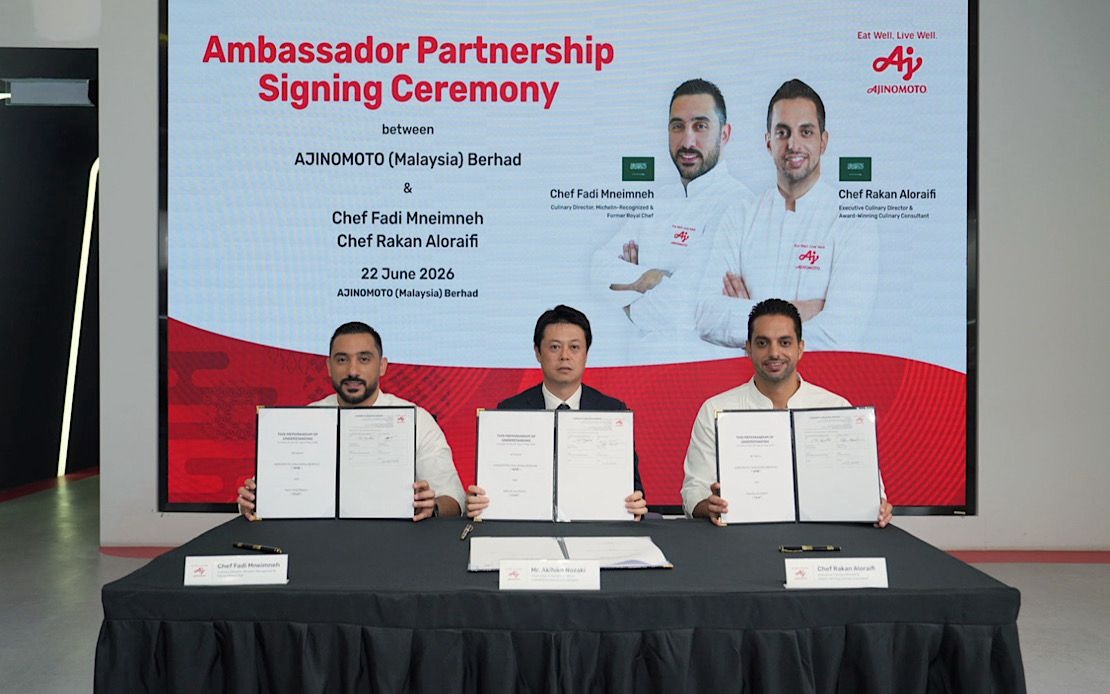
Ajinomoto (Malaysia) Berhad is moving aggressively into Middle Eastern markets through a high-profile alliance with two of Saudi Arabia's most celebrated culinary personalities, recognizing the substantial commercial opportunity presented by the region's expanding appetite for certified halal food ingredients and premium flavour solutions. The strategic collaboration with Chef Fadi Mneimneh and Chef Rakan Aloraifi represents a deliberate pivot toward leveraging influential voices within the hospitality and food service sectors, where procurement decisions and product recommendations carry considerable weight among institutional buyers and restaurant operators.
Chef Fadi, who holds a Michelin star and previously served as a royal chef, brings both prestige and operational experience across high-end establishments. Chef Rakan, an award-winning executive and culinary consultant, commands respect within consulting circles and among procurement professionals across the Arabian Gulf. Together, these figures embody the kind of thought leadership that can reshape ingredient adoption patterns within regional kitchens, from luxury hotels to mid-market restaurants seeking to modernize their flavor profiles while maintaining cultural authenticity.
The partnership initiative gained momentum following an exclusive factory visit to AMB's manufacturing complex in Bandar Enstek, Negeri Sembilan, where the chefs gained firsthand exposure to production standards, halal certification protocols, and the technical capabilities underpinning the company's product range. This facility tour served a dual purpose: it provided tangible reassurance regarding quality and compliance standards, while simultaneously creating memorable experiences that the chefs could authentically communicate to their networks and media contacts back in Saudi Arabia.
Central to AMB's positioning strategy is the concept of umami—the savory fifth taste dimension—which remains less established in Middle Eastern culinary consciousness compared to Western markets. By framing umami not as foreign innovation but as a tool for deepening authentic regional flavors, AMB is attempting to overcome potential resistance to Japanese-origin ingredients. The culinary demonstrations conducted by Chef Fadi and Chef Rakan directly addressed this positioning challenge, featuring traditional Middle Eastern dishes where Ajinomoto products enhanced depth and complexity without altering the essential character of heritage recipes.
The halal certification dimension cannot be overstated in this context. Malaysia has cultivated a globally recognized reputation for rigorous halal standards, and AMB's explicit emphasis on halal integrity and transparency responds to a critical market requirement. For Saudi Arabian buyers and hospitality operators, halal compliance is not merely a regulatory checkbox but a core value proposition that influences consumer trust and institutional purchasing decisions. By showcasing both manufacturing transparency and third-party certification, AMB addresses the due diligence expectations of regional procurement teams.
Beyond the bilateral chef relationship, the collaboration extended to networking with AMB's distributor representative in Brunei, underscoring the company's intent to strengthen supply chain relationships across Southeast Asia and the Middle East simultaneously. This cross-regional networking dynamic reflects an understanding that halal food distribution channels are increasingly interconnected, with procurement professionals, distributors, and importers regularly exchanging market intelligence and product experiences across borders.
The commercial ambitions extend explicitly into 2026, when AMB intends to feature both chefs at the Hotel, Restaurant and Café (HORECA) trade event scheduled for Riyadh and Jeddah in the first week of October. HORECA events function as critical deal-making platforms where product buyers, executive chefs, hospitality managers, and food service companies converge to evaluate new suppliers, negotiate volume agreements, and identify innovation opportunities. By securing prominent platform space for live demonstrations, AMB positions itself to reach procurement decision-makers at precisely the moment when purchasing budgets and menu development priorities are being finalized.
For Malaysian stakeholders and policymakers, this expansion effort exemplifies how homegrown food manufacturers can leverage Malaysia's halal sector credibility and manufacturing expertise to penetrate premium market segments globally. The Middle East represents one of the highest-value halal food markets, where purchasing power, regulatory sophistication, and consumer expectations for quality align favorably with Malaysian capabilities. AMB's strategy of using culinary influencers and experiential marketing rather than relying solely on conventional B2B sales channels reflects a maturing approach to international food business development.
The broader context involves the Middle East's increasing emphasis on culinary excellence and food innovation alongside traditional heritage preservation. Saudi Arabia in particular has been investing substantially in hospitality infrastructure, culinary training programs, and food service standardization, creating receptive conditions for premium ingredient suppliers capable of demonstrating both quality and cultural sensitivity. By positioning Ajinomoto products as enabling rather than replacing traditional culinary practices, AMB taps into this dual aspiration.
The partnership also signals AMB's confidence in the sustainability of halal food demand growth across the Middle East. Demographic trends, rising middle-class populations, expanding restaurant and hotel sectors, and increased food service professionalization all point toward sustained ingredient consumption growth, making the region strategically important for Malaysian manufacturers seeking to diversify revenue sources beyond domestic and ASEAN markets.
From a competitive standpoint, this collaboration illustrates how smaller Malaysian food manufacturers can compete effectively against larger multinational players by emphasizing authenticity, cultural alignment, and transparent manufacturing practices. Rather than attempting generic global marketing, AMB is investing in region-specific relationships and experiences that resonate with local professional communities and decision-makers.
Looking forward, the success of this initiative will depend on whether Chef Fadi and Chef Rakan translate their positive factory experiences and partnership arrangements into concrete product recommendations within their professional networks, institutional relationships, and media platforms. The October 2026 HORECA events represent a critical validation point where the partnership's effectiveness in driving actual procurement traction can be measured. For AMB and Malaysian halal food manufacturers more broadly, maintaining these elite culinary partnerships requires ongoing product excellence, transparent communication, and genuine commitment to understanding regional taste preferences and institutional requirements.

