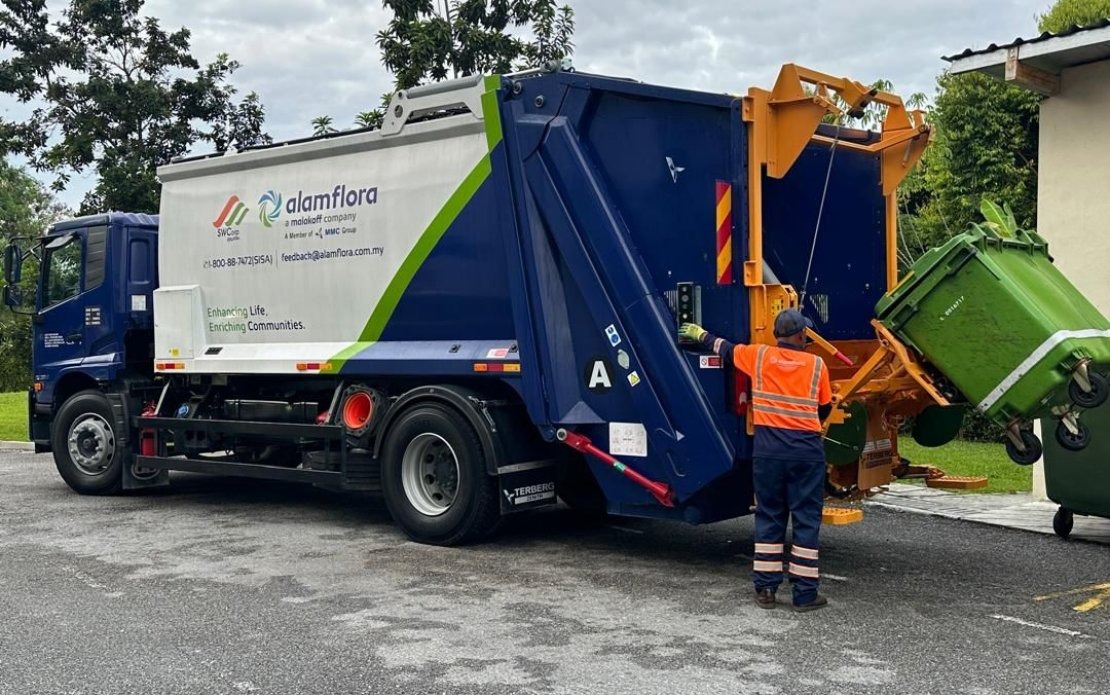
Waste management operator Alam Flora has assured complete cooperation with investigating authorities following a collision involving one of its compactor garbage lorries near a residential development in Kuala Lumpur's Pantai Hillpark area. The company announced its commitment through a formal statement, emphasising that it regards the matter with appropriate seriousness and will comply fully with all procedural requirements set by the investigating officer in charge of the case.
The early-morning incident saw the garbage collection vehicle experience what is suspected to be a brake system failure, causing the lorry to lose control before striking the perimeter wall of a nearby condominium. The company has ordered the vehicle to undergo comprehensive technical assessment at the Computerised Vehicle Inspection Centre, commonly known as Puspakom, to establish the precise mechanical cause underlying the crash. This independent inspection forms a crucial part of determining whether equipment failure, maintenance deficiencies, or other factors contributed to the accident.
The driver of the lorry promptly reported the incident to the Kuala Lumpur Traffic Police Station. Preliminary checks by police officers, including a breathalyser test, determined that the driver was not operating the vehicle while impaired by alcohol, thereby eliminating one potential contributing factor. The police investigation is proceeding under Section 43(1) of the Road Transport Act 1987, which governs motor vehicle-related offences and accidents on Malaysian roads.
Alam Flora's official statement underscored that the safety and wellbeing of its workforce—encompassing both direct employees and contracted workers—alongside public welfare, constitute the organisation's foremost operational concern. The company acknowledged the inconvenience and distress caused to the affected residential community, expressing sincere regret for the impact of the incident on local residents who witnessed or were affected by the crash.
The waste management sector in Malaysia handles millions of tonnes of refuse annually across urban and suburban areas, with collection lorries operating during early morning hours to minimise traffic disruption. Safety incidents involving these heavy-duty vehicles, however infrequent, underscore the importance of rigorous maintenance protocols and mechanical inspections. Brake failure in compactor lorries represents a particularly serious hazard given the vehicles' significant mass and the dense residential areas through which collection routes typically pass.
Alam Flora's commitment to follow the investigation's conclusions with appropriate corrective measures reflects industry expectations regarding accident response and accountability. Should the Puspakom inspection identify systemic mechanical problems or maintenance gaps, the company may face obligations to implement fleet-wide improvements, enhanced inspection schedules, or driver training modifications to prevent recurrence.
For Malaysian residents and property owners living along waste collection routes, incidents of this nature raise legitimate concerns about vehicle safety standards and the adequacy of preventive maintenance in the waste management industry. The involvement of an independent technical inspection centre provides reassurance that findings will be objective and comprehensive rather than reliant solely on the operator's own assessment.
The investigation's outcome will carry implications extending beyond the single vehicle involved. Depending on findings, relevant regulatory bodies may examine whether existing maintenance requirements across the waste collection sector are sufficiently stringent, whether driver training adequately addresses emergency procedures, and whether vehicle inspection intervals require adjustment. Such broader reviews often follow high-profile incidents to identify whether individual accidents signal wider systemic vulnerabilities.
Alam Flora's public positioning emphasises transparency and adherence to safety standards as foundational to operational legitimacy. The company's willingness to submit its vehicle for independent inspection and to await investigation findings before implementing corrective measures reflects a formal commitment to regulatory compliance and public accountability. This approach aligns with contemporary expectations regarding corporate responsibility in essential service provision, particularly where public safety intersects with daily community living.

