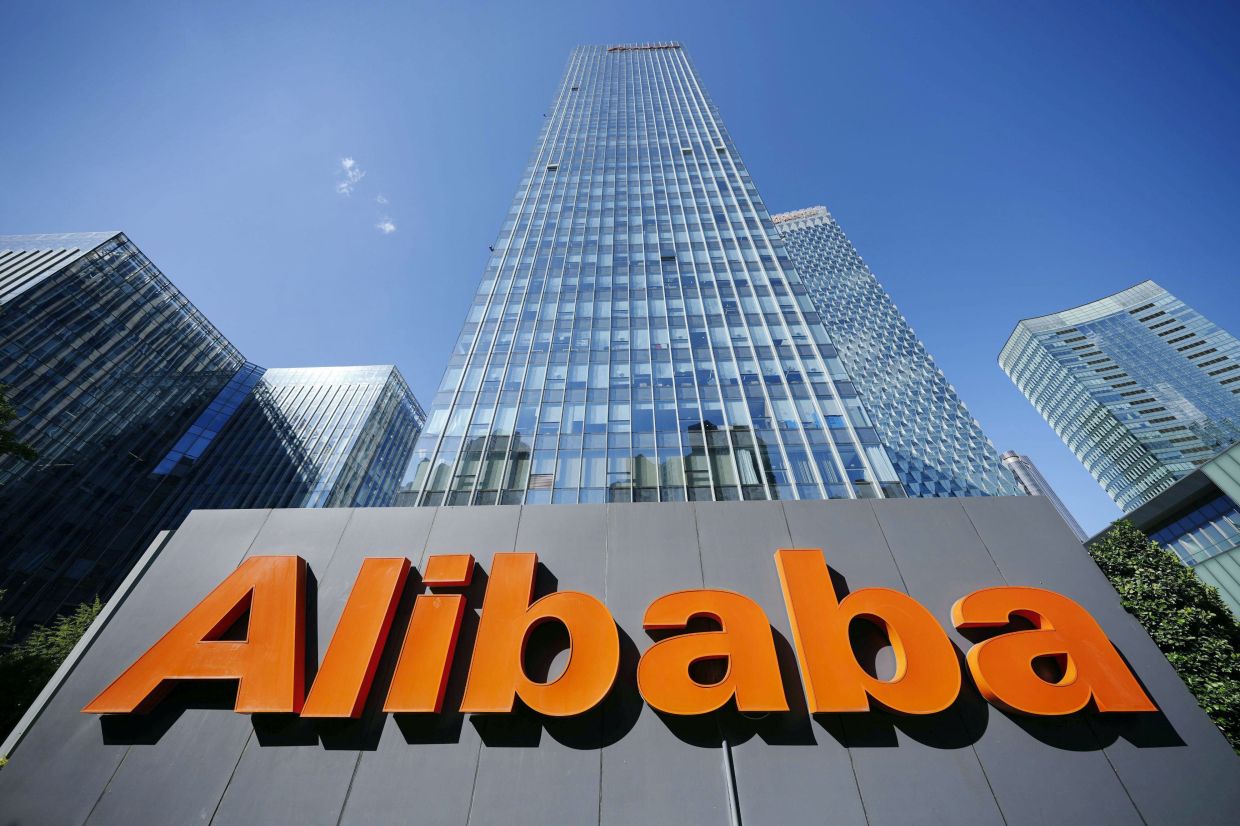
Alibaba Group Holding, the Hangzhou-based technology and e-commerce behemoth, has escalated its dispute with Washington by filing a lawsuit against the US Department of Defence in San Jose, California, challenging its designation as a company supporting China's military apparatus. The legal action represents a significant pushback against American pressure on Chinese technology firms and signals deepening friction in the strategic competition between the world's two largest economies over critical technologies.
The Pentagon added Alibaba to its "Chinese military companies" blacklist on June 9, alongside other prominent Chinese firms including electric vehicle manufacturers BYD and Nio, search engine provider Baidu, robot maker Unitree Robotics, and networking equipment manufacturer TP-Link. The classification covered organisations spanning artificial intelligence, biotechnology, and renewable energy sectors—precisely the domains where Beijing and Washington are engaged in a prolonged battle for technological supremacy. This sweeping designation reflects American concerns about the blurred boundaries between China's civilian and military technological development, a phenomenon Chinese authorities term "military-civil fusion".
Under Section 1260H of the National Defence Authorisation Act, the Pentagon's classification does not immediately impose direct sanctions, yet carries substantial practical consequences. The designation significantly constrains access to American capital markets and government contracting opportunities, effectively throttling the commercial prospects of affected companies. For multinational firms with aspirations to participate in US defence supply chains or attract American institutional investment, the label becomes a substantial competitive disadvantage. The blacklist thus functions as a soft but powerful weapon in America's toolkit for managing technological competition with China.
Alibaba's legal challenge contests two core Pentagon assertions about the company's status. First, the company denies any affiliation with China's State-owned Assets Supervision and Administration Commission (SASAC), which the Pentagon cited as evidence of military connections through state control. Second, Alibaba rejects the claim that it constitutes a "military-civil fusion contributor" due to its relationships with the Ministry of Industry and Information Technology (MIIT). In its court filing, Alibaba argued that interactions with MIIT represent nothing more than routine regulatory compliance obligations required of technology enterprises operating within China's borders—a characterisation that highlights the difficulty American regulators face in distinguishing between legitimate corporate-government engagement and genuine national security threats.
The company contends that the Pentagon's action violated constitutional protections including due process rights and freedom of speech guarantees. This framing seeks to invoke fundamental American legal principles against the government itself, positioning Alibaba's case as a test of whether Chinese companies can receive fair legal treatment in American courts. By choosing litigation rather than diplomatic channels, Alibaba has opted for maximum visibility and the formal legal record that accompanies court proceedings, signalling confidence in its ability to prevail under American jurisprudence.
Alibaba maintains that it engaged constructively with Pentagon officials during January consultations regarding the potential designation. The company submitted a comprehensive written response in March addressing the military-affiliation allegations, yet the Defence Department proceeded with the blacklist classification three months later despite this engagement. This sequence of events supports Alibaba's argument that the Pentagon's determination lacked adequate deliberation or responsiveness to contrary evidence—a key component of the company's constitutional due process claim.
The timing of Alibaba's lawsuit coincides with intensifying tit-for-tat economic measures between Washington and Beijing. On the same day Alibaba filed suit, China's Ministry of Commerce announced it would add ten American companies to its export control list, including defence contractors Ball Aerospace & Technologies, Oshkosh Defense, and drone manufacturer Teal Drones, alongside firms in critical materials and technology sectors. Simultaneously, China's Ministry of Finance restricted 46 American companies from government procurement opportunities, a list encompassing giants such as Lockheed Martin, Raytheon Missiles & Defense, and Boeing Defense, Space & Security.
The escalating measures demonstrate how technological competition between the superpowers has metastasised into comprehensive economic containment strategies. China's targeting of American defence contractors and critical technology suppliers mirrors the Pentagon's approach of weaponising supply chain access and investment restrictions. For Malaysian companies and investors monitoring the US-China relationship, these reciprocal blacklists illustrate the real risk that technology sectors deemed strategically sensitive—semiconductors, artificial intelligence, advanced materials, renewable energy—have become zones of profound geopolitical contestation where purely commercial considerations increasingly yield to state security imperatives.
Other Chinese companies subjected to the Pentagon's June blacklist have similarly objected strenuously. BYD, China's leading electric vehicle and battery manufacturer, and Baidu, the nation's dominant search engine, both issued statements categorically denying military connections. Their resistance suggests Alibaba's lawsuit is not an isolated corporate protest but part of a broader Chinese corporate response challenging the credibility and legitimacy of American security designations. The Chinese embassy in Washington has formally protested that America's national security framework has become overstretched, weaponising undefined concepts of "civil-military fusion" to disadvantage Chinese competitors.
For regional observers including Malaysian stakeholders with business exposure to both American and Chinese technology ecosystems, Alibaba's lawsuit underscores a critical structural change in global technology markets. The era when Chinese and American firms could navigate relatively integrated supply chains and investment networks has demonstrably ended. Companies throughout Southeast Asia now confront an increasingly binary choice: demonstrating compliance with American technology restrictions or accepting Chinese partnership and market access. This polarisation will reshape Southeast Asian technology development, forcing governments and enterprises to navigate strategic technology choices that carry profound geopolitical implications extending far beyond commercial considerations.
The Pentagon declined to comment on the ongoing litigation, maintaining the silence that characterises most defence department responses to legal challenges. However, the lawsuit positions American courts as potential arbiters of whether the Pentagon's military-company designations meet constitutional and statutory requirements. Should Alibaba succeed, the precedent could constrain the government's ability to unilaterally blacklist foreign companies based on opaque determinations of military affiliation. Conversely, if the courts defer to Pentagon national security judgments, the blacklist mechanism will be further fortified as a virtually unchallengeable instrument of technology containment.

