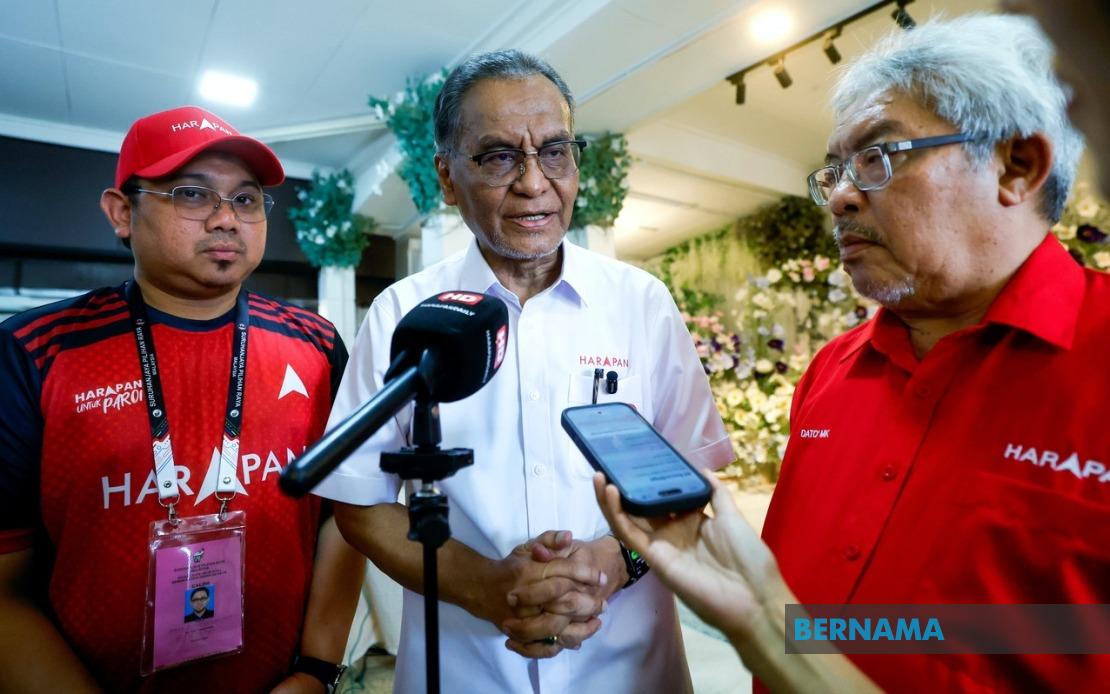
Amanah's nine-strong slate of candidates competing in the 16th Negeri Sembilan state election is anchoring its campaign strategy on the track record accumulated by the Pakatan Harapan-led state administration, marking a deliberate pivot away from personality-driven campaigning towards performance-based messaging. The approach reflects a broader coalition strategy that each component party will emphasise its own accomplishments and the credibility of its candidates within the constituencies it contests. Amanah has been allocated nine of the coalition's 36 total seats, with Parti Keadilan Rakyat fielding 16 candidates and the Democratic Action Party putting forward 11, according to the agreed division of labour within Pakatan Harapan.
Amanah vice-president Datuk Seri Dr Dzulkefly Ahmad articulated the rationale underpinning this strategy during a campaign event in Seremban, emphasising that electoral success hinges not on the intensity of campaign rhetoric but on whether candidates can demonstrate tangible solutions to community problems and maintain credibility through prior service. This philosophy signals a recognition that Malaysian voters, particularly in state elections where local governance is the primary concern, increasingly evaluate candidates on their ability to deliver practical results rather than respond to partisan messaging. The emphasis on administrative track record suggests Amanah believes the coalition's five-year governance of Negeri Sembilan—won decisively in the 2023 state election with 17 seats compared to Barisan Nasional's 14 and Perikatan Nasional's five—provides sufficient legitimacy to warrant re-election.
The campaign methodology that Amanah is deploying focuses on grassroots engagement and personalised contact rather than mass rallies or media saturation. Small-group discussions, door-to-door canvassing, and targeted social media communication form the backbone of the effort to identify and address specific constituent concerns before escalating issues to relevant government departments. This granular approach serves multiple functions: it allows candidates to gather intelligence about local priorities, demonstrates responsiveness to community needs, and creates multiple touchpoints for voter engagement beyond traditional campaign forums. For a state like Negeri Sembilan, where several constituencies contain substantial populations and diverse economic activities, this decentralised approach may prove more effective than centralised messaging.
The Paroi state seat, which Amanah candidate Ahmad Shahir Mohd Shah is defending, exemplifies the types of constituencies where this strategy could gain traction. With more than 65,000 registered voters and approximately 140,000 residents, Paroi encompasses multiple economic zones and demographic groups requiring coordinated attention from relevant local authorities and state agencies. Ahmad Shahir has signalled that empowering small and medium-sized traders will constitute a cornerstone of his legislative agenda, incorporating measures to simplify business licensing procedures, enhance basic infrastructure, and upgrade commercial areas through collaboration with local government bodies. Such specific policy commitments contrast with generic campaign pledges and suggest Amanah candidates have identified concrete grievances within their constituencies.
The composition of Amanah's candidate list reflects an emphasis on continuity and proven service records. Incumbent Datuk Bakri Sawir will seek re-election in Klawang, while the remaining eight candidates—Yaacob Mahmood in Serting, Zarrina Abu Zarin in Lenggeng, Mohd Hanis Alimin in Senaling, Mohd Zailan Mohd Munawar in Johol, Muhammad Allif Ibrahim in Kota, Nasir Raman in Bagan Pinang, and Abd Latif A. Tambi in Gemencheh—represent candidates with varying degrees of prior political involvement and community engagement. This geographic spread across Negeri Sembilan's diverse constituencies, from more urbanised areas like Paroi to rural seats, indicates Amanah is competing across multiple socioeconomic contexts rather than concentrating resources in strongholds.
The timing of the election—with early voting scheduled for July 28 and the main polling day set for August 1—provides a compressed campaign window that may advantage candidates with established community networks and recognisable track records over those attempting to build name recognition from scratch. For Amanah in particular, as a relatively younger component of Pakatan Harapan compared to PKR and the DAP, demonstrating that its candidates possess legitimate community credentials becomes especially important for establishing the party's credibility as a state-level political force. The strategy of leading with administrative achievements rather than partisan rhetoric suggests party strategists believe this approach resonates with pragmatic voters in Negeri Sembilan.
Pakatan Harapan's governance record in Negeri Sembilan from 2018 onwards provides substantive material for the campaign's track-record focus. The coalition's five-year stewardship encompassed economic management, infrastructure development, and administrative reforms implemented across multiple constituencies represented by various parties. However, the coalition's ability to translate administrative accomplishments into electoral support depends heavily on voter perception of whether improvements reached their own neighbourhoods and circumstances. Amanah's emphasis on candidate-level service records and personal engagement may serve to localise these broader state government achievements, demonstrating to voters that their specific representatives contributed meaningfully to whatever progress has occurred.
The opposition landscape shapes how Amanah's campaign strategy will be tested. Barisan Nasional's campaign approach and messaging direction remain consequential for determining whether performance-based arguments gain traction or whether other themes dominate electoral discourse. Perikatan Nasional's five seats in the outgoing state assembly, while not dominant, may indicate areas where voters have gravitated toward alternative coalition options. If either opposition bloc emphasises dissatisfaction with Pakatan Harapan's tenure or highlights unfulfilled promises, the coalition's counter-narrative centred on achievements and service records will require consistent reinforcement across all three component parties.
For Malaysian observers and political analysts, Amanah's approach in Negeri Sembilan offers a case study in how emerging political parties attempt to build legitimacy within coalition frameworks while establishing independent identity. The party's decision to highlight candidate credentials and local service records rather than relying on broader coalition branding suggests confidence that its individual candidates can compete effectively without overwhelming emphasis on party machinery. This strategy contrasts with the approach some newer parties adopt of heavily leveraging coalition partners' popularity. Success or failure in Negeri Sembilan could influence how Amanah calibrates its campaign strategy in other state elections and whether this model of granular, constituent-focused campaigning proves viable in contemporary Malaysian electoral contexts.
The implications extend beyond Negeri Sembilan's state politics. If Amanah's performance-centred campaign framework and community engagement methodology succeed in mobilising voters and translating into electoral gains, the model may be adapted for use in other jurisdictions where Pakatan Harapan competes. Conversely, if voters respond more strongly to alternative messaging or if opposition parties effectively challenge the coalition's track record, this could prompt strategic reassessment within Amanah and potentially across the broader coalition regarding optimal campaign approaches. The election will test whether Malaysian state electorates in 2024 prioritise administrative competence and demonstrated service over other electoral considerations.

