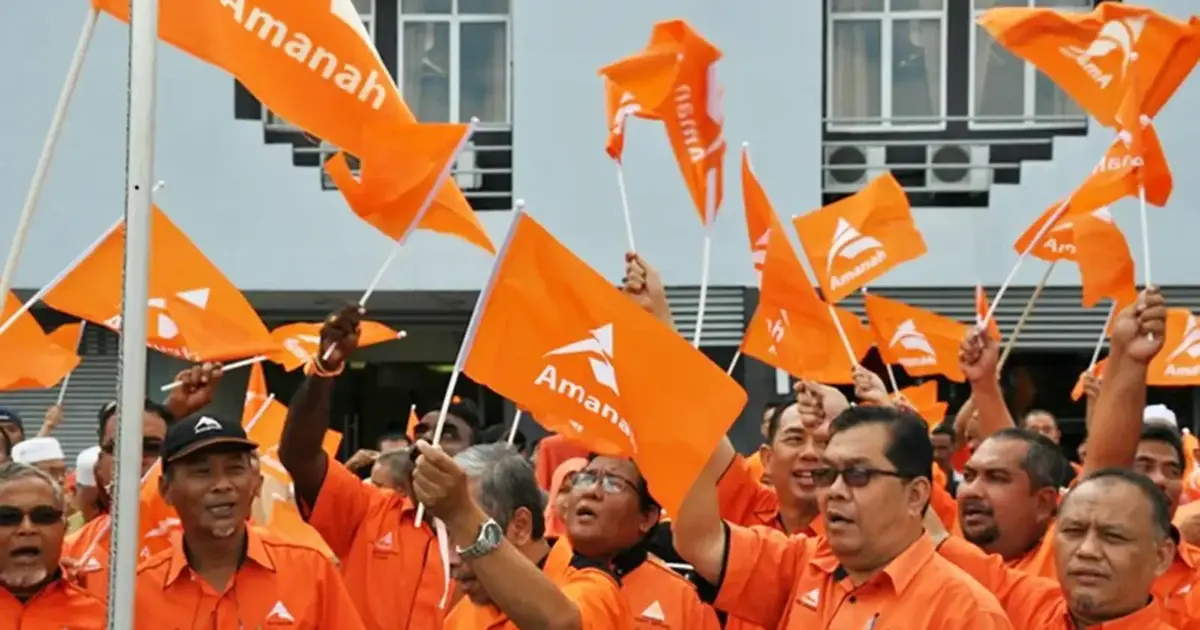
Amanah's leadership has indicated a pragmatic approach to candidate allocation within Pakatan Harapan ahead of the Johor state election, prioritising coalition cohesion over individual party interests. The party's secretary-general Faiz Fadzil conveyed this flexibility as discussions continue over seat distribution among the ruling coalition partners in the state, signalling that internal disagreements on specific candidacies will not derail the broader electoral strategy.
The statement regarding Puteri Wangsa represents a significant moment for Pakatan Harapan as it seeks to maintain the unity that has characterised its political cooperation in several Malaysian states and at the federal level. For Amanah, a party that has experienced fluctuating political fortunes over the past decade, demonstrating willingness to accommodate coalition partners reflects a strategic calculation that electoral success depends on presenting a united front rather than fragmenting over individual contests. This approach contrasts sharply with the zero-sum competition that often characterises opposition politics in Malaysia.
Faiz Fadzil's emphasis on maximising the total number of seats Pakatan Harapan captures underscores the coalition's understanding that Johor's political landscape remains highly competitive. The state, which has long been a stronghold for Umno and Barisan Nasional, has gradually shifted in recent years, though it remains a challenging terrain for Pakatan Harapan candidates. The arithmetic of seat distribution becomes crucial in a state where the margin between government formation and opposition status hinges on relatively small numbers of constituencies.
Amanah's flexibility on the Puteri Wangsa candidacy reveals important dynamics within Pakatan Harapan's internal negotiations. The party, which drew its early support from disillusioned PAS members and professionals concerned with Islam's role in governance, has positioned itself as a moderate Islamist voice within the coalition. By deferring to the coalition's broader strategic interests rather than insisting on specific seat allocations, Amanah demonstrates political maturity and an understanding that losing elections while maintaining principle provides little benefit to supporters.
The Johor election represents a critical test for Pakatan Harapan's ability to consolidate power in another state while potentially weakening Barisan Nasional's remaining strongholds. Success would require not merely winning individual constituencies but developing competitive advantages across multiple demographic and geographic segments. This demands careful nomination strategy, with experienced candidates positioned in winnable seats and emerging figures given opportunities in constituencies where demographic shifts favour opposition politics.
Puteri Wangsa itself carries particular significance as a constituency that reflects broader patterns of urbanisation and demographic change in Johor. The constituency's composition influences which type of candidate and campaign strategy would prove most effective, making coalition coordination on nominations essential rather than peripheral. Amanah's readiness to accept Pakatan Harapan's determination on this seat suggests that internal coalition discussions have already identified the most electorally viable approach.
The broader context involves Pakatan Harapan's experience managing coalition politics at the federal level and in several state governments. These experiences have taught coalition partners that internal discipline and acceptance of collective decisions generally produce better electoral outcomes than public disputes over candidate selection. When parties disagree openly about nominations, it signals weakness to voters and provides ammunition for opponents seeking to portray the coalition as faction-ridden and unstable.
For Malaysian voters and observers, Amanah's stance reflects a shift in opposition politics toward more sophisticated coalition management. Rather than the divisive candidate disputes that sometimes plagued Malaysian politics, modern coalitions attempt to negotiate internally and present unified public faces. This approach, while occasionally frustrating to party loyalists who believe their organisation deserves particular allocations, tends to improve electoral performance by presenting disciplined, confident governance alternatives.
The Johor state election also carries implications extending beyond that state alone. A strong Pakatan Harapan performance would influence calculations across Malaysia regarding which political coalitions appear ascendant and capable of governing effectively. Conversely, a poor showing would strengthen Barisan Nasional's claim to represent the electoral mainstream and could embolden parties currently within Pakatan Harapan to reconsider their alignment. This larger political economy contextualises why parties like Amanah prioritise coalition unity over narrow organisational interests.
Faiz Fadzil's comments also suggest that Amanah has concluded that accepting coalition decisions produces long-term benefits exceeding the short-term satisfaction of securing particular constituencies for party candidates. In a state like Johor where Umno maintains considerable institutional advantages and grassroots organisation, Pakatan Harapan's best chance lies in optimised seat distribution that maximises competitive contests rather than distributing seats equally among coalition partners regardless of electoral viability. This realpolitik approach distinguishes serious governing coalitions from protest alliances.
The flexibility Amanah has shown may also reflect confidence that its candidates will receive competitive allocations in other constituencies where party members can effectively mobilise voters. By demonstrating cooperative behaviour in negotiations, Amanah positions itself favorably for future discussions on seat distribution in other elections and potential state-level portfolio allocation should Pakatan Harapan form the next Johor government. Coalition politics rewards parties that demonstrate reliability and strategic thinking.

