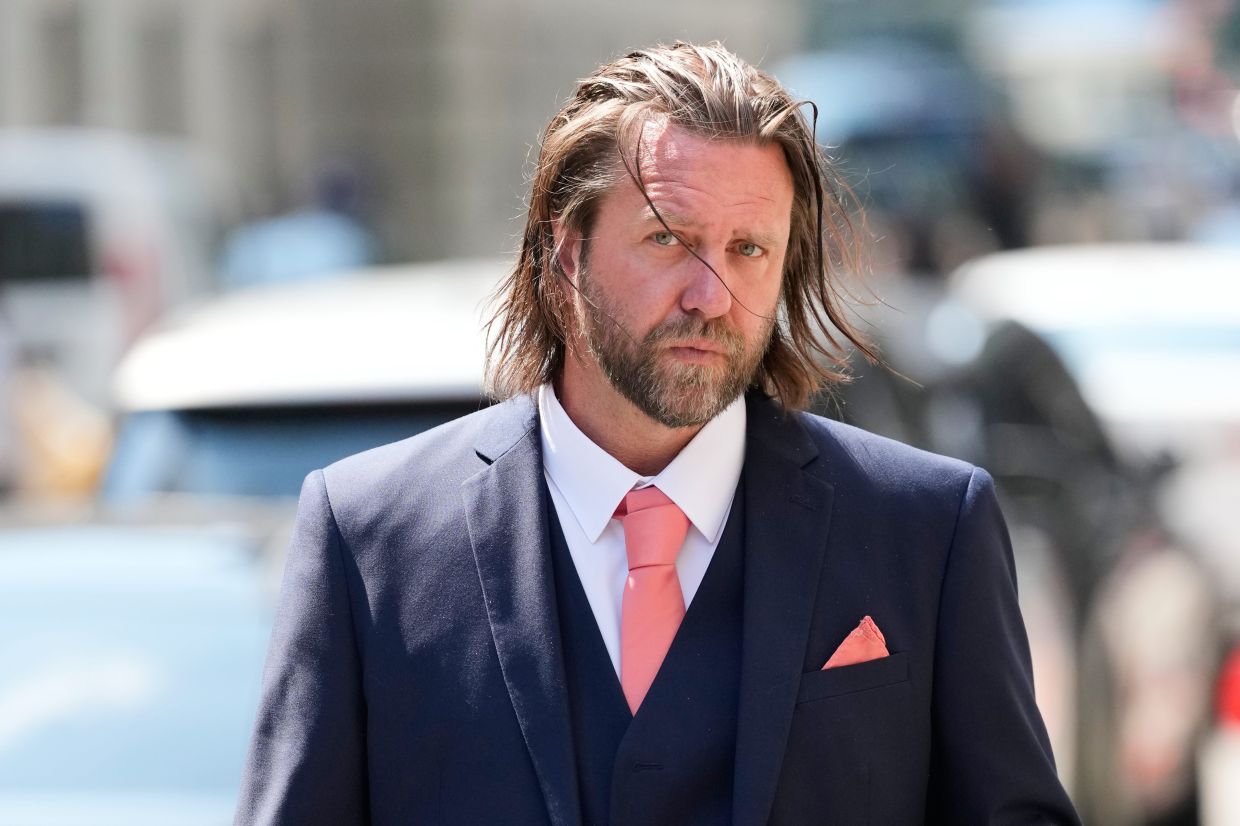
American film director Carl Rinsch has been handed a prison sentence after being found guilty of defrauding streaming giant Netflix out of US$11 million in production funds that he squandered on personal luxuries and risky financial speculation rather than using to create the commissioned project. The 48-year-old filmmaker's case represents a high-profile breach of trust in the entertainment industry and raises questions about financial oversight in major production deals.
Rinsch was convicted of the offence last year following allegations that he grossly misappropriated funds Netflix transferred to him in 2020 for the development and creation of a science fiction television series. Rather than channelling the money into the show's production budget, the director allegedly diverted substantial portions toward personal enrichment through a combination of volatile investment activities and extravagant consumer purchases. Jay Clayton, the United States Attorney for the Southern District of New York, outlined the nature of the misconduct in an official statement, noting that Rinsch engaged in risky speculation on highly volatile stock options and cryptocurrency instead of focusing on the project work.
The scale and nature of Rinsch's personal spending during the fraud period proved particularly noteworthy. Court records and prosecution evidence revealed that he purchased multiple high-end vehicles, including a red Ferrari sports car and five Rolls-Royce automobiles, alongside expensive luxury apparel and designer furniture for his own use. These acquisitions collectively consumed a substantial portion of the funds that Netflix had provided under the understanding they would support production activities. The conspicuous nature of these purchases—particularly the accumulation of rare luxury vehicles—underscored the brazenness of the misappropriation.
Beyond the prison sentence imposed by the court, Rinsch was ordered to forfeit the entire US$11 million sum to compensate for his misconduct. This restitution requirement ensures that the funds, to whatever extent recoverable, return to Netflix as redress for the fraudulent scheme. The combination of incarceration and financial forfeiture represents the standard approach American courts take toward white-collar fraud cases involving substantial sums.
Defence arguments presented during sentencing hearings sought to mitigate the severity of the conviction by contextualizing Rinsch's behaviour within broader personal and professional pressures. His legal team appealed to the presiding judge for leniency, characterizing the fund misuse as occurring under extreme career-related stress and during a particularly acrimonious divorce proceeding. The defence strategy attempted to frame the misconduct as a temporary lapse in judgment rather than calculated criminal intent, though such arguments appear to have carried limited weight with the court.
The commissioned project itself was envisioned as an ambitious science fiction series exploring speculative themes. According to court documentation, the narrative centred on a scientist who engineered a group of genetically enhanced clones that were subsequently isolated within a fortified zone in a Brazilian city. The storyline would have followed how these clones developed sophisticated technology while simultaneously engaging in complex power struggles with both unmodified humans and each other. The project represented the type of high-concept, effects-heavy production that streaming platforms like Netflix frequently develop to attract subscribers.
Rinsch's early career showed considerable promise and artistic ambition. He began his work as a feature film director in the early 2010s, establishing himself as a creative talent capable of handling ambitious visual and narrative material. However, his track record as a trustee of major production budgets proved questionable, as evidenced by his management of Netflix's significant investment in the planned series.
In a notable development during the sentencing process, prominent figures from the entertainment industry intervened on Rinsch's behalf. One notable actor associated with prior collaborations wrote to the judge requesting leniency and mercy in the sentencing determination. This correspondent characterized Rinsch as an "exceptional artist" while acknowledging his susceptibility to self-destructive behaviour patterns. Such character references from respected industry figures occasionally influence sentencing outcomes in white-collar cases, though judges must balance such testimonials against the seriousness of the criminal conduct.
The case carries broader implications for how major streaming platforms structure production financing arrangements and monitor contractor accountability. Netflix and similar services typically advance substantial funds to filmmakers and producers based on creative proposals and professional reputation, often with limited real-time financial oversight during production phases. This Rinsch case demonstrates the vulnerability of such arrangements to fraud when individual creators lack adequate internal controls or external accountability mechanisms.
For Malaysian and Southeast Asian audiences, the case illustrates how international entertainment financing operates at the highest levels and the risks inherent when substantial capital crosses borders to support creative projects. As regional streaming services and production companies increasingly invest in original content with international partners and contractors, the Rinsch precedent underscores the importance of rigorous financial controls, transparent budgeting processes, and regular auditing of expenditures. The case serves as a cautionary tale about the dangers of placing excessive trust in individual artists without corresponding structural safeguards.
The conviction and sentencing also reflect broader American legal priorities regarding white-collar crime accountability. Federal prosecutors and courts have increasingly targeted financial fraud in the entertainment sector, recognizing that such cases involve substantial sums and breach public trust in major corporations. As the entertainment industry continues its digital transformation and expansion into streaming platforms, regulatory and prosecutorial attention to financial malfeasance is likely to intensify.

