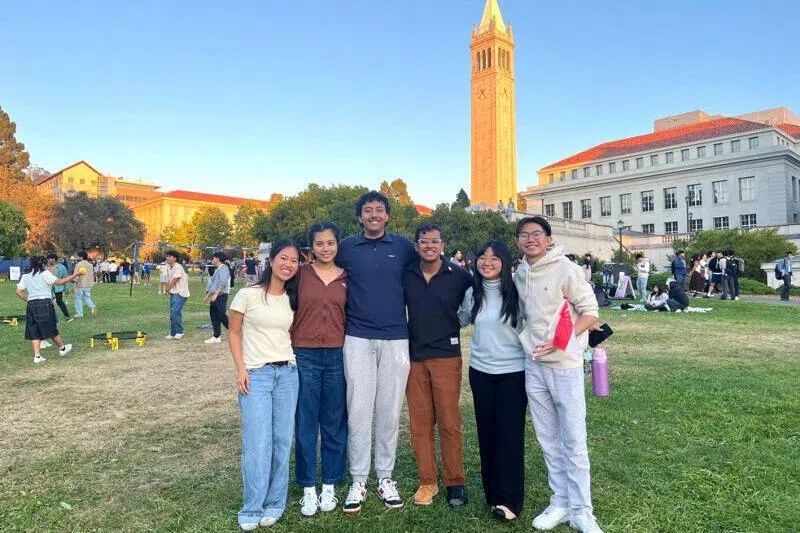
For Mavis Wen, the decision to pursue higher education in the United States represented a carefully considered choice shaped by her academic aspirations and exposure to American campus culture. The 19-year-old attended recruitment events in Boston during the middle of 2025, where she experienced the appeal of studying alongside an internationally diverse cohort and explored the attractions of American liberal education systems that permit broader intellectual exploration across disciplinary boundaries. Her acceptance into Boston University's electrical engineering programme seemed to validate this pathway, yet a single event fundamentally altered her trajectory. When a mass shooting at the campus claimed two lives and injured nine others in December 2025, her family's enthusiasm evaporated entirely. The combination of this tragedy and her parents' concerns about broader social dynamics rendered the American option unacceptable to her household, prompting her to enrol instead at the National University of Singapore in a double major spanning industrial design and innovation.
Wen's experience encapsulates a broader tension now confronting prospective international students from Singapore and across Southeast Asia. Beyond safety anxieties, the Trump administration's recently announced immigration modifications represent a structural shift in how the US government manages student mobility. The policy changes, unveiled on 16 July and scheduled for implementation in September, fundamentally reconfigure the international student visa landscape through mechanisms designed to impose greater temporal limits and bureaucratic scrutiny on extended stays. Previously, international students on F-1 visas could pursue flexible timelines for degree completion with administrative extensions handled largely through institutional channels. Under the revised framework, any extension beyond four years requires formal applications to the US Citizenship and Immigration Services, mandatory background checks, biometric submission, and associated filing fees—a gatekeeping apparatus that transforms what was once routine administrative processing into a discretionary governmental decision.
The regulations introduce additional constraints that ripple through students' academic planning. Transferring between universities, altering major concentrations, or pursuing sequential degrees becomes administratively prohibited rather than simply discouraged. The grace period for departure following programme completion has compressed from two months to thirty days, with heightened penalties for temporal violations. For students pursuing extended programmes such as doctoral studies or double majors common among high-performing cohorts, the implications become particularly acute. The J-1 visa category, commonly utilised for exchange-based work and study opportunities, now mandates immediate departure upon programme conclusion, eliminating the flexibility that previously characterised these arrangements. The Department of Homeland Security framed these modifications as combating visa misuse and strengthening national security protocols, language consistent with broader administration rhetoric around immigration enforcement.
Despite these structural changes and safety apprehensions, education consultancies operating within Singapore report that actual student behaviour has remained surprisingly stable thus far. Sedifly, a prominent college admissions advisory firm, indicates that approximately seventy percent of its clientele pursues American university applications, and recent surveys conducted in May 2026 revealed that over eighty-five percent of prospective students interested in US institutions remained committed to their original plans. This apparent resilience may reflect multiple dynamics: the four-year limitation applies primarily to students pursuing extended programmes rather than standard bachelor's degrees, visa extension procedures remain technically available albeit through more cumbersome mechanisms, and the prestige attached to American credentials continues exercising substantial gravitational pull within Singapore's highly education-conscious society. Joash Lee, chief executive of Sedifly, observes that families are conducting more thorough due diligence earlier in their decision-making processes and demonstrate greater openness to alternatives, particularly British universities, yet this expanded consideration has not translated into wholesale abandonment of American pathways.
Crimson Education's Singapore operations similarly anticipate limited disruption, with roughly half of applicants pursuing US university opportunities while the remainder pursue British institutions. The consultancy's country manager, Praise Tan, emphasises that the policy framework does not fundamentally prohibit visa extensions but rather channels requests through formal governmental approval mechanisms. Since most students complete standard bachelor programmes within four-year timeframes, the immediate impact affects primarily those pursuing longer trajectories. Tan's advisory approach emphasises proactive engagement with visa requirements and sustained communication with universities' international student services, essentially urging students to treat the new regulations as manageable procedural hurdles rather than systemic barriers. This positioning reflects the professional stakes inherent in education consultancy—demonstrating continued viability of American options remains crucial to business models predicated on student placement in high-prestige institutions.
Yet the political dimensions extend beyond mere regulatory mechanics into broader questions of institutional receptivity and national welcome. When the Trump administration moved to revoke Harvard University's authorisation to enrol foreign nationals in May 2025, the symbolic message reverberated across prospective student populations considering American education. Ahsan Nathyr Noorazman, a junior college student at Raffles Institution, articulates this anxiety directly: the political climate projects hostility toward international students through both policy interventions and administrative actions targeting America's elite institutions. This perception circulates through social media channels where immigration enforcement videos documenting deportation procedures circulate widely, creating affective dimensions of immigration anxiety that transcend formal policy documentation. Mavis Wen explicitly referenced such content as contributing to her family's decision-making, suggesting that the emotional register surrounding American immigration enforcement exercises material influence on educational choices.
America's universities, however, continue projecting welcoming messages to offset these political headwinds. Institutional recruitment efforts, explicit commitments to international student support, and reassurance regarding institutional autonomy in admissions decisions work to counterbalance governmental policy rhetoric. The distinction between US government immigration apparatus and American universities themselves becomes pedagogically significant for prospective students seeking to reconcile their aspirations with their concerns. Universities emphasise their commitment to supporting international students through visa navigation, extension procedures, and advocacy around policy interpretation, essentially positioning themselves as institutional buffers against governmental restrictiveness. This dynamic reflects the structural reality that American higher education constitutes an export industry worth billions annually, creating institutional incentives to maintain international enrollment despite governmental friction.
Singaporean students occupy a particularly interesting position within this constellation of forces. As residents of a wealthy, stable, developed economy with strong historical education ties to the United States, Singaporean prospective students represent relatively lower-risk visa applicants from security and economic perspectives. The demographic profile—typically from affluent families with demonstrated financial resources, strong academic preparation, and extensive documentation—means that the new vetting procedures, while administratively burdensome, likely pose limited practical barriers for Singaporean applicants specifically. Departmental of Homeland Security data indicate approximately 4,258 Singaporean students were studying in the US as of September 2025, a substantial constituency possessing institutional relationships and networks within American universities. This established presence creates feedback loops where successful Singaporean alumni networks facilitate subsequent cohort recruitment, providing countervailing influences against deterrent policy messaging.
The broader Asian dimension merits consideration. Over seventy percent of international students in the US originate from Asian countries, with China and India representing the dominant source nations. Policy modifications targeting international student visa administration disproportionately affect Asian student populations, though the stated rationale emphasises national security and abuse prevention rather than explicit geographic discrimination. For Southeast Asian countries like Singapore positioned between regional powers, American university access maintains substantial geopolitical and economic significance. Maintaining viable American education pathways preserves optionality for talented students while reinforcing soft power dimensions of US regional engagement. Conversely, policies perceived as restricting Asian student access risk damaging American competitive positioning in the region's talent markets, potentially favouring competitors like Australia, Canada, and increasingly, the United Kingdom.
Looking forward, the stability of student flows likely depends on policy implementation details and institutional response mechanisms. If universities successfully navigate visa extension procedures through expedited governmental processing and students experience manageable timelines, the practical impact may remain limited despite regulatory strictures. Conversely, if delays, rejections, or excessive bureaucratic friction materialize, cost-benefit calculations may tip decisively toward alternative destinations. Education consultancies anticipate a bifurcation whereby students pursuing standard four-year programmes face minimal disruption while those pursuing extended studies increasingly consider alternatives. Mavis Wen's choice to pursue a domestic double major while retaining aspirations for postgraduate American study represents a compromise increasingly attractive to risk-averse families: capturing Singapore's educational excellence while preserving optionality for later-stage American engagement when students possess greater independence and clearer academic focus.

