The 2026 World Cup is reshaping perceptions of the United States among international football fans in ways that extend far beyond what sceptics anticipated before the tournament began. Many overseas supporters arrived with justified concerns about visa accessibility, inflated ticket prices, safety worries, inadequate football culture, and lingering diplomatic tensions. Yet as matches unfold across the country, social media has become a window into an unexpected narrative—one where visitors are encountering genuine warmth, distinctive American customs, and hospitality that transcends typical tourist interactions.
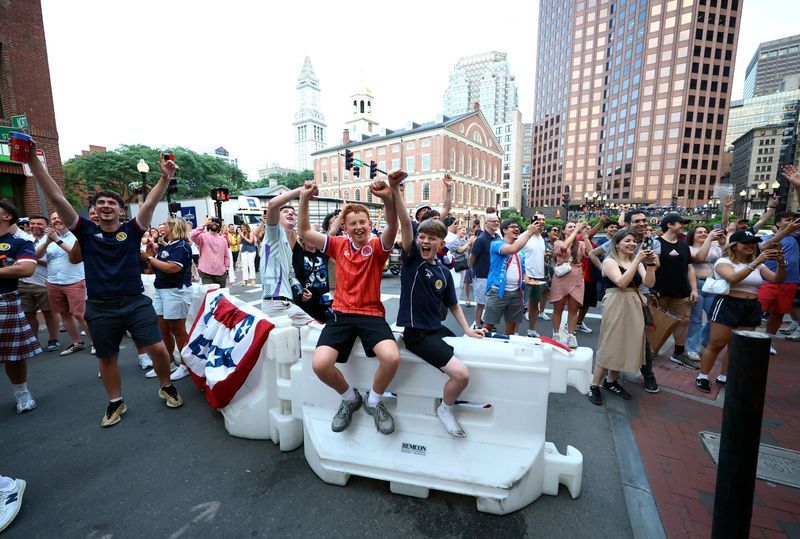
Scottish supporter Gail Nicholl's experience in a Boston pub encapsulates this sentiment. During celebrations ahead of Scotland's match against Haiti, local residents approached her with open friendliness, buying drinks and enthusiastically welcoming visitors to Massachusetts with infectious enthusiasm. Her observation that "everyone is so friendly, so nice" mirrors sentiments pouring onto online forums, where Swiss visitors and fans from dozens of nations express surprise at the outgoing nature of their American hosts. These accounts suggest something more fundamental than superficial politeness—rather, a genuine cultural openness that catches international visitors off guard.
From a strategic perspective, sports industry analysts view this dynamic through an important lens. Darin White, founder of Samford University's Sports Industry Program and former soccer coach, frames major sporting events as a nation's "front porch"—the critical first impression that determines whether visitors form lasting positive associations with a place. For countries and cities, this initial encounter carries disproportionate weight in shaping long-term perceptions and future visitation decisions. Research consistently demonstrates that hosting premier international competitions can fundamentally alter deeply embedded stereotypes about nations, communities, and their inhabitants.
What distinguishes this particular World Cup tournament is its geographic dispersal. Rather than concentrating matches in traditional tourist hubs like New York, Los Angeles, and Orlando, the competition has brought international visitors to heartland cities including Kansas City, Atlanta, and Houston. This distribution exposes global audiences to authentic American communities rarely featured in international media coverage. Kansas City's encounter with Argentine supporters reveals the cultural exchange happening in these secondary cities. Argentines, for whom asado barbecue represents a cornerstone of national identity rivalling football itself, discovered that the local "dry rub" grilling technique possessed its own merit. Visiting supporter Cristian Gastes, sampling Kansas City's signature preparation, acknowledged the quality despite his deep attachment to traditional Argentine methods.
Dallas similarly hosted unexpected cross-cultural moments. German fan Maximilian Kirch from Duesseldorf not only sampled Texas barbecue but embraced Texan cowboy culture, acquiring a genuine Stetson hat to commemorate his experience. Such moments—seemingly trivial in isolation—accumulate into meaningful narratives about American regional diversity that international media often overlooks. These interactions occur not in polished hospitality settings but in genuine community spaces where strangers extend assistance and share local pride.
White emphasizes that the most significant diplomatic work happens away from headlines and social media attention. A Moroccan supporter receiving navigation assistance at a Dallas airport gate, a German family obtaining directions from a random Seattle stranger—these unmemorated interactions constitute what he calls "real work on Brand USA." They are the unglamorous but genuinely transformative moments where individual Americans convey openness and generosity without political calculation. Such experiences carry particular weight because they occur outside formal welcome programs or orchestrated public relations initiatives.
However, the tournament has not entirely resolved the concerns that preceded it. Oppressive heat in Miami and other southern venues has tested both players and supporters, and the midsummer timing of future matches promises even more challenging conditions. Perhaps more substantively, elevated ticket prices and expensive travel logistics have prevented many international fans from attending matches in person, limiting the scope of these positive encounters. Visa restrictions have further constrained participation, with citizens of Iran, Haiti, Ivory Coast, and Senegal facing partial or complete entry bans to the United States. For Iran and Haiti, which possess substantial American diaspora communities, this exclusion creates particular disappointment and internal conflict among supporters who cannot freely cheer their nations.
The visa situation highlights how systemic policy challenges complicate the otherwise genuine warmth visitors experience. Ivory Coast and Senegal, with minimal American-based populations, have seen their supporters largely excluded from attending matches they might otherwise have experienced. Yet even within these constraints, remarkable solidarity has emerged. Brooklyn resident Jessica Ambres, wearing a Senegal shirt at a recent match in New Jersey, embodied a different form of connection—as a Black American identifying with African diaspora representation. Her perspective demonstrates how the tournament has created spaces for Americans to express global football solidarity beyond narrow nationalist frameworks.
Across venues nationwide, American spectators have surprised organizers by supporting not only the United States squad but also underdogs and teams lacking substantial domestic fan bases. This inclusive approach reflects a broader shift in American sports consumption, particularly among younger demographics engaged with global football culture through digital platforms. The composition of crowds itself tells a story about American diversity and international connectivity that contrasts sharply with the "America First" nationalism that has characterized recent political discourse.
Boston Mayor Michelle Wu's invitation to the Scottish Tartan Army to "keep coming back to Boston" whenever they wish extends beyond ceremonial welcome language. It represents a deliberate municipal strategy to convert temporary World Cup visitors into repeat travelers who will spend tourism dollars, attend cultural events, and carry positive impressions home to their communities. Cities like Boston, Kansas City, and Dallas recognize that the tournament presents a rare opportunity to build international relationships and reshape their global standing.
The broader implications for United States soft power could prove significant if momentum can be sustained beyond the final whistle. The nation's international reputation has suffered from diplomatic confrontations with longtime allies including Canada, Britain, and Germany over trade, climate, and security matters. Restoring that damaged trust requires more than political declarations—it necessitates genuine human connection and demonstrated openness. The World Cup provides an unexpected vehicle for that reconstruction, one match and one hospitable interaction at a time.
Sports events occupy a unique position in national messaging because they generate authentic emotional experiences beyond political control. A Scottish fan's birthday celebration in Boston, a German supporter's first Texas barbecue, a Moroccan's helpful interaction in Dallas—these moments escape government spin while accomplishing more durable diplomatic work. Whether the goodwill generated during the tournament can translate into longer-term perception shifts depends partly on whether Americans maintain this welcoming orientation once the international spotlight fades. For now, the World Cup demonstrates that beneath the polarized rhetoric dominating American public discourse exists a foundation of genuine hospitality upon which more positive international relationships might be rebuilt.

