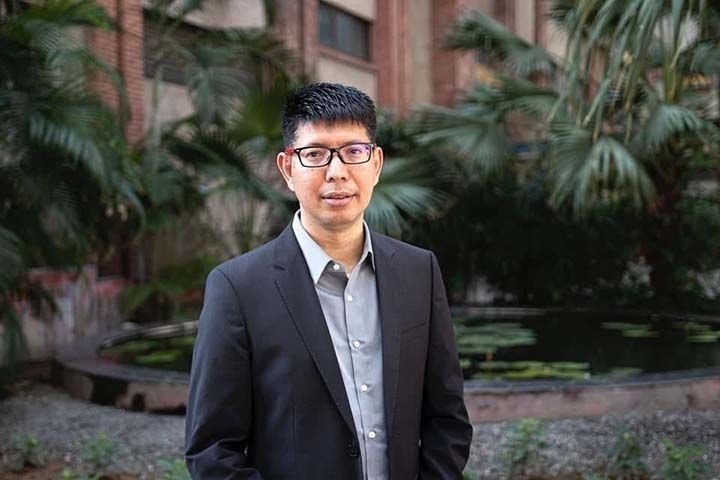
Min Zin, a prominent American scholar and executive director of the Institute for Strategy and Policy (ISP) - Myanmar, remains in Chinese custody following his arrest in the southwestern city of Kunming on June 3. The think tank he founded moved to release a statement on June 17 refuting allegations levelled by Beijing and insisting that the detention was baseless, while demanding his unconditional and immediate release. According to the organisation's account, Min Zin had travelled to Kunming solely to participate in an academic workshop, a purpose entirely consistent with his professional work and scholarly obligations.
China's foreign ministry had confirmed the arrest the previous week, asserting that Min Zin was suspected of engaging in espionage and threatening national security. The vague and broad nature of these allegations has raised concerns among international observers and academic freedom advocates, who view such charges as potentially being used to suppress legitimate research and critical analysis. The Chinese government has not provided specific details about what activities or communications form the basis of the espionage allegations, maintaining only that the case would be handled in accordance with Chinese law.
The Institute for Strategy and Policy - Myanmar, which Min Zin established and continues to direct, issued a forceful statement condemning the accusations as groundless and rejecting any suggestion that the scholar's activities constituted illegal conduct. The think tank emphasised that it operates within the parameters of legitimate academic research and policy analysis, focusing its work on understanding Myanmar's political situation, economic challenges, and international relationships. The organisation's positioning is significant because it reflects the broader concern within academic circles that China may be using detention to discourage scholarly scrutiny of sensitive geopolitical issues.
The United States has moved quickly to support the detained scholar. A spokesperson for the U.S. State Department rejected the espionage accusations against Min Zin, stating that American consular officers have been granted access to visit him in detention. The department indicated that it is actively engaged with Chinese officials to secure his release and is providing what it characterised as appropriate consular assistance. This diplomatic response underscores the seriousness with which Washington views the detention and its commitment to protecting American citizens abroad.
The timing of Min Zin's arrest carries considerable diplomatic significance, occurring just weeks before Myanmar's military leader Min Aung Hlaing undertook a scheduled state visit to China. This proximity suggests the detention may be part of a broader pattern of messaging by Beijing regarding which actors and organisations it regards as acceptable interlocutors on Myanmar affairs. China maintains one of the most strategically important relationships with Myanmar's military establishment, having provided substantial military and economic support to the junta, particularly following the February 2021 coup that overthrew the elected government of Aung San Suu Kyi.
Myanmar's political landscape has been transformed dramatically since that coup. The initial civilian protests against military rule evolved into a nationwide armed conflict, with newly established pro-democracy resistance forces joining forces with longstanding ethnic armed organisations to challenge military control. This armed uprising represents the most serious internal security challenge Myanmar's military has faced in decades, and the conflict has created significant humanitarian and economic crises. The country's economy has deteriorated sharply, drawing international scrutiny and concern from regional partners including China.
Min Zin brings considerable experience and credentials to his research on Myanmar. He is a former student activist who participated directly in Myanmar's historic 1988 democracy movement, one of the most significant pro-democracy uprisings in Southeast Asian history. His educational background includes advanced study in political science at the University of California, Berkeley, providing him with rigorous training in research methodology and theoretical frameworks. This combination of lived experience during Myanmar's pro-democracy struggles and formal academic training positions him as a sophisticated analyst of the country's political dynamics.
The Institute for Strategy and Policy - Myanmar, which Min Zin helped establish, initially operated within Myanmar but was forced to relocate overseas in the aftermath of the 2021 coup. This geographic repositioning reflects the increasingly restrictive environment for independent analysis and research within Myanmar itself, where the military has sought to control narratives about the conflict and political situation. The think tank's publications have maintained focus on understanding the ongoing armed conflict, analysing potential pathways for political transition, examining Myanmar's economic deterioration, and studying the complex bilateral relationship between Myanmar and China, among other subjects.
The detention raises serious questions about intellectual freedom and the space for independent research in the region. The think tank emphasised in its statement that academic and research organisations must be able to pursue their work without facing intimidation or harassment. The case reflects broader international concerns about restrictions on scholarly exchange and the potential weaponisation of espionage allegations against researchers whose work examines sensitive geopolitical relationships. For Malaysia and other Southeast Asian nations, the incident underscores the importance of maintaining robust protections for academic freedom and cross-border scholarly collaboration.
The situation also illuminates the complex positioning of China within Southeast Asian affairs, particularly regarding Myanmar. While Beijing has long been the military junta's most steadfast international partner, the detention of a scholar merely attending an academic workshop suggests a more expansive interpretation of what constitutes threatening activity. This approach may reflect Chinese concerns about research and analysis that critically examines the military's governance record, Myanmar's bilateral relationship with China, or the broader geopolitical implications of China's Myanmar engagement.
For the Southeast Asian region, the case serves as a reminder of the vulnerability of scholars and researchers who work on sensitive political and security issues. The incident may have a chilling effect on academic exchange programmes and collaborative research projects involving Myanmar specialists, potentially limiting the quality of independent analysis available to policymakers and international stakeholders. The broader principle at stake concerns whether researchers can operate freely across borders to share ideas and contribute to global knowledge production without facing detention on vague security allegations.
The outcome of Min Zin's case will likely be closely monitored by academic institutions, think tanks, and international observers across Southeast Asia and beyond. The principles of academic freedom and the protection of researchers engaged in legitimate scholarly work have become increasingly important as geopolitical tensions shape the operating environment for independent analysis. Malaysia, as a regional player committed to maintaining productive international relationships, has a stake in ensuring that research collaborations and intellectual exchange remain possible across the region.

