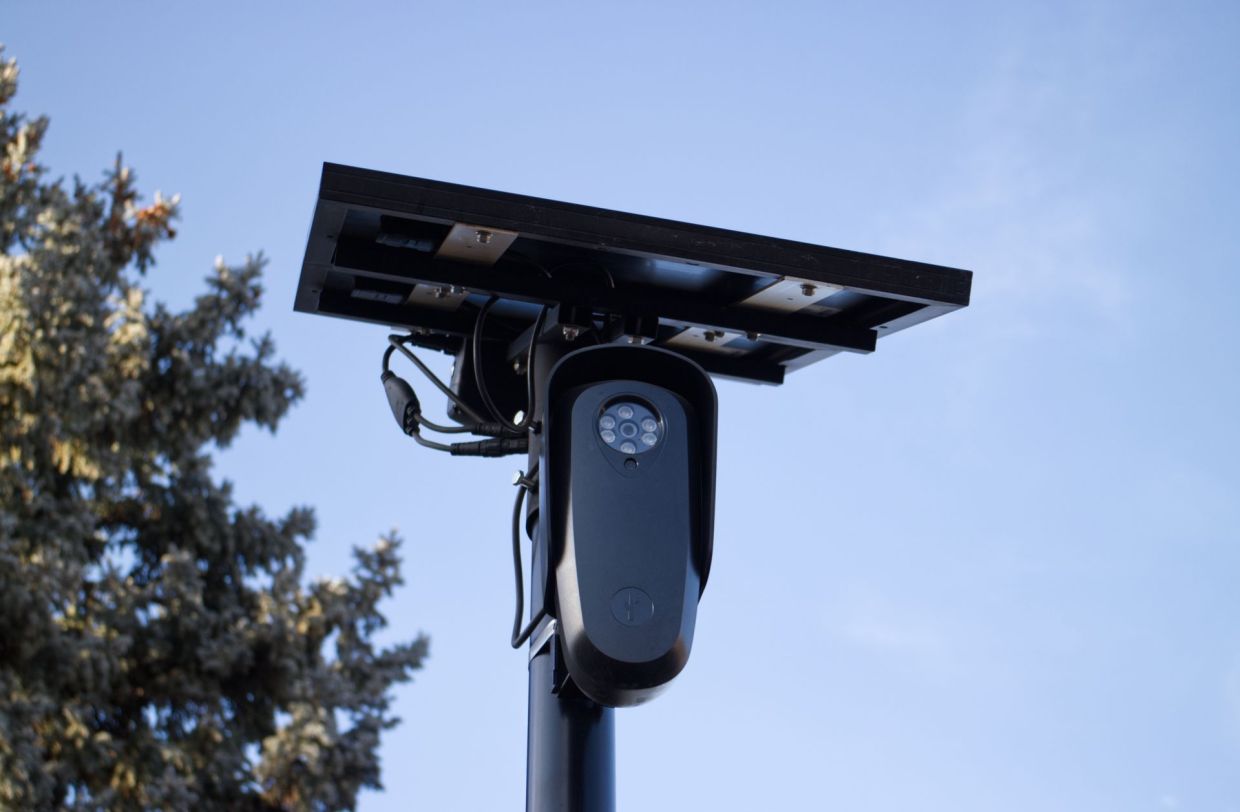
Across the United States, an unusual political alliance is forming to challenge what critics view as an invasive surveillance apparatus. The target is Flock Safety, a company that manufactures automated license plate recognition cameras, and the opposition spans traditional political divides in a country typically fractured along ideological lines. The movement has grown from online activism to tangible political victories, with more than 70 municipalities abandoning contracts with the company in recent months, according to tallies by the American Civil Liberties Union.
Flock cameras operate differently from conventional surveillance systems, which record continuous video footage. Instead, these devices capture still photographs of vehicles, extracting the licence plate number along with details such as make, model, colour, and distinctive features like bumper stickers. The crucial distinction lies in data storage and accessibility. Unlike traditional cameras that function as isolated devices, Flock's system uploads data to cloud servers where it can be retained for up to a month and shared across police departments, sometimes spanning state lines. This networked architecture has become the focal point of mounting concern among privacy advocates.
The practical applications of Flock technology demonstrate why law enforcement agencies have adopted it enthusiastically. Jon Bridges, a police official in Richmond, Virginia, explains that his department, which has employed Flock since 2023, queries the database for practically any vehicle-related investigation. During a domestic homicide investigation in May, officers used the system to identify a suspect who had fled the crime scene in a pickup truck. After detectives retrieved the licence plate data and set up an alert, the system flagged the vehicle when it appeared on another camera in a neighbouring county, enabling a rapid arrest. Such success stories have motivated police departments nationwide to expand their reliance on the technology.
However, the same capabilities that make Flock valuable for solving crimes have alarmed civil liberties advocates who fear it enables warrantless tracking of vehicles. Recent investigations have uncovered troubling patterns of abuse. The Washington Post reported that at least 50 police officers have been accused of misusing Flock systems, predominantly to conduct surveillance on romantic partners and former partners. Additional cases have surfaced in which officers tracked women who obtained abortions in states where the procedure remains illegal, and some police personnel illegally transferred data to immigration authorities. These incidents underscore the danger that critics emphasise: a powerful surveillance tool with insufficient safeguards against misuse.
The resistance to Flock has manifested in two distinct but complementary forms. Online, a coordinated activist movement has flourished, with the Facebook group DeFlock America accumulating over 600,000 members and growing by thousands daily. Activists have developed crowdsourced maps identifying camera locations, shared technical methods for obstructing lenses, and celebrated individuals arrested for destroying equipment as heroes. The movement has extended to practical action, with self-described vigilantes systematically disabling cameras in their neighbourhoods. One activist known as Nomark, a 20-year-old with 500,000 Instagram followers, has documented his removal of approximately 30 cameras near Minneapolis whilst providing instructional content to his audience about rendering the devices inoperable. He has openly acknowledged that his initial attempts were accompanied by considerable anxiety, but he reports that subsequent actions have felt increasingly routine.
What distinguishes this movement from typical fringe activism is its remarkable cross-ideological appeal. The opposition encompasses both progressive civil liberties organisations and libertarian conservatives who view mass surveillance as fundamentally incompatible with American values. Tucker Carlson, the former Fox News host and influential conservative figure, has characterised those vandalising the cameras as "decent, patriotic Americans" exercising legitimate political resistance. This unusual convergence suggests that concerns about surveillance transcend the partisan divisions that typically dominate American political discourse.
Flock's leadership has responded to growing criticism with aggressive rhetoric. CEO Garrett Langley has publicly accused opponents of the technology of being "terrorists," language that has further inflamed tensions rather than defusing them. Chad Marlow, senior policy counsel for the American Civil Liberties Union, has observed the movement's expansion with considerable interest, describing the grassroots mobilisation as "stunning" in its scope and effectiveness. The ACLU itself has become a primary institutional voice challenging Flock's expansion, providing both legal arguments and strategic guidance to communities resisting adoption.
Grassroots organising at the municipal level has proven unexpectedly effective. Communities from Los Angeles to small towns throughout Virginia have successfully pressured local officials to terminate contracts with Flock through sustained engagement with city councils and mayors. Steven Keener, a criminology professor at Christopher Newport University, emphasises that residents need not rely solely on vandalism or confrontation; they can achieve concrete results through conventional democratic participation. The accumulation of municipal withdrawals from Flock contracts demonstrates that this institutional approach yields tangible outcomes without legal consequences for participants.
The broader significance of this movement extends beyond the specific question of licence plate cameras. In a nation characterised by deep partisan polarisation on most major issues, the anti-Flock movement represents a rare instance of genuine consensus emerging across ideological boundaries. Both progressives concerned with racial justice and police accountability, and conservatives wary of government overreach, have found common cause in opposing what they perceive as unchecked surveillance infrastructure. For observers of American politics, this convergence suggests that privacy concerns possess the potential to mobilise unusual coalitions, potentially reshaping future debates around technology and government power. As more municipalities reassess their contracts with Flock and the movement continues recruiting adherents, the outcome may significantly influence how other cities and states approach surveillance infrastructure decisions in the coming years.

