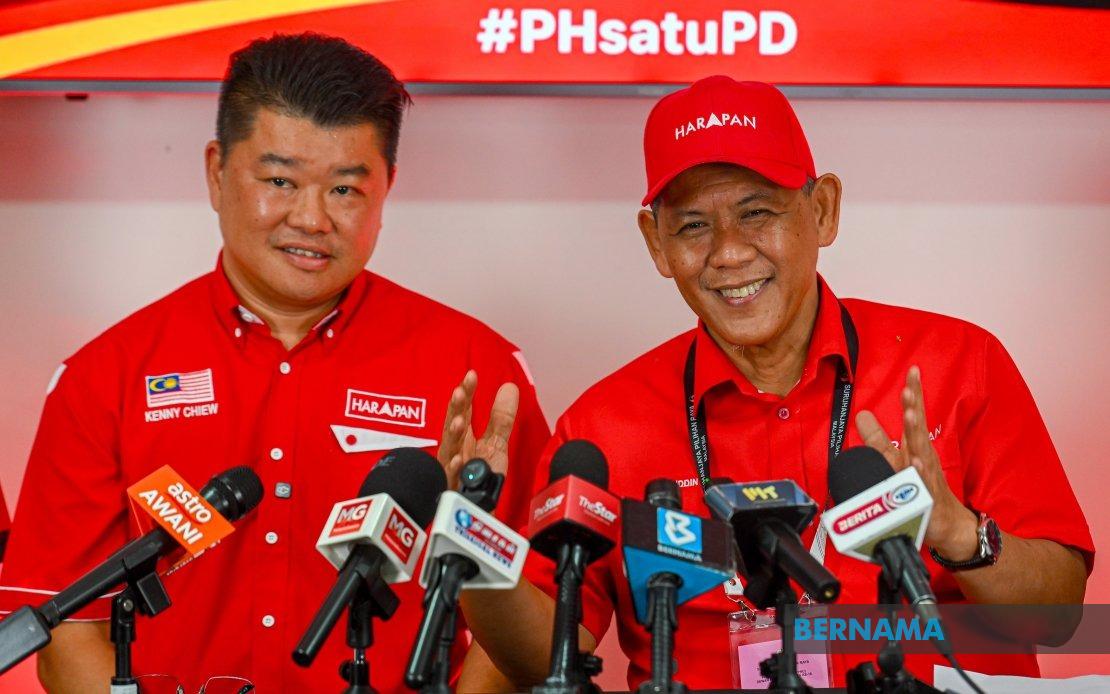
Negeri Sembilan's top political leader has made an impassioned plea for all contesting parties to elevate the tone of the 16th state election by conducting their campaigns with integrity and strict adherence to electoral regulations. Datuk Seri Aminuddin Harun, who serves as Menteri Besar and is contesting the Linggi state seat for Pakatan Harapan, articulated his concerns while addressing supporters in Port Dickson on the second day of campaigning, warning that destructive behaviours undermine democratic principles in the state.
The timing of Aminuddin's remarks proved significant, coming as reports surfaced of deliberate damage to campaign materials across multiple constituencies. Pakatan Harapan's media operations centre documented several incidents of vandalism on what marked the second day of active campaigning following the dissolution of the state assembly on June 5. These troubling developments included the intentional burning of party flags in the Palong constituency and structural damage to flagpoles supporting campaign signage in the Chembong area. Such acts, according to the coalition's statement, represented exactly the kind of uncivil conduct that Aminuddin was addressing.
The Menteri Besar's intervention reflects broader concerns about maintaining democratic standards during competitive electoral periods. His comments underscore an expectation that political rivals, regardless of their ideological differences, should respect basic conventions that distinguish mature democracies from less developed political systems. By positioning Negeri Sembilan as a civilised state, Aminuddin implicitly challenged all participants to honour that characterisation through their actions rather than undermine it through vandalism and intimidation tactics.
Law enforcement authorities confirmed that the vandalism incidents extended beyond what Pakatan Harapan initially reported. Negeri Sembilan Police Chief Datuk Alzafny Ahmad acknowledged receiving formal complaints regarding campaign material destruction in the Jempol constituency, while a separate investigation remained active following the Chembong flagpole damage. The police engagement suggested that these were not isolated mischievous acts but rather a pattern of organised disruption that warranted official investigation and potential enforcement action.
The electoral calendar for Negeri Sembilan's 16th state election has compressed the timeline significantly. With early voting scheduled for July 28 and the main polling day fixed for August 1, campaigns operate within a relatively narrow window. This condensed schedule arguably places greater pressure on parties to maximise their visibility, yet Aminuddin's remarks indicate that legitimate visibility must not come at the expense of democratic conduct. The competitive intensity, while understandable, cannot justify the destruction of opponents' property or the intimidation of voters through vandalism.
For Malaysian observers and political analysts, these developments carry implications beyond Negeri Sembilan's borders. State elections serve as important barometers of national political health and the robustness of electoral institutions. When campaigns deteriorate into property destruction and intimidation, questions arise about the broader health of political discourse. The incidents documented in Palong, Chembong, and Jempol suggest that even during what may be routine state-level contests, maintaining electoral integrity requires constant vigilance and leadership commitment.
Aminuddin's position as both Menteri Besar and an active candidate creates a unique platform from which to articulate these values. His calls for respectful conduct carry particular weight because they come from someone with significant institutional authority. When a sitting Menteri Besar publicly criticises vandalism and appeals for civil engagement, the message carries both moral weight and an implicit warning that responsible governance requires upholding these standards consistently.
The broader context matters significantly for understanding these incidents. Negeri Sembilan has historically been a relatively stable state politically, though like all Malaysian states it experiences competitive electoral contests. The emergence of vandalism reports during this particular campaign cycle may reflect intensified competition or shifting political alignments. Regardless of cause, the incidents highlight that no state in Malaysia should assume immunity from electoral misconduct, and vigilance remains necessary.
Stakeholders throughout Southeast Asia, particularly those monitoring Malaysian democratic practices, will be watching how these vandalism cases are resolved. The manner in which authorities investigate and, if warranted, prosecute those responsible for campaign material destruction will signal the strength of electoral enforcement mechanisms. A vigorous response would reinforce that Malaysia takes electoral integrity seriously; conversely, any perception of selective enforcement or leniency would undermine confidence in the system.
Looking forward, the remaining weeks of campaigning before August 1 will test whether Aminuddin's appeal for civility gains traction across party lines. Other political leaders and candidates would do well to amplify this message, using their platforms to discourage supporters from engaging in vandalism or intimidation. The competitive nature of elections need not manifest as destructive behaviour; campaigning can be vigorous and assertive while remaining lawful and respectful.
The Negeri Sembilan election ultimately offers an opportunity for the state to demonstrate that competitive democracy and civil conduct are not mutually exclusive. Aminuddin's intervention signals that political leadership entails responsibility for setting appropriate standards, particularly during periods when democratic contestation intensifies. Whether all contesting parties embrace this philosophy will substantially shape the tone of the campaign and, by extension, the character of governance that follows polling day.

