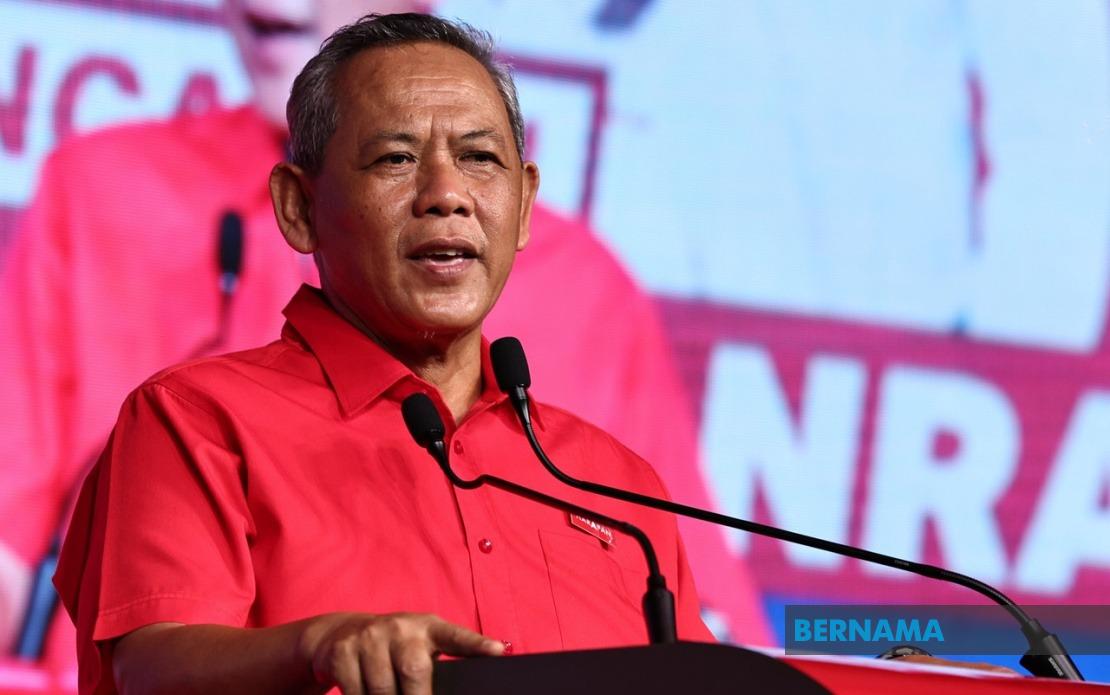
Negeri Sembilan Menteri Besar Datuk Seri Aminuddin Harun has appealed to voters ahead of the 16th state election to assess the government's practical efforts to tackle Linggi's chronic flooding problem, cautioning against using the sensitive infrastructure issue as a political tool. Speaking in Seremban on July 17 after performing Friday prayers, Aminuddin, who is contesting the Linggi state seat as the Pakatan Harapan candidate, emphasised that the issue should be judged on tangible action rather than electoral rhetoric.
The Negeri Sembilan Menteri Besar underscored that the state administration has treated Linggi's recurring floods with utmost seriousness, having secured approvals for two dedicated flood mitigation projects that are now underway through coordinated effort between state and federal authorities. He stressed that addressing infrastructural challenges of this scale demands time and systematic planning, rather than quick-fix political posturing.
The decision to highlight flood management comes as social media has amplified discussion of Linggi's vulnerability to inundation during periods of heavy rainfall in the Seremban area. These viral discussions have created political opportunity for opponents to question the government's competence in managing the constituency's most pressing environmental concern. Aminuddin's statement represents a deliberate pivot to frame the conversation around demonstrable progress and responsible governance rather than allowing sentiment-driven criticism to dominate the electoral narrative.
Aminuddin articulated the coalition's governing philosophy as one grounded in methodical problem-solving and infrastructure development, distinguishing this approach from what he characterised as opponents' reliance on emotional appeals to secure political backing. This framing positions Pakatan Harapan as the mature, solutions-oriented force in Negeri Sembilan politics, contrasting with what the Menteri Besar implicitly suggests are more opportunistic tactics employed by rival camps.
For Malaysian voters, and particularly those in flood-prone constituencies across the peninsula, the Linggi situation represents a broader tension between infrastructure investment timelines and electoral cycles. Flood mitigation projects, whether involving dike construction, drainage system overhauls, or river management initiatives, typically require years of planning and implementation. The political challenge emerges when citizens experiencing annual inundation perceive insufficient urgency or results. Aminuddin's emphasis on both projects being approved and under implementation suggests a recognition that Pakatan Harapan must demonstrate progress to defend its record convincingly.
The Negeri Sembilan Pakatan Harapan chairman positioned the coalition's electoral appeal on its established administration track record and current development endeavours, effectively asking voters to weigh proven governance against untested alternatives. This strategy carries inherent risk, as incumbents must answer for past flood seasons and explain why relief was not faster or more comprehensive. However, it also carries potential strength if the mitigation projects show visible advancement and if the coalition can demonstrate that its problems-solving approach, whilst slower, produces durable results.
Contextually, the appeal carries significance for Southeast Asian politics more broadly, where infrastructure investments often become battlegrounds between incumbents and challengers. Governments defending development records must navigate between justifiable timelines for complex projects and voter expectations shaped by electoral competition. The Linggi case illustrates how a single, persistent local problem can crystallise broader voter sentiment about governmental competence and responsiveness.
The Negeri Sembilan administration's emphasis on collaborative state-federal funding and implementation also reflects the Malaysian federal structure's influence on local governance. Flood management frequently requires resources and technical expertise spanning multiple administrative levels, meaning local representatives must sometimes position themselves as facilitators rather than sole architects of solutions. Aminuddin's acknowledgment of this partnership structure conveys both pragmatism and an implicit message that solutions require political maturity and cross-level cooperation.
For Southeast Asian readers, the Linggi narrative resonates with recurring flood management challenges across the region. Malaysia, Indonesia, Thailand, and the Philippines all contend with seasonal and increasingly frequent extreme rainfall events. How regional governments communicate about mitigation efforts—whether emphasising rapid visible action or methodical long-term solutions—significantly influences public confidence in governance capacity. Aminuddin's framing represents one approach within this broader regional conversation about climate adaptation and infrastructure investment.
The Election Commission's announcement of nomination day on July 18, followed by early voting on July 28 and polling on August 1, compresses the campaign window into a fortnight. Within this timeframe, Aminuddin's strategy of directing voter attention toward tangible government projects aims to counter any political momentum from criticism of flood management. Whether this forward-looking emphasis on infrastructure projects succeeds depends partly on voters' assessment of the two mitigation schemes' visibility and perceived adequacy.
Aminuddin's intervention also signals that Pakatan Harapan recognises Linggi as potentially vulnerable territory, necessitating proactive defence of the incumbent's record rather than passive reliance on voter familiarity. By explicitly urging voters to focus on government efforts and dismissing the politicisation of flooding as counterproductive, the Menteri Besar attempts to frame opposition criticism as opportunistic rather than substantive. This rhetorical move seeks to inoculate against potential losses among voters frustrated by past flood experiences.
The broader implication for Negeri Sembilan's electoral contest is that local issues—particular geographical challenges like flooding—retain political potency even in state elections. Whilst higher-level political narratives and national party dynamics influence outcomes, tangible constituency-level problems shape voter decisions. Aminuddin's emphasis on Linggi's flood mitigation projects reflects recognition that electoral credibility rests partly on demonstrating practical responsiveness to the specific difficulties affecting daily life in constituencies like this one.

