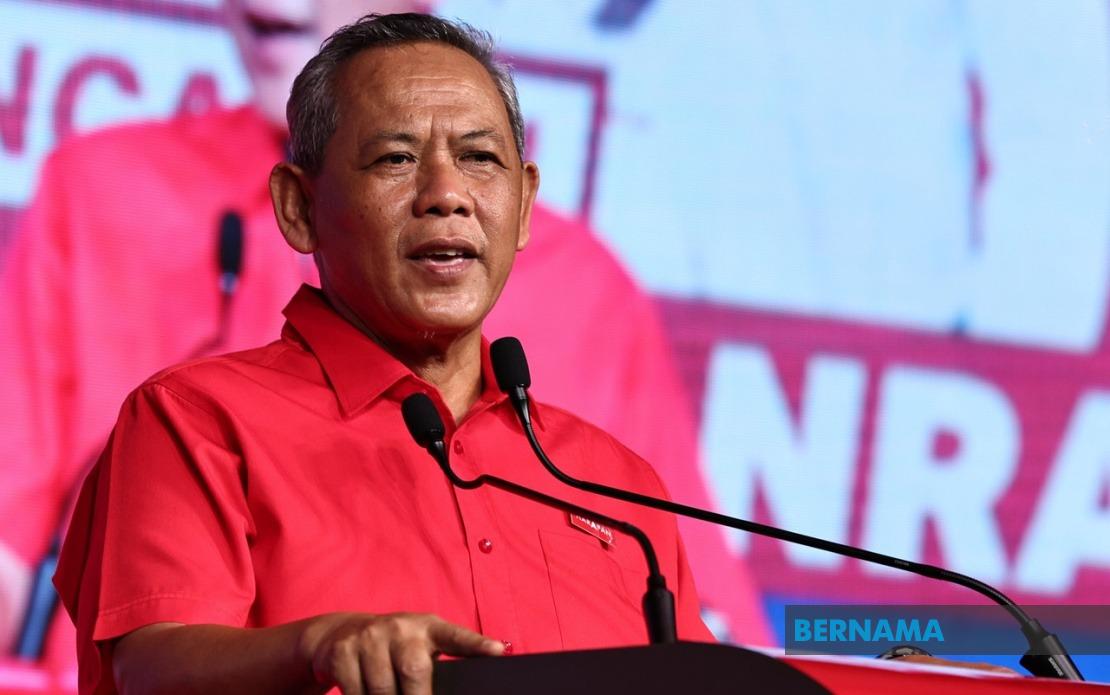
Datuk Seri Aminuddin Harun, the Menteri Besar of Negeri Sembilan, has moved to quash speculation surrounding his decision to stand for the Linggi state seat in the upcoming state election, characterising the shift as a personal strategic decision rather than an attempt to evade defending his long-held Sikamat constituency. Speaking on Tuesday, the Pakatan Harapan chairman for the state made clear his resolve to bring the same work ethic and commitment to his new electoral battleground that defined his four-term tenure in Sikamat.
In remarks posted on social media, Aminuddin articulated his vision for Linggi, pledging to channel the same energy and focus that had marked his previous four victories in Sikamat. His statement carries particular weight given the intensity of local political competition in Negeri Sembilan, where seat changes by senior figures often invite questions about strategic positioning. The Menteri Besar's explicit rejection of these suggestions underscores his confidence in the rationale behind the move and his determination to frame it as proactive rather than defensive.
The veteran politician reflected extensively on his political evolution within Sikamat, a constituency he has represented since his initial electoral breakthrough. He recalled the lean years when Pakatan Harapan operated as an opposition force, describing the modest circumstances under which his operation functioned—a small office situated above a commercial shoplot with minimal budgetary support. This retrospective serves multiple purposes: it contextualises his political growth trajectory, highlights the party's transformation from opposition to government, and emphasises the collaborative relationship built with constituents over nearly two decades of representation.
During those opposition years, Aminuddin noted that both he and the residents of Sikamat worked together creatively to maximise limited resources, pooling efforts to raise funds, address community needs, and orchestrate welfare initiatives. This narrative of shared sacrifice and collective problem-solving has become a familiar refrain in Malaysian politics, particularly when senior figures transition constituencies—it establishes credibility and demonstrates hands-on commitment to development work. For Aminuddin, recounting these experiences also serves to cement his legacy in Sikamat before departing.
The Menteri Besar extended formal gratitude to Sikamat's population for their consistent electoral support throughout his four-term representation, acknowledging the bond formed through years of constituent service. This expression of appreciation represents standard political practice in Malaysia—honouring outgoing constituencies is integral to maintaining relationships and preserving political capital for future contests or legislative support. Aminuddin's explicit thanks also signals to Sikamat voters that while he moves on, his appreciation for their backing remains genuine.
Crucially, Aminuddin expressed optimism regarding his successor in Sikamat, Nor Azman Mohamad, who has been selected by Pakatan Harapan to retain the seat for the coalition. By offering encouragement for his replacement's candidacy and urging continuity in service standards, Aminuddin attempts to frame the transition as seamless rather than problematic. This approach reflects an understanding that the coalition's success in Sikamat depends on voter confidence in the new representative, making the outgoing assemblyman's endorsement strategically valuable.
The political contest shaping up in Linggi pits Aminuddin against incumbent assemblyman Datuk Mohd Faizal Ramli, who represents Barisan Nasional. This represents a battle between two established figures with track records in state politics, raising the profile of what might otherwise be a routine state election contest. Faizal Ramli's status as the sitting Linggi assemblyman means he carries the advantage of incumbency, familiarity with constituent issues, and the administrative machinery of a BN-held seat. Aminuddin, however, brings the weight of the Menteri Besar's office and Pakatan Harapan's broader state government narrative.
The electoral schedule for the 16th Negeri Sembilan state election has been clearly demarcated. Nominations occur on Saturday, with early voting scheduled for July 28 and general polling taking place on August 1. This compressed timeline typical of Malaysian state elections means candidates have limited time to mobilise their ground operations and refine their messaging. For Aminuddin, the abbreviated campaign period necessitates an immediate and effective pivot to building support within Linggi's electorate—a constituency with distinct demographic and economic characteristics compared to Sikamat.
For Malaysian observers and analysts, Aminuddin's move to Linggi carries broader implications for how established political leaders navigate electoral transitions. In Negeri Sembilan's case, the shift reflects confidence in Pakatan Harapan's ability to defend Sikamat through a new candidate while simultaneously maintaining government through the Menteri Besar's personal election in a marginal seat. This hedging strategy—placing a senior leader in a potentially competitive seat—suggests either that internal polling indicates vulnerability in constituencies Pakatan might have previously considered secure, or that party strategists believe Aminuddin's profile as Menteri Besar provides sufficient electoral leverage to flip or defend marginal territory.
Regionally, such seat changes by incumbent chief ministers warrant attention because they can signal shifts in state political dynamics or recalibrations of party strategy ahead of anticipated federal contests. Negeri Sembilan's election, coming within the context of broader Malaysian electoral cycles, may provide early indicators of voter sentiment toward coalition performance and public reception of both Pakatan Harapan and BN approaches to governance and development priorities.

