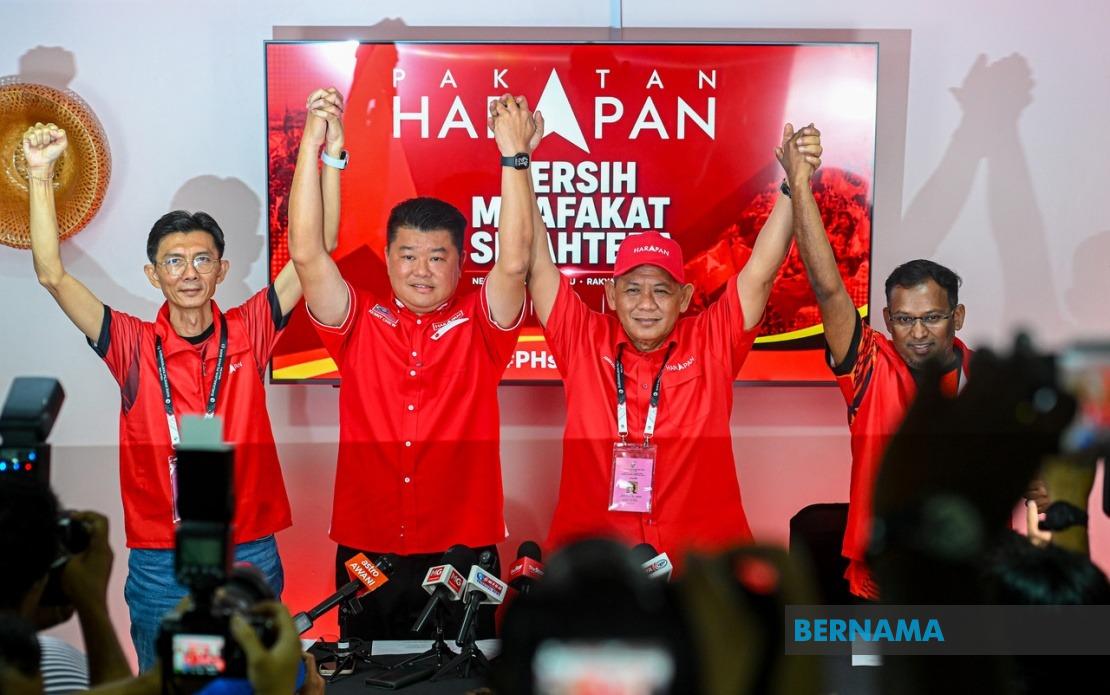
Negeri Sembilan Pakatan Harapan leadership has firmly rejected suggestions of discord within the coalition's ranks in the Port Dickson parliamentary area, with State Chairman Datuk Seri Aminuddin Harun asserting that the machinery remains unified and focused on winning all five state constituencies under the federal seat. The menteri besar's statement comes as the coalition mobilises its campaign apparatus ahead of early voting on July 28 and general polling on August 1, directing efforts across the Chuah, Lukut, Sri Tanjung, Bagan Pinang and Linggi state divisions.
Aminuddin, who doubles as State PKR chairman and MP for Port Dickson, indicated that coordination between coalition partners and the electoral machine has functioned smoothly despite surface-level tensions that surfaced on social media platforms. The leadership appeared particularly keen to move past a controversy surrounding the renomination of incumbent Chuah assemblyman Datuk Yew Boon Lye, which had drawn scrutiny following Port Dickson PKR deputy division chief Datuk Kenny Chiew Chi Kin's exclusion from the candidate list.
The menteri besar characterised the matter as a resolved internal dispute that required no further public discussion. Aminuddin outlined how Chiew, despite disappointment at not being fielded as a candidate, had committed to advancing the coalition's electoral prospects across the Port Dickson constituencies. This framing suggests an attempt to normalise the outcome and position disgruntled party figures as ultimately subordinating personal ambitions to collective organisational goals.
In his remarks, Aminuddin acknowledged Chiew's contributions to the PKR division, emphasising that the deputy chief's exclusion from candidacy reflected procedural decisions rather than any reflection on capacity or dedication. The narrative presented positions Chiew as a loyal party servant willing to channel his energies into supporting colleagues' campaigns, thereby reinforcing an image of internal cohesion despite the underlying tensions. This approach mirrors conventional coalition management during competitive electoral periods, where acknowledging dissent risks projecting weakness to opponents.
Aminuddin suggested that external actors deliberately amplified speculation about supposed fractures within Pakatan Harapan's Port Dickson operations to undermine the coalition's standing with voters. By attributing such claims to malicious third parties rather than genuine grievances, the leadership attempted to reframe the narrative as a matter of opposition mischief rather than authentic intra-coalition disagreement. This rhetorical strategy allows the coalition to maintain a unified public face while implicitly acknowledging that tensions existed.
The Port Dickson MP himself is contesting the Linggi state seat, placing him on the ballot alongside the other four PH candidates across the parliamentary constituency. This personal stake in the electoral outcome underscores the immediate pressure on Aminuddin to project confidence and unity, given that any perception of coalition weakness could ripple across all five races. His aggressive dismissal of the rift narrative reflects this electoral calculus.
Historical context from the 2023 state election provides perspective on Yew's standing and the coalition's performance across these constituencies. The incumbent secured the Chuah seat with a 6,298-vote majority against Perikatan Nasional candidate Tang Jay Son, demonstrating capacity to overcome opposition from the competing coalition despite electoral tides. In the current contest, Yew faces fresh competition from Barisan Nasional's Pau Jeou Ching, presenting a different political alignment than two years prior.
The shift from facing Perikatan Nasional to confronting Barisan Nasional represents a notable change in Negeri Sembilan's political landscape. The reconfiguration of opposition forces reflects broader realignments across Malaysian politics following the 2023 general election, with implications for how voters perceive incumbent performance and coalition reliability. Yew's track record of defeating PN may not directly translate into effectiveness against a BN opponent.
For Pakatan Harapan, maintaining its footprint across all five Port Dickson constituencies remains strategically important in Negeri Sembilan. The coalition's ability to consolidate these five seats demonstrates organisational capacity and voter confidence at the state level. Conversely, any slippage would signal vulnerability and potentially embolden opposition parties seeking to expand their inroads into traditionally competitive zones.
The timing of Aminuddin's statement, delivered just over a week before early voting, suggests coordination with broader PH messaging strategy during the campaign's critical phase. Leadership utterances at this juncture carry heightened significance for ground-level mobilisation efforts and media narrative framing entering the final electoral push. Public expressions of unity serve both internal and external audiences simultaneously.
For Malaysian voters tracking coalition dynamics, such disputes carry implications beyond mere factional politics. Tensions over candidate selection reflect underlying questions about democratic accountability within political organisations, the balance between meritocratic advancement and patronage networks, and how parties negotiate competing internal interests. The manner in which coalitions resolve such disagreements influences voter perceptions of institutional health and governance capacity.

