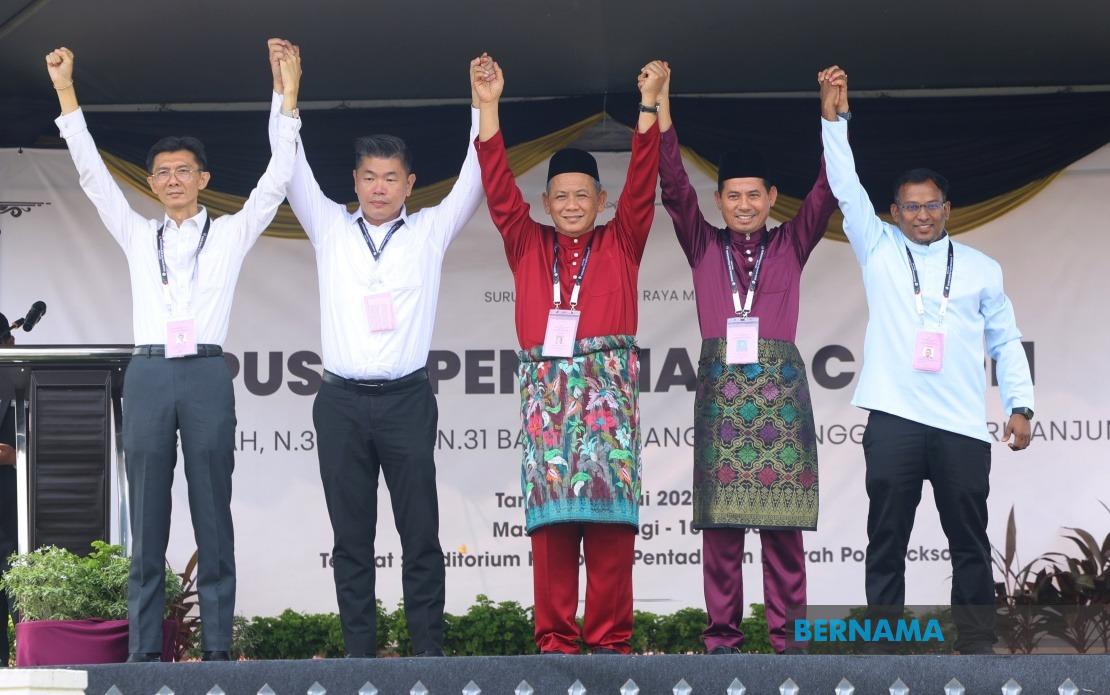
Negeri Sembilan Menteri Besar Datuk Seri Aminuddin Harun has unveiled an ambitious infrastructure agenda centred on port and industrial development for the Linggi state constituency, framing these projects as catalysts for broader economic transformation. Speaking after the nomination process at the District Administration Complex Auditorium in Port Dickson on July 18, Aminuddin articulated a vision that extends beyond standard political rhetoric, positioning Linggi as a potential growth engine within the state's economic landscape. The proposed developments represent a calculated attempt to redefine the constituency's trajectory and demonstrate that Pakatan Harapan brings substantive solutions to voters' aspirations for tangible improvement in their standard of living.
As chairman of Negeri Sembilan Pakatan Harapan, Aminuddin framed the port and industrial projects as integral components of a comprehensive development framework rather than standalone campaign promises. This strategic positioning reflects an understanding that Malaysian voters increasingly demand concrete evidence of how political parties will translate election commitments into measurable outcomes. The infrastructure investments he described are designed to address existing gaps in the state's economic ecosystem, particularly the lack of modern port facilities and coordinated industrial clusters that could attract manufacturing and logistics investments to Negeri Sembilan.
The political context surrounding Aminuddin's candidacy is notably challenging. Linggi has traditionally served as a bastion of Barisan Nasional support, with incumbent Datuk Mohd Faizal Ramli representing the coalition. Contesting in such strongholds typically requires either exceptional local mobilisation or a significant shift in voter sentiment. Aminuddin's acknowledgment of this difficulty was candid rather than dismissive, suggesting a realistic assessment of the electoral terrain while maintaining public confidence in Pakatan Harapan's campaign machinery. His willingness to confront such headwinds indicates either substantial internal party support or conviction that changed circumstances in Negeri Sembilan politics could favour his candidacy.
The three-cornered contest adds another layer of complexity to the race. Datuk Zamri Md Said of Bersatu enters as a third major contender, potentially fragmenting the anti-incumbent vote or providing an alternative for voters dissatisfied with both the ruling coalition and Pakatan Harapan. This dynamic transforms what might otherwise be a straightforward two-way contest into a genuinely unpredictable election where momentum and campaign effectiveness become crucial variables. In Malaysian state elections, such multi-cornered fights frequently produce surprising outcomes, particularly when local issues resonate strongly with particular voter demographics.
Aminuddin's personal investment in the Linggi candidacy deserves scrutiny. He stated that he personally proposed the port and industrial development plan to party leadership, and the proposal was accepted. This framing suggests genuine conviction rather than a standard electoral platform, indicating that Aminuddin views this constituency as central to his political identity and administrative vision. For a sitting Menteri Besar, undertaking such a challenging contest signals either confidence in his political capital or determination to demonstrate Pakatan Harapan's willingness to compete aggressively in traditionally opposing strongholds.
The incumbent Datuk Mohd Faizal Ramli's response reflected prudent caution regarding Barisan Nasional's electoral position. Despite characterising Linggi as a coalition stronghold, Mohd Faizal notably urged that the campaign proceed without excessive provocation, slander, or baseless allegations. This language choice suggests that Barisan Nasional recognises vulnerabilities that require careful management. In Malaysian politics, calls for civility often emerge when a supposedly dominant force detects genuine competitive threat. Mohd Faizal's emphasis on campaign conduct may indicate internal polling or intelligence suggesting the race is tighter than historical patterns would suggest.
For Malaysian readers assessing the broader implications, the Linggi contest represents a microcosm of evolving state politics in Negeri Sembilan. The state has witnessed shifting political dynamics in recent election cycles, with Pakatan Harapan making significant inroads and Bersatu's emergence as an independent force complicating traditional binary contests. The specific focus on port and industrial infrastructure also reflects national economic priorities around diversification and regional development, echoing Federal Government initiatives to distribute growth more equitably beyond the Klang Valley and Selangor.
Infrastructure announcements in Malaysian elections require careful contextualisation. While campaign promises carry political weight, the feasibility, timeline, and funding mechanisms for such ambitious projects merit scrutiny. Voters in Linggi and elsewhere should consider whether proposed developments align with state and federal development frameworks, possess adequate financing, and represent genuine priorities rather than electoral expedients. The port proposal particularly warrants examination regarding Port Dickson's existing maritime infrastructure and whether a new facility would constitute enhancement or duplication.
The August 1 polling date creates a compressed campaign window of approximately two weeks from the nomination process. This condensed timeframe amplifies the importance of messaging clarity and campaign organisation. For Aminuddin and Pakatan Harapan, the port and industrial development narrative provides a compelling campaign centrepiece distinct from more abstract appeals. Such tangible proposals can resonate particularly strongly among constituencies experiencing economic stagnation or perceived neglect, assuming voters find the commitments credible.
The election carries implications extending beyond Linggi itself. Negeri Sembilan's overall political direction significantly influences Peninsular Malaysia's broader electoral trajectory and will likely influence Federal Government composition and coalition dynamics. A successful Pakatan Harapan performance could signal expanding support for the coalition, while Barisan Nasional retention would confirm its continuing appeal in certain constituencies. Bersatu's performance will provide insights into whether the party can establish itself as a viable independent force or whether voters ultimately default to traditional binary choices.
For international observers and regional analysts, the Negeri Sembilan election illustrates Malaysian democracy's resilience and competitiveness. Despite historical patterns favouring incumbent coalitions, serious political contestation remains possible, and politicians must present substantive platforms addressing voter concerns. The port and industrial development agenda, whether ultimately realised or not, exemplifies how contemporary Malaysian political competition increasingly revolves around economic opportunity and regional development rather than purely factional or communal considerations.
Aminuddin's challenge remains formidable but not insurmountable. Linggi voters will evaluate whether Pakatan Harapan's infrastructure vision reflects genuine commitment to their constituency's development or represents campaign theatrics. The sitting Menteri Besar's credibility as an administrator who can deliver on ambitious promises will likely prove decisive. As voting approaches, the substantive details of proposed port and industrial projects, alongside more traditional campaign mechanics, will determine whether Aminuddin can overcome historical voting patterns and secure victory in what remains one of Negeri Sembilan's most contested constituencies.

