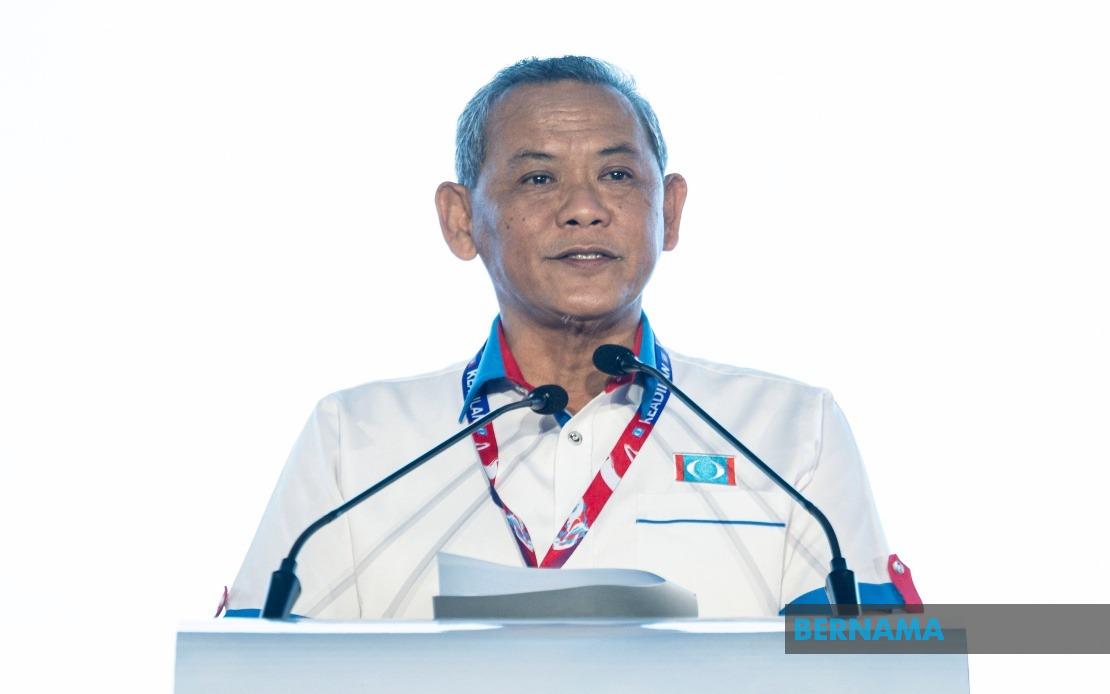
Former Negeri Sembilan Menteri Besar Datuk Seri Aminuddin Harun has signalled his willingness to relinquish his position as chairman of the Negeri Sembilan State Leadership Council of Parti Keadilan Rakyat (PKR), acknowledging the party's catastrophic showing in the recent state election. Speaking during the PKR National Congress in Melaka on August 16, Aminuddin publicly accepted demands from six state branch leaders who have called for a leadership review following PKR's failure to retain electoral relevance in the state.
The context for Aminuddin's announcement is stark. In the August 1 Negeri Sembilan state election, PKR managed to secure only two of the fifteen state assembly seats it contested—a devastating result that has triggered internal reckonings across the party's grassroots membership. This outcome is particularly significant given that Aminuddin himself held the position of Menteri Besar before the election, making the party's collapse under his watch a matter of acute political sensitivity. The demand from branch leaders for accountability appears to have resonated sufficiently for Aminuddin to make a preemptive statement accepting responsibility, framing the decision as one that prioritizes party unity over personal political survival.
Aminuddin's concession is noteworthy for its tone of contrition and deference to party machinery. Rather than defending his record or deflecting blame, he explicitly stated agreement with critics who demanded he answer for the defeat. His remarks at the National Congress positioned the leadership transition not as an act of humiliation but as a necessary sacrifice for PKR's institutional health. By framing his potential departure as subordinate to broader party interests, Aminuddin sought to shape the narrative around what could have been portrayed as a forced removal.
The electoral mathematics underlying this crisis are unforgiving. Aminuddin himself contested the Linggi state seat and lost decisively, polling 6,163 votes against Barisan Nasional incumbent Datuk Mohd Faizal Ramli's 9,139 votes in a three-cornered contest also featuring Bersatu candidate Datuk Zamri Md Said, who garnered 391 votes. The margin of defeat—2,976 votes—represents not a narrow loss but a clear rejection by Linggi voters. This personal electoral failure, combined with the party's state-wide collapse, created an untenable political position that Aminuddin's statement appears designed to manage gracefully.
For Malaysian political observers, Aminuddin's willingness to step aside illustrates an evolving dynamic within PKR regarding accountability. The party has long positioned itself as a reformist force emphasizing integrity and responsiveness to membership concerns, and Aminuddin's decision to accept demands for leadership change aligns with that self-image. However, the episode also exposes the tension between top-down party control and grassroots pressure—the fact that branch leaders felt compelled to publicly demand action suggests frustration with the pace of internal decision-making.
The underlying issues driving PKR's Negeri Sembilan collapse warrant examination. The state has traditionally been contested terrain, but PKR's inability to retain even a strong second-place position suggests either organizational weakness, candidate quality concerns, or voter migration patterns that the party failed to anticipate or counter. The three-way contests evident in results like Linggi—where a relatively minor third-place candidate still competed—may have fragmented the anti-BN vote, though this alone does not explain PKR's poor performance.
Aminuddin's statement also carried a forward-looking element designed to preempt characterization of the moment as purely negative. He emphasized that electoral defeat should catalyze reconstruction rather than demoralization, framing the transition as preparation for future contests. This rhetorical positioning attempts to transform a leadership change that might otherwise appear as an admission of failure into a strategic recalibration. Whether party members interpret it this way remains an open question, however, and the credibility of such messaging depends substantially on what comes next.
The decision to defer final determination of Aminuddin's fate to the party leadership proper is tactically significant. By stating his readiness to step down while leaving the formal decision to others, Aminuddin creates space for the party to appear to have made an independent judgment rather than responding to external pressure or public statements. This allows party leaders latitude in deciding whether to accept his offer immediately, request he continue until a successor is identified, or pursue other arrangements. Aminuddin's framing thus gives party leadership maximum flexibility while demonstrating his own willingness to cooperate with institutional processes.
For the broader Malaysian political landscape, PKR's Negeri Sembilan setback forms part of a larger pattern of electoral volatility affecting all major coalitions. The performance raises questions about whether the party's national standing can withstand repeated state-level disappointments, particularly in states where it once held executive power. Aminuddin's departure would mark a significant turnover in PKR's state-level leadership echelon, with implications for how the party manages similar situations in other underperforming constituencies.
The episode also reflects longer-term challenges facing PKR as it navigates the tensions between maintaining a cohesive national coalition structure and responding to diverse state-level electoral realities. Aminuddin's acceptance of responsibility, while politically prudent, cannot fully address the structural questions about whether PKR's electoral coalition strategy requires fundamental revision. The party must now determine whether the Negeri Sembilan result represents an isolated setback or a symptom of deeper organizational or strategic problems requiring attention across multiple dimensions of party operations and electoral planning.

