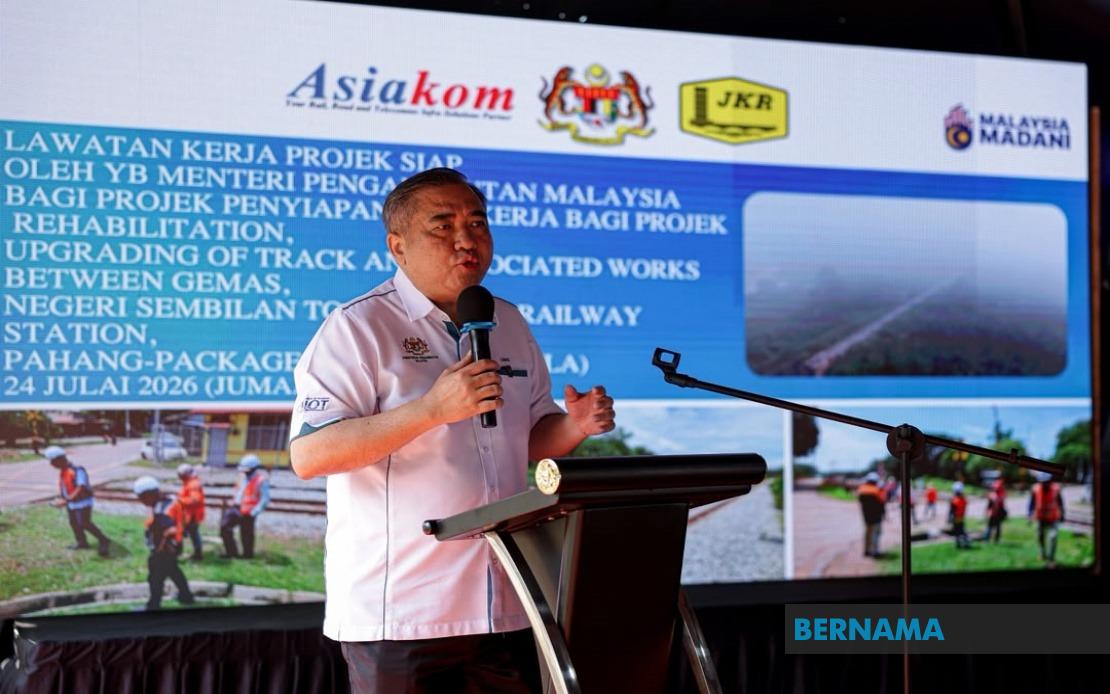
Pakatan Harapan's unity behind Datuk Seri Aminuddin Harun as its Menteri Besar candidate for Negeri Sembilan appears unshaken, according to DAP secretary-general Anthony Loke, who on July 24 reaffirmed the coalition's unwavering commitment to the incumbent should it retain control of the state government in the upcoming election.
Speaking during a working visit to the Bahau KTMB railway project, Loke dismissed persistent suggestions that the coalition was entertaining alternative candidates, characterizing such claims as politically motivated distortions spread by opposition parties. The firmness of his statement underscores how sensitive the leadership question has become in Negeri Sembilan's electoral calculus, with just days separating the major parties from the ballot.
Aminuddin, who simultaneously chairs the Negeri Sembilan PH chapter, benefits from a legal safeguard that substantially narrows the field of viable successors. The state constitution explicitly mandates that the Menteri Besar must be a Malay Muslim member of the State Legislative Assembly—a constraint that automatically disqualifies Loke himself, despite his prominence as the coalition's most visible face in the state. This constitutional requirement has effectively shielded Aminuddin from serious internal challenges while rendering speculation about other candidates largely academic.
Loke's emphatic rejection of the alternative-candidate narrative came in direct response to earlier statements from UMNO secretary-general Datuk Dr Asyraf Wajdi Dusuki, who had provocatively suggested that Pakatan should prepare a backup option in case Aminuddin failed to retain his Linggi state seat. The opposition's strategy appears aimed at sowing doubt about coalition stability and raising questions about PH's contingency planning should its leadership become unavailable on polling day.
The timing of Asyraf Wajdi's intervention is characteristic of opposition tactics in the final stretch before elections, when parties attempt to exploit any perceived vulnerabilities in their rivals' candidacy structures. By publicly questioning whether Pakatan had adequately prepared for a scenario in which Aminuddin lost his own contest, UMNO sought to undermine confidence in the coalition's readiness to govern—a classic albeit blunt electoral maneuver.
For Malaysian political observers, Loke's categorical assurance carries particular weight because he represents a different generational cohort within Pakatan and has built a reputation for directness on sensitive matters. His willingness to explicitly deny rumours about his own elevation to the chief minister's post, despite holding significant party rank and wielding considerable influence, signals confidence that the coalition's internal dynamics remain stable and that no serious faction views Aminuddin's position as contested.
The constitutional stipulation regarding the Menteri Besar's identity has historically shaped Negeri Sembilan politics in distinctive ways. It has ensured that the state's chief executive invariably emerges from the Malay Muslim demographic, a requirement that reflects Negeri Sembilan's constitutional makeup but also creates a structural advantage for whichever party can reliably secure support among Malay Muslim legislators. This dynamic has proven consequential in past elections and remains a defining feature of state electoral competition.
Aminuddin's leadership of Pakatan's state chapter reinforces his standing as the natural custodian of the coalition's interests should it prevail on August 1. His dual role—both as a leading assemblyman and as coordinator of the PH machinery in Negeri Sembilan—has allowed him to cultivate relationships across the coalition's three main components (PKR, DAP, and Amanah) and to position himself as an indispensable figure whose removal would create organizational disruption.
The early voting scheduled for July 28, followed by general polling on August 1, compressed the timeline for any serious alternative narratives to gain traction. With less than a week separating Loke's statement from the actual vote, the opportunity for opposition-generated doubts about Pakatan's leadership succession to influence electoral behaviour had already substantially narrowed. Voters were effectively choosing between known quantities, with the chief ministerial succession question already settled in the coalition's public messaging.
Negeri Sembilan's election carries significance beyond the state itself, as it represents one of several electoral contests that will shape the broader regional balance of power in peninsular Malaysia. The state's 36-seat assembly and its economic profile as a relatively prosperous industrial and mining jurisdiction make its governance a matter of interest to federal-level actors across multiple parties. A decisive Pakatan victory would reinforce the coalition's claim to represent a viable national alternative, whereas an opposition triumph would provide momentum to UMNO and its allies ahead of future federal-level contests.
Loke's tour of the Bahau railway project during his confirmation statement also served a secondary purpose: demonstrating PH's track record of infrastructure delivery and connecting the coalition's leadership pronouncements to visible developmental achievements. This integration of leadership reassurance with infrastructure messaging reflects a campaign strategy aimed at addressing both emotional confidence in coalition unity and rational voter concerns about competent governance.
The emphasis on Aminuddin's continuing candidacy without qualification suggests that internal coalition deliberations about succession scenarios, if they occurred, reached swift resolution. No party within Pakatan appeared willing to ventilate alternative preferences publicly, a disciplined posture that contrasts with opposition parties' more fractious leadership dynamics. This internal coherence, at least as presented to the electorate, formed part of PH's broader pitch to Negeri Sembilan voters that the coalition represented stable, united governance in contrast to its opponents.

