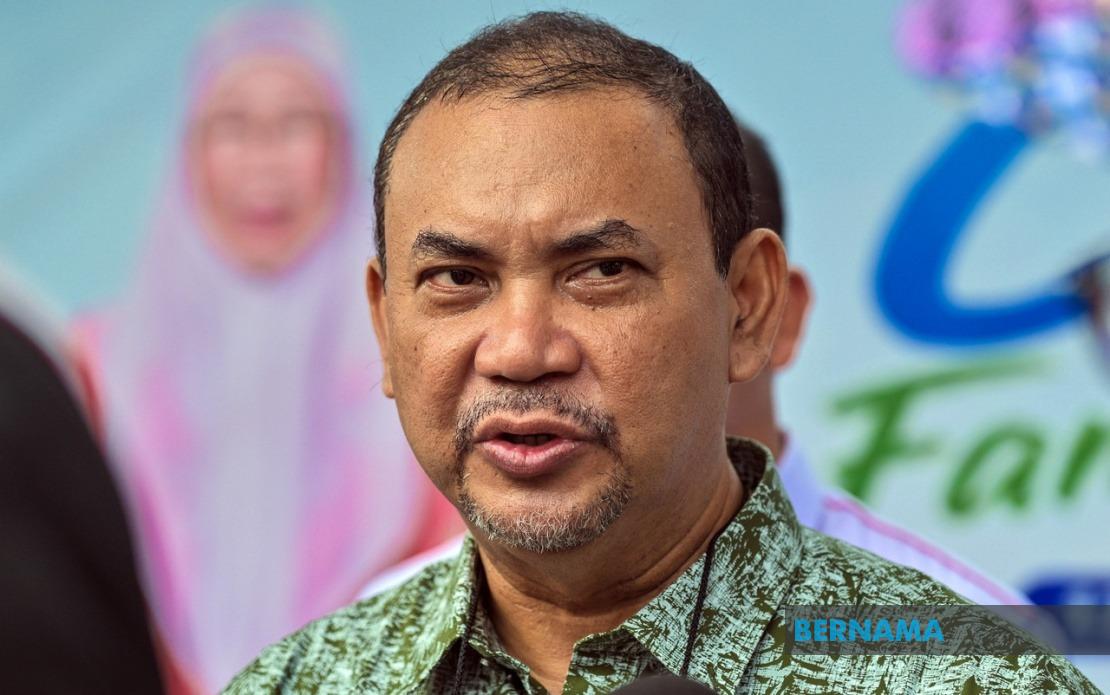
Datuk Azman Abidin, who now serves as both Prime Minister's Political Secretary and Ampang Parliamentary Constituency Coordinator following his appointment by Prime Minister Datuk Seri Anwar Ibrahim, has outlined an ambitious framework for improving how government support reaches residents in the constituency. The initiative represents an effort to bridge the gap between federal initiatives and community-level implementation, addressing longstanding concerns about the reach and effectiveness of welfare programmes in the region.
The coordinator's pledge centres on establishing a more systematic approach to processing and delivering welfare assistance across the Ampang parliamentary constituency. Rather than relying on ad-hoc mechanisms, Azman's office will implement structured channels where residents can submit applications directly to the Office of the Prime Minister's Political Secretary, which will then coordinate with relevant government bodies to ensure timely resolution. This centralisation aims to eliminate bureaucratic delays and ensure that deserving residents receive benefits without unnecessary administrative hurdles.
Critical to this framework is the involvement of the Implementation Coordination Unit (ICU) under the Prime Minister's Department (JPM), an agency tasked with translating policy directives into ground-level action. By engaging the ICU, the coordinator's office seeks to align welfare delivery with broader government priorities while ensuring that local peculiarities and community needs are factored into implementation. The coordination extends beyond federal structures to include state assemblymen within Ampang constituency and grassroots community leaders, recognising that effective welfare distribution requires multi-layered governance cooperation.
The appointment itself carries significance for Ampang, a mixed urban-rural constituency in Selangor that has been a political battleground in recent electoral cycles. The decision to assign the Prime Minister's Political Secretary to this specific coordinator role signals heightened attention to constituent services in the area. For residents, this means enhanced direct access to the Prime Minister's office, potentially expediting resolution of welfare-related grievances that might otherwise remain stalled in departmental queues.
Azman's commitment to professionalism, integrity and accountability provides an implicit acknowledgment that previous welfare delivery mechanisms may have suffered from inconsistencies or fairness concerns. By explicitly pledging these principles, the coordinator is attempting to reset public confidence in the system and establish clearer standards against which his office's performance can be measured. This transparency-focused approach reflects broader governance trends in Malaysia, where constituents increasingly demand accountability from elected officials and their representatives.
The involvement of assemblymen and community leaders in the welfare coordination process underscores the importance of ground-level knowledge in identifying and supporting vulnerable populations. Ampang, like many Malaysian constituencies, contains pockets of urban poverty, elderly residents requiring healthcare assistance, and working families struggling with affordability. Community leaders typically possess intimate knowledge of these populations and can help target assistance more accurately than centralised bureaucracies alone. By institutionalising their participation, Azman's framework seeks to combine bureaucratic efficiency with community insight.
From a Malaysian governance perspective, this initiative reflects a broader shift towards constituency-based service delivery as a means of strengthening federal-state-local coordination. Rather than treating welfare as exclusively a state or federal function, the framework treats it as a collaborative endeavour requiring input from multiple administrative levels. This approach has gained traction following recent reforms in the civil service aimed at improving service delivery standards and reducing citizen complaints about government responsiveness.
For Southeast Asian observers, Ampang's experience may offer lessons in implementing welfare systems that maintain central oversight while remaining responsive to local conditions. The region faces persistent challenges in reaching vulnerable populations with targeted assistance, particularly in urban areas where informal settlements and transient populations complicate registration and benefit distribution. Malaysia's attempt to solve this through high-level coordination meriting the Prime Minister's direct oversight suggests growing recognition that conventional welfare infrastructure requires augmentation in contemporary cities.
The practical success of this initiative will depend significantly on resource allocation and the willingness of participating agencies to prioritise Ampang applications. Without adequate staffing and funding, even well-intentioned coordination frameworks can devolve into additional bureaucratic layers rather than efficiency improvements. Azman's team will need to demonstrate rapid turnaround times and visible outcomes to build public trust and justify the administrative architecture being constructed. Early performance metrics will likely determine whether this model becomes replicated across other constituencies or remains a localised experiment.
The pledge also carries implicit political dimensions worth considering. Strengthening welfare delivery in Ampang ahead of potential electoral contests could influence voter perceptions of governmental effectiveness and responsiveness. Opposition parties will likely scrutinise whether the enhanced coordination produces tangible improvements for residents or primarily generates positive publicity for the ruling coalition. This scrutiny, however, serves a useful function by establishing performance benchmarks against which the coordinator's office can be held accountable.
Looking forward, Ampang residents seeking welfare assistance now have a defined pathway and designated contact point in the Prime Minister's Political Secretary's office. This institutional clarity alone represents an improvement over previous arrangements where residents often struggled to identify appropriate agencies for specific applications. Whether the coordination framework translates into faster approvals, more equitable benefit distribution, and ultimately stronger welfare outcomes for constituents will determine whether this initiative becomes a model for broader governance reform or remains a constituency-specific experiment in improved service delivery.

