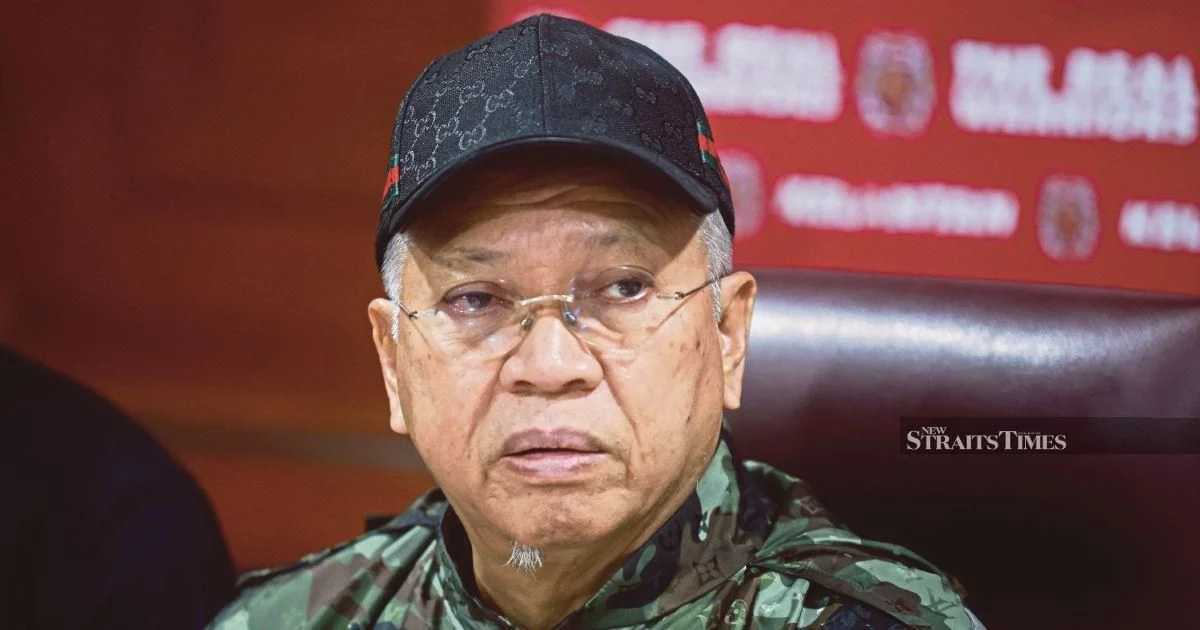
Tan Sri Annuar Musa has acknowledged that despite his personal intervention, attempts to restore harmony between PAS and opposing camps within Bersatu have ultimately proved unfruitful, raising fresh concerns about the stability of Perikatan Nasional as a unified political force. Speaking in Kota Baru, the senior coalition figure disclosed that he had undertaken multiple rounds of dialogue aimed at resolving the festering tensions that have increasingly strained the three-party alliance.
The revelation underscores the mounting challenges facing Malaysia's ruling coalition as internal disputes threaten to undermine its political leverage and governance agenda. Perikatan Nasional, which came to power in 2021 following the Sheraton Move and has since consolidated authority, relies heavily on maintaining cohesion among its constituent parties. The emergence of competing factional interests within Bersatu, combined with PAS's assertive positioning, has created a structural vulnerability that Annuar's mediation efforts have been unable to resolve.
Annuar's candid admission of failure carries significant implications for Malaysian politics. As a figure who has traditionally played a bridge-building role within the coalition, his inability to engineer compromise signals that the disagreements may run far deeper than procedural or personal differences. The factional divisions within Bersatu reflect competing visions for the party's strategic direction and leadership, while PAS's concerns likely centre on its own expanding influence and resource allocation within the federal government.
The inability to reconcile these factions comes at a moment when Perikatan Nasional faces mounting pressure from both external and internal sources. The opposition remains organised and vocal, while economic challenges and public discontent with governance matters could erode the coalition's electoral strength. Internal cohesion becomes exponentially more valuable under such circumstances, making the persistence of unresolved disputes particularly damaging to the government's standing and effectiveness.
Historically, Malaysian coalitions have weathered internal tensions through mechanisms of compromise, elite consensus-building, and carefully calibrated power-sharing arrangements. The fact that Annuar's intervention—ostensibly backed by his seniority and political experience—has yielded no breakthrough suggests that conventional conflict-resolution tools may have exhausted their utility in this context. The parties may now be operating according to structural imperatives that transcend negotiated settlements, such as resource competition, ideological divergence, or succession anxieties.
PAS, as the strongest component party within Perikatan Nasional in terms of electoral reach and grassroots mobilisation, may feel emboldened to press its demands more forcefully. The Islamic party's growing confidence stems from its 2022 electoral performance and its demonstrated capacity to deliver votes in crucial constituencies. Simultaneously, Bersatu factions represent competing power centres, with implications for the party's present leadership and future trajectory. Without a unifying figure or shared existential threat, the factional logic within Bersatu may simply prevent consensus from emerging.
The implications extend beyond the coalition's immediate functioning to affect Malaysia's broader political economy. A fractious ruling coalition struggles to implement coherent policy agendas, leaving room for inconsistency, inefficiency, and the pursuit of narrow factional interests at public expense. Investors and international observers closely monitor coalition stability as a barometer of governmental reliability and policy continuity. Visible cracks in Perikatan Nasional's unity may therefore carry economic consequences beyond the political realm.
Looking ahead, Annuar's unsuccessful mediation may prompt alternative conflict-resolution mechanisms or leadership interventions. Senior figures within the coalition may seek to escalate efforts, or alternatively, parties may decide that managed coexistence—accepting discord as a permanent feature—represents the most realistic approach. Neither scenario bodes well for smooth governance or strategic alignment on major policy questions.
The timing of Annuar's disclosure also warrants attention. By publicly acknowledging his failed reconciliation attempts, he arguably shifts responsibility to the parties themselves while potentially dampening expectations for quick resolution. This transparent acknowledgment of failure, while politically candid, simultaneously signals that the leadership recognises the severity of the rifts. Malaysian voters, particularly those concerned about governmental stability and coherence, will likely interpret this admission as evidence that elite consensus—once a hallmark of Malaysian coalition-building—may no longer be assured.
Moving forward, Perikatan Nasional faces a choice between aggressive intervention to enforce unity or accepting a new operating reality characterised by managed factionalism. Both paths carry risks. Forced unity risks triggering defections or public conflict, while acceptance of permanent division may gradually erode the coalition's functionality and electoral appeal. For Malaysian politics writ large, the outcome of this internal struggle will substantially influence the trajectory of the nation's political system and governance quality in the medium term.

