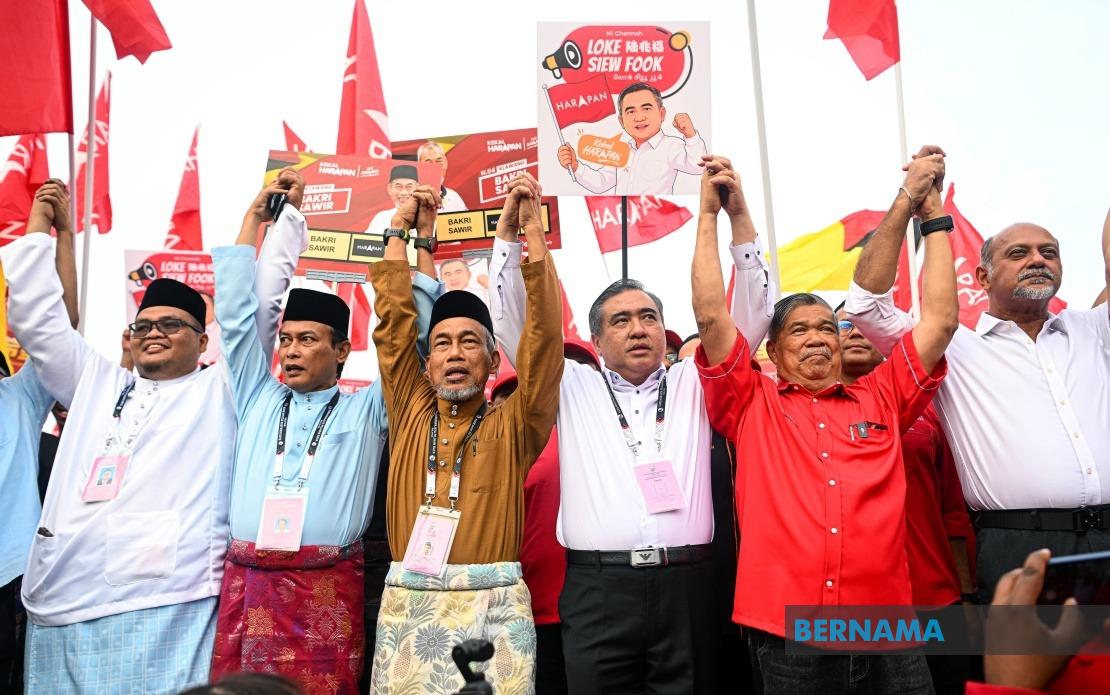
Transport Minister Anthony Loke is set to contest the Chennah state seat in the 16th Negeri Sembilan state election beginning today, facing off against Siow Kong Choon, the state MCA Youth chief fielded by Barisan Nasional. The nomination process concluded this morning at the Dewan Besar Kuala Klawang in Jelebu, with both contenders formally registering their candidacies for what shapes up as a direct two-way battle in one of the peninsular state's key battlegrounds.
Loke, who also serves as Seremban Member of Parliament, submitted his nomination papers at 9.05 am, with Siow following moments later at 9.09 am. The Jelebu Parliamentary returning officer Abdul Rahim A Aziz confirmed the contest structure after the nomination window closed at 10 am. This straight fight configuration suggests the Negeri Sembilan political landscape has consolidated around the traditional government-opposition divide, with neither Perikatan Nasional nor other smaller parties mounting serious challenges in this particular seat.
The Chennah seat represents a significant personal stronghold for Loke within the DAP-dominated coalition. He has successfully defended this constituency through multiple electoral cycles since first winning it in 2013, consolidating support through a decade of representation. His ability to retain the seat has made Chennah a symbol of DAP's sustained political footprint in the state, even as the broader political landscape has shifted dramatically with the emergence of Perikatan Nasional and subsequent electoral realignments across Malaysia.
The previous election in 2023 provided a clear template for understanding the dynamics likely to play out this time. Loke secured 5,888 votes then, defeating Perikatan Nasional's Rosmadi Arif with a decisive majority of 2,200 votes. However, the fact that BN is now contesting suggests a strategic recalibration by the coalition, possibly indicating confidence in Siow's appeal or recognition that the opposition's hold on Chennah warrants a more serious challenge than what Perikatan Nasional could mount.
Siow Kong Choon brings the MCA's organisational machinery and the broader BN coalition resources to bear in what represents a competitive pitch for the seat. As state MCA Youth chief, Siow carries youth credentials and party positioning that may resonate with segments of the electorate seeking alternatives to Loke's incumbency. The MCA's decision to field him here underscores the party's determination to recapture ground in Negeri Sembilan, where it has faced significant pressure from both DAP and Perikatan Nasional in recent cycles.
For Malaysian political observers, this contest reflects broader tensions within the current governing coalition. The appointment of Loke as Transport Minister signals the DAP's elevated status within the federal government structure following the 2022 general election. His simultaneous defence of a state seat, however, highlights how Malaysian politics continues to operate across multiple electoral arenas simultaneously. A loss here would carry reputational implications beyond the state level, potentially affecting perceptions of DAP's grassroots resilience and Loke's personal political standing.
Negeri Sembilan itself occupies an interesting position within Malaysian electoral geography. As a relatively compact state with manageable voter numbers, it has often served as a testing ground for political trends before they ripple outward. Recent years have seen the state experience significant political volatility, with government compositions and seat allocations shifting considerably. The outcome of contests like Chennah will help determine whether Negeri Sembilan continues trending toward stronger opposition consolidation or whether BN can rebuild its traditional electoral base.
The Election Commission has structured the Negeri Sembilan campaign schedule with early voting set for July 28 and polling day designated as August 1. This compressed timeline means candidates have limited weeks to mobilise voters, place their messages, and consolidate support. For Loke, the challenge involves reinvigorating his existing voter coalition while addressing any dissatisfaction that may have accumulated over his decade holding the seat. For Siow, the task involves building sufficient momentum to overcome the incumbent's entrenched advantages and institutional benefits.
The electoral stakes extend beyond individual constituency outcomes. Negeri Sembilan's state government composition will influence the broader balance of power within Malaysia's federal system. Should opposition-aligned parties perform strongly, it strengthens the government coalition's internal positioning and validates current federal arrangements. Conversely, if BN regains significant ground, it signals potential challenges to current power distributions and may embolden parties within the government coalition to recalibrate their positioning ahead of the next general election.
Loke's campaign will likely emphasise his ministerial position as evidence of DAP's influence and ability to deliver federal resources to the constituency. His long tenure in Chennah provides a substantial record of grassroots engagement and constituent service that typically forms the foundation of incumbent defensive campaigns. Siow's approach will probably highlight BN's traditional governance experience and resources, while attempting to frame the contest as an opportunity for Negeri Sembilan to benefit from stronger alignment with the broader national political mainstream.
For Southeast Asian political analysts, the Negeri Sembilan election cycle illustrates how Malaysian state contests remain genuinely competitive despite federal government consolidation. Unlike some neighbouring systems where ruling coalitions achieve near-monopolistic control, Malaysia's federal structure and proportional representation elements create genuine spaces for electoral contestation even when national trends favour particular political formations. The Chennah seat exemplifies this dynamic, with two formidable candidates and significant resources positioned for serious combat.

