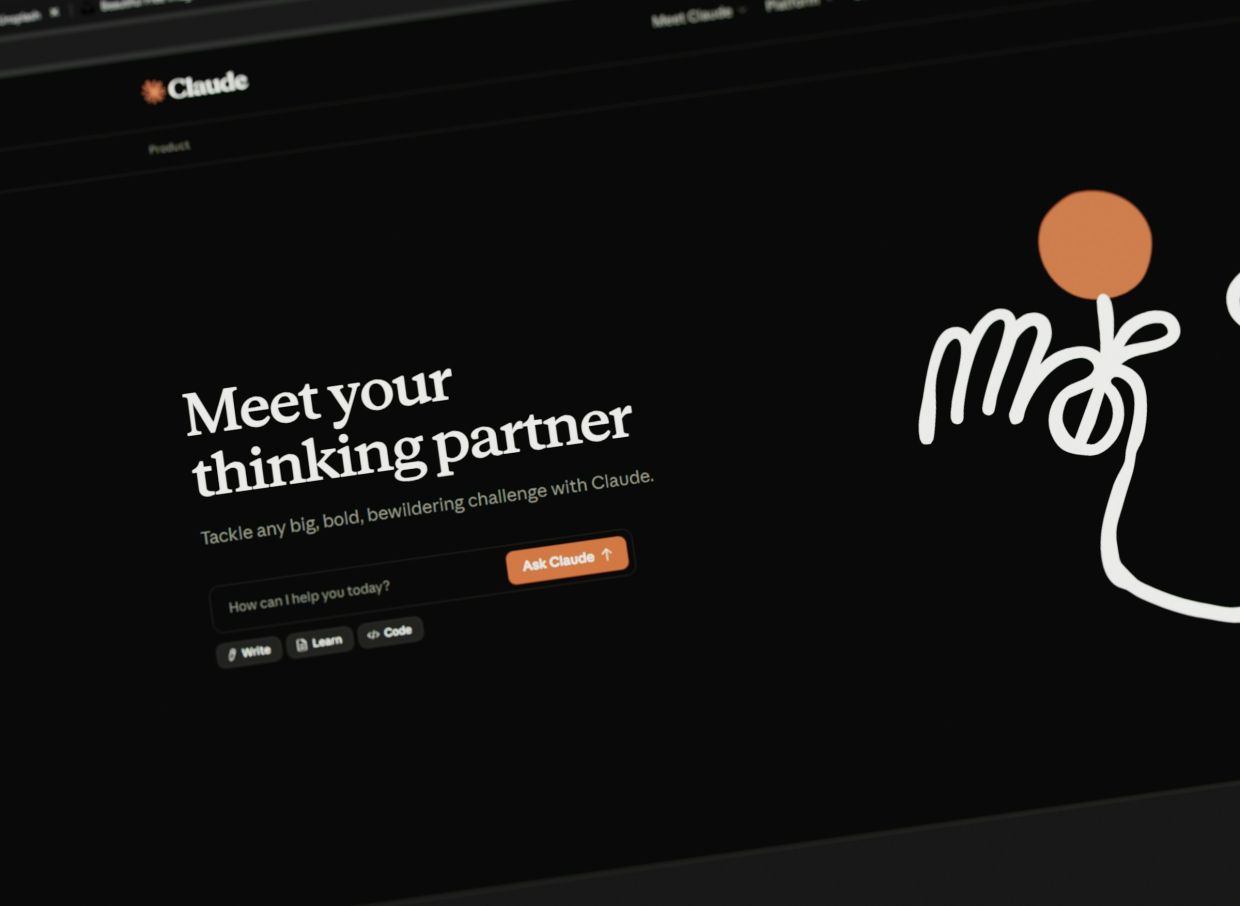
Anthropic, the artificial intelligence firm now valued at US$965 billion (approximately RM4 trillion), has introduced Claude Tag, a significant upgrade to how its Claude chatbot integrates with Slack. Unveiled on June 23, this new feature fundamentally reshapes the relationship between workers and AI by allowing Claude to operate as an autonomous agent within team communication channels, moving beyond the earlier iteration that required direct user interaction.
The expanded capabilities represent a meaningful shift in workplace AI deployment. Rather than users initiating conversations with Claude, the system now monitors channel activity continuously, detects developments relevant to individual team members, and proactively intervenes in discussions. The tool can identify posts requiring immediate attention, generate alerts tailored to user priorities, inject comments into ongoing conversations, and tackle technical challenges such as debugging code—all without explicit instruction each time.
For the feature to handle complex operational demands, integration with external systems becomes essential. Users must connect Claude Tag to their organisational infrastructure including calendar systems, email platforms, and other business tools. This architecture allows the AI to contextualise workplace events and make informed decisions about when intervention matters. Cat Wu, who leads product development for Claude Code and Cowork at Anthropic, notes that about two-thirds of her product team's code now originates from an internal iteration of Claude Tag, indicating genuine confidence in the tool's capabilities within the organisation itself.
The rollout timing carries strategic significance given recent regulatory pressures. Fewer than two weeks before the announcement, Anthropic disabled user access to Fable 5 and Mythos 5, its most capable AI models, in response to a Trump administration directive aimed at restricting foreign nationals' access to advanced American AI technology. This geopolitical constraint forced Anthropic to pursue an alternative technical approach for Claude Tag. The company initially intended Fable 5 to power the new feature, but instead opted for Opus 4.8, the model released in May.
Wu acknowledged this represents a compromise. She stated plainly that Fable remains superior for executing the kinds of tasks Claude Tag must perform—particularly sophisticated coding work and autonomous decision-making about when to participate in conversations without constant user guidance. The model's ability to determine appropriate moments for engagement without explicit prompting distinguishes it from Opus 4.8. This limitation reveals how geopolitical fragmentation of AI development creates tangible trade-offs in product capability, a dynamic that will likely reshape how multinational organisations think about deploying AI infrastructure.
The Claude Tag launch exemplifies the intensifying competition between Anthropic and OpenAI to establish themselves as indispensable platforms for enterprise operations. Throughout the past year, both companies have focused considerable resources on building professional-grade AI tools spanning financial services, healthcare, and general workplace productivity. These efforts serve dual purposes: acquiring revenue-generating business customers while simultaneously justifying the astronomical valuations both firms command in private markets. For Anthropic specifically, demonstrating robust enterprise demand becomes increasingly important as the company advances toward an anticipated initial public offering.
Anthropicity has not entirely abandoned Slack integration. The firm previously offered Claude within Slack, though in substantially more limited form. Claude Tag essentially replaces this earlier application, introducing capabilities that transform the interaction model. The new tool will initially reach users with team and enterprise subscription tiers, suggesting Anthropic views this primarily as a premium offering rather than a widely accessible feature.
From a Southeast Asian perspective, the development carries important implications for regional organisations contemplating AI adoption. The geopolitical restrictions affecting Fable 5 demonstrate how US-China technology competition and regulatory frameworks increasingly constrain access to cutting-edge models, even for non-American companies and individuals. Malaysian firms considering investment in AI infrastructure must reckon with the possibility that their preferred tools may become unavailable due to export controls or sanctions regimes beyond their influence.
Moreover, Claude Tag exemplifies the broader transformation reshaping how teams coordinate work. The shift toward AI agents that operate independently within existing communication platforms represents a fundamental departure from traditional software deployment, where tools remain passive until users activate them. This move toward agentic AI—systems that pursue objectives autonomously within defined parameters—will likely accelerate adoption timelines and expand AI's influence across workplace decision-making, particularly in technical domains like software development and engineering.
The competitive dynamics between Anthropic and OpenAI will likely intensify pressure on both firms to expand integration capabilities with popular enterprise platforms. Slack's position as the dominant workplace communication tool in global organisations, particularly among technology and knowledge-intensive sectors, makes it an inevitable battleground for AI vendors competing for enterprise mindshare. Other platforms and regional alternatives may find themselves similarly targeted for AI integration partnerships.
For organisations already invested in Slack, the emergence of Claude Tag presents practical questions about governance, oversight, and the appropriate scope for autonomous AI decision-making. Teams must establish clear parameters for what types of decisions Claude Tag should handle independently versus what requires human review. As more workers interact with AI that operates continuously in their communication channels, establishing healthy norms around human-AI collaboration becomes increasingly urgent.

