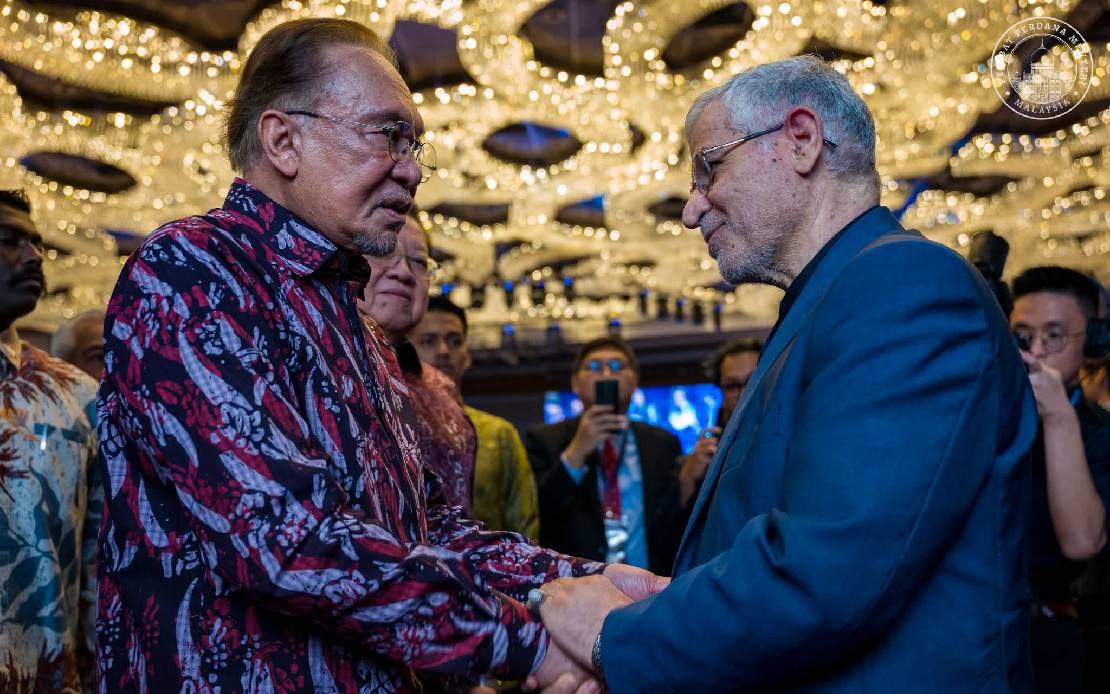
Prime Minister Datuk Seri Anwar Ibrahim has formally apologised to the Iranian Government for his inability to attend the state funeral and farewell ceremonies of Iran's Supreme Leader, Ayatollah Ali Khamenei, who passed away in February at the age of 86. The Malaysian leader conveyed his regrets during a bilateral meeting with Iranian Ambassador to Malaysia Valiollah Mohammadi at the 39th Asia-Pacific Roundtable conference in Kuala Lumpur on July 2, underscoring the importance Malaysia places on its relationship with Tehran despite the scheduling conflict.
Anwar acknowledged the constraints imposed by his existing official obligations, which prevented his personal attendance at what represents one of the most significant state ceremonials in recent Middle Eastern history. The decision to send a representative rather than attend personally reflects the delicate balancing act required of Malaysian leadership when managing commitments across multiple diplomatic and domestic fronts. In addition to his formal apologies, Anwar reiterated Malaysia's sympathies to both the Iranian Government and its people during this period of national mourning.
The Prime Minister delegated Agriculture and Food Security Minister Mohamad Sabu to represent Malaysia throughout the extensive funeral and commemoration proceedings. This appointment carries symbolic weight, as ministerial representation at a state funeral signals respect and maintains diplomatic protocol, even when the head of government cannot personally participate. The choice of Mohamad Sabu suggests Malaysia's commitment to honouring the occasion despite competing priorities.
Ayatollah Ali Khamenei, who led Iran for approximately four decades as Supreme Leader, died on February 28 at his residence in Tehran. Official accounts attribute his death to health complications following geopolitical tensions in the region. His passing marked the end of an era for Iran's Islamic system of governance and triggered a significant succession process with lasting implications for regional stability and international relations.
The state farewell ceremony unfolds across six consecutive days commencing July 4, representing an extended period of national observance that underscores Khamenei's centrality to Iran's political and religious establishment. The ceremonial schedule begins with major funeral processions through Tehran and Qom, two of Iran's most significant cities religiously and politically. The final phase culminates with Khamenei's burial at the Imam Reza Shrine in Mashhad on July 9, one of Shia Islam's holiest sanctuaries and a location that carries profound spiritual meaning for the Iranian faithful.
Malaysia's diplomatic engagement with Iran reflects broader regional considerations relevant to Southeast Asian interests. Iran maintains significant influence across Middle Eastern affairs, energy markets, and international security frameworks that affect regional trade and stability. Malaysia, as a Muslim-majority nation with considerable economic stakes in Middle Eastern partnerships, balances its relationships carefully across the Islamic world. The ceremonial attendance by Malaysian representation acknowledges this importance while practical constraints prevent the Prime Minister's direct participation.
The incident illustrates how contemporary prime ministerial schedules operate under intense pressure, with multiple simultaneous commitments often rendering full attendance at all major international events impossible. Governments navigate these conflicts through strategic delegation, carefully selecting representatives whose rank appropriately conveys respect without requiring the head of state's personal presence. Malaysia's response demonstrates awareness that proper diplomatic acknowledgment can be fulfilled through alternative means.
Anwar's public acknowledgment of the scheduling conflict and his formal apology through official channels represents standard contemporary diplomatic practice. By making his regrets explicit and communicating them through direct bilateral channels, the Prime Minister minimises any potential perception of disrespect or diminished commitment to the Iran relationship. Such transparent communication helps maintain goodwill and prevents misunderstandings that could otherwise strain bilateral ties.
The timing of Anwar's statement at the Asia-Pacific Roundtable conference provided an appropriate diplomatic venue for clarifying Malaysia's position. This forum, bringing together regional leaders and policymakers, allowed the Prime Minister to address the matter within a multilateral setting while simultaneously conducting bilateral business. Such strategic use of international conferences maximises diplomatic efficiency and demonstrates Malaysia's active engagement across multiple relationship tracks simultaneously.
Looking forward, Malaysia's representation at Khamenei's funeral ceremonies positions the nation to engage constructively with Iran's emerging leadership structure. The succession process following any Supreme Leader's death carries implications for regional policy directions, and maintaining strong diplomatic presence during transition periods helps ensure Malaysia's interests receive appropriate consideration. The ministerial-level attendance signals Malaysia's intention to sustain and develop its relationship with Iran regardless of the transition occurring within Iranian governance structures.

