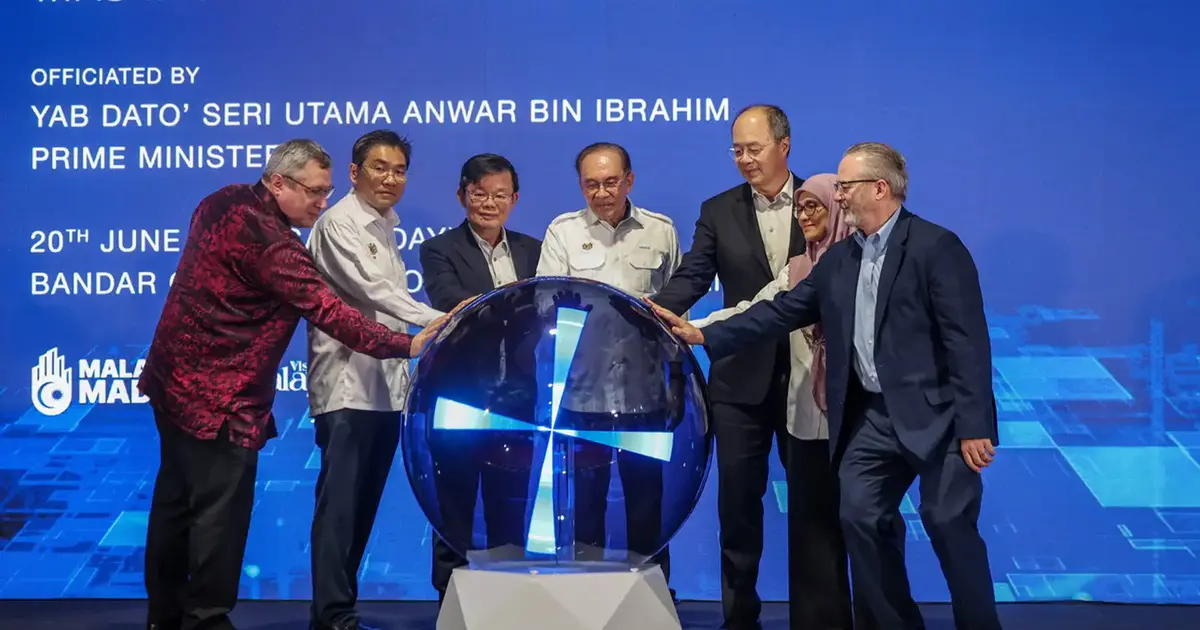
Prime Minister Anwar Ibrahim has moved to bridge the widening gap between Malaysia's semiconductor sector and its university system by appointing a dedicated adviser, a strategic manoeuvre designed to unlock the intellectual and technological resources of the nation's higher education institutions for industrial innovation. The appointment underscores the government's recognition that Malaysia's ambitions to maintain relevance in the global semiconductor value chain depend critically on translating academic research into commercially viable applications and ensuring a steady pipeline of skilled talent entering the sector.
In announcing the initiative, Anwar emphasised that the arrangement would impose no burden on the federal budget, a notable consideration given Malaysia's fiscal pressures and competing demands across multiple sectors. This approach reflects a deliberate shift towards leveraging existing institutional capacity and expertise rather than launching resource-intensive new programmes. By utilizing an advisory structure that operates within existing government frameworks, the appointment positions itself as a cost-neutral mechanism for policy implementation, a messaging point likely calculated to deflect criticism from fiscal conservatives while maintaining momentum on strategic priorities.
The semiconductor industry holds outsized importance for Malaysia's economic future. The nation has evolved into a significant player in the global semiconductor ecosystem, particularly in assembly, testing, and packaging operations, with major multinational corporations maintaining substantial operations throughout the country. However, Malaysia faces mounting competitive pressure from neighbours including Singapore, South Korea, and increasingly Vietnam, which have invested aggressively in research capabilities and innovation ecosystems. Without deepening connections between industry practitioners and academic researchers, Malaysia risks remaining trapped in lower-value segments of the semiconductor supply chain rather than advancing towards higher-margin design and innovation capabilities.
Universities across Malaysia possess considerable untapped potential for semiconductor-related research and development. Institutions including Universiti Malaya, Universiti Teknologi Malaysia, and others maintain engineering faculties with expertise spanning materials science, microelectronics, and computational design. Yet collaboration between these academic entities and the private sector has historically remained sporadic and underdeveloped compared to regional competitors. The adviser appointment signals an intention to systematise these connections, creating frameworks through which university researchers can access industry problems requiring novel solutions, while companies gain exposure to emerging talent and cutting-edge research directions before they mature into commercially viable innovations.
The timing of this initiative reflects broader geopolitical and economic currents shaping the semiconductor landscape. The semiconductor supply chain has become increasingly politicised, with major powers endeavouring to secure domestic capacity and reduce reliance on concentrated manufacturing nodes. Malaysia, positioned between major production centres and consumer markets, faces both opportunities and vulnerabilities in this environment. By strengthening its innovation capacity through university-industry collaboration, the country can enhance its competitive positioning and reduce susceptibility to external supply chain disruptions that have periodically constrained global semiconductor availability.
The adviser's mandate likely encompasses multiple dimensions. Facilitating technology transfer from universities to industry partners, identifying research gaps where academic work could address real commercial challenges, and designing internship and placement mechanisms that accelerate the transition of graduates into the workforce all represent potential focus areas. Additionally, the role may encompass advising on funding mechanisms, intellectual property frameworks, and research commercialisation pathways that can accelerate the journey from laboratory discovery to scalable manufacturing or design processes. Each of these elements requires careful navigation to balance competing interests of academic institutions prioritising fundamental knowledge advancement and commercial entities seeking rapid returns on investment.
For Malaysian universities, the adviser initiative opens pathways to resources and validation that typically remain limited. Industrial collaboration provides research funding opportunities beyond traditional government grants, access to sophisticated equipment and manufacturing facilities, and real-world test cases that enhance the relevance and impact of academic work. Graduate students and early-career researchers gain mentorship from practitioners operating at the frontier of the industry, experiences that sharpen their technical skills and professional networks. These connections, in turn, improve employment prospects for graduates and boost institutional reputations in international rankings increasingly influenced by industry partnerships and commercialisation metrics.
For the semiconductor industry, the appointment represents government acknowledgement of collaboration's value and a commitment to removing institutional barriers that have historically impeded closer ties with universities. Companies investing in research and development or planning to establish innovation hubs in Malaysia can anticipate more coordinated engagement with academic institutions, clearer pathways to talent acquisition, and potentially simplified arrangements for accessing university facilities and expertise. This institutional support can lower transaction costs associated with collaboration and encourage firms to anchor more advanced operations in Malaysia rather than elsewhere in the region.
The broader context for this appointment involves Malaysia's National Technology and Innovation Council and various economic transformation initiatives spanning recent years. The adviser role integrates into a wider government strategy emphasising innovation, higher-value-added manufacturing, and knowledge-economy development. Semiconductor sector strengthening aligns with priorities outlined in Malaysia's long-term economic roadmap, particularly aspirations to transition away from resource-dependent sectors and establish leadership in advanced manufacturing and design.
Implementation success will depend substantially on the adviser's ability to navigate complex institutional dynamics. Universities operate according to academic calendars, peer review processes, and publication imperatives that differ markedly from industry timelines and profit requirements. The adviser must mediate these different operational logics while building trust among sceptical parties on both sides who may harbour reservations about collaboration's benefits. Establishing pilot programmes involving leading firms and universities can provide proof-of-concept demonstrations that encourage broader participation and commitment from stakeholders initially uncertain about the model's effectiveness.
The appointment also carries indirect messaging value, signalling to multinational semiconductor firms considering regional investment decisions that Malaysia takes seriously the development of supporting innovation ecosystems. Competitors including Thailand and Vietnam actively court semiconductor industry investment, and Malaysia must demonstrate credible commitment to building complementary capabilities beyond manufacturing. University partnerships constitute one element of this broader appeal, contributing to the ecosystem maturity that determines whether companies locate research and design functions or restrict operations to routine production and assembly activities.
Looking ahead, the success of this initiative will become visible through concrete metrics including the number and scale of industry-university research collaborations established, graduate employment rates in semiconductor firms, patents generated from collaborative projects, and ultimately whether Malaysia's semiconductor sector shifts perceptibly towards higher-value activities. The cost-neutral appointment structure presents both advantages and constraints: avoiding budget controversies while potentially limiting the adviser's capacity to fund initiatives or offer incentives encouraging participation. How effectively these limitations are navigated will substantially shape the adviser role's ultimate impact on Malaysia's semiconductor trajectory.

