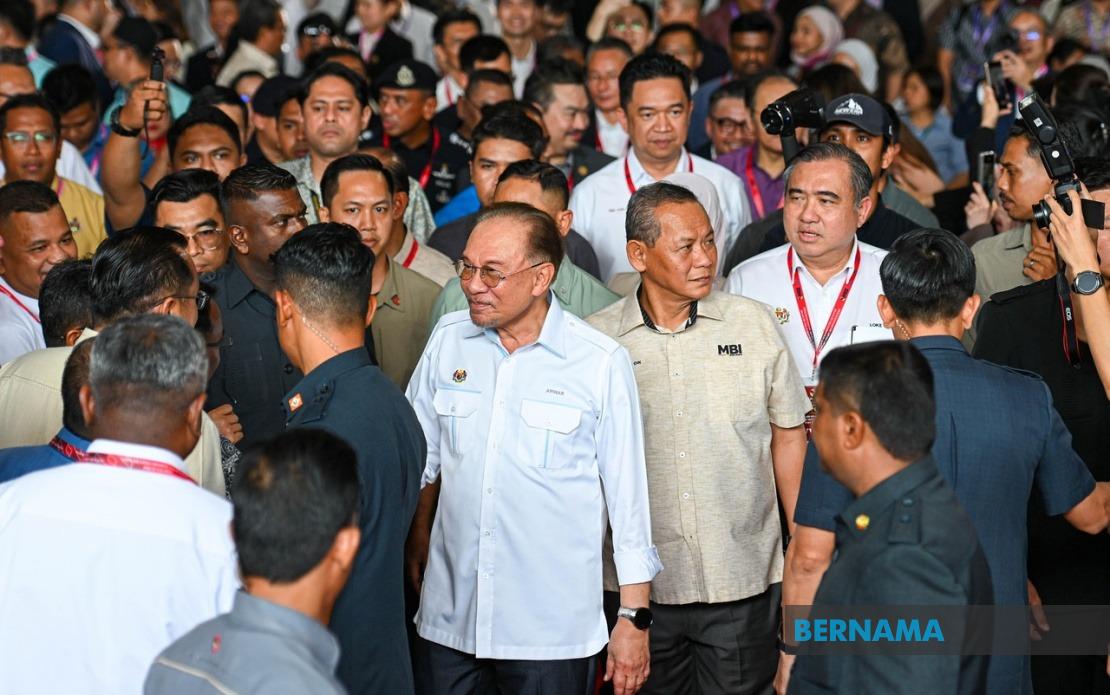
Prime Minister Datuk Seri Anwar Ibrahim made an emotional appeal to Melaka DAP on July 14 to delay its planned exit from the state government, arguing that the move would disrupt development initiatives and hamper efforts to improve residents' living standards. Speaking after inaugurating the AI-powered Midport Smart Container Terminal in Port Dickson, Anwar stressed that maintaining coalition cohesion should take precedence over internal disagreements, particularly when electoral contests loom on the horizon.
The timing of this appeal is significant, coming on the same day that Melaka DAP announced its immediate withdrawal from the administration. The party's decision followed the passage of amendments to the Melaka State Constitution that would permit the appointment of nominated assemblymen—a move that DAP chairman Khoo Poay Tiong characterised as fundamentally undemocratic. For Melaka DAP, the constitutional changes represented a betrayal of electoral principles and democratic values, leaving the party little choice but to sever ties with the government it had been part of.
As chairman of Pakatan Harapan, Anwar indicated he had engaged directly with key stakeholders to broker a compromise. He revealed conversations with DAP secretary-general Anthony Loke and Melaka Chief Minister Datuk Seri Ab Rauf Yusoh, expressing optimism that continued dialogue might yield an acceptable resolution that would satisfy all parties. The Prime Minister's intervention reflects the delicate balance required to manage coalition politics in Malaysia, where partner parties frequently hold divergent views on governance and constitutional matters.
Anwar acknowledged that disagreements within ruling coalitions are inevitable and not necessarily problematic in themselves. He noted that component parties within the broader Pakatan Harapan framework regularly encounter issues on which they hold differing perspectives. However, he drew a crucial distinction between tactical disagreements and strategic abandonment of shared governance, arguing that parties should compartmentalise their disputes and maintain unity on matters affecting economic growth and public welfare. This framing positions the Melaka situation as a negotiable dispute rather than a principled stand requiring coalition dissolution.
The constitutional amendments that triggered the crisis represent a deeper concern within Malaysian politics about the integrity of electoral systems and the expansion of unelected representation. Nominated assemblymen, in DAP's view, undermine the democratic mandate that voters provide through the ballot box. This philosophical divide reflects broader tensions in Malaysian federalism between appointed and elected institutions, tensions that have periodically destabilised coalitions and triggered party realignments throughout the country's democratic history.
From a practical perspective, Melaka DAP's withdrawal would reduce the ruling coalition's representation in the state assembly, potentially weakening its legislative position and complicating the passage of state budgets and policies. Anwar's plea for postponement carries implicit recognition that losing DAP's assembly members would create operational difficulties and underscore fractures within the coalition at a moment when presenting a united front is electorally advantageous. The approach reflects pragmatic coalition management—seeking to defer confrontation until after elections rather than attempting to resolve fundamental disagreements immediately.
The political landscape in Melaka has historically been volatile, with governing coalitions proving fragile and subject to realignment based on relatively modest changes in electoral arithmetic or intra-coalition relations. This background makes Anwar's intervention understandable, as he seeks to preserve what unity remains and prevent further deterioration in Pakatan Harapan's standing at the state level. A visible rupture between component parties, especially over constitutional matters, would inevitably damage the coalition's credibility among urban, educated voters who form DAP's core constituency.
For Malaysian readers observing coalition dynamics, the Melaka situation illustrates an enduring challenge facing multi-party governing arrangements. The tension between maintaining coalition discipline and respecting the principled objections of component parties creates constant pressure on leaders like Anwar. When parties perceive that fundamental democratic principles are at stake, as DAP does regarding nominated assemblymen, they find it difficult to simply accept coalition discipline and suppress their concerns.
The appeal for postponement implicitly assumes that electoral success might resolve the underlying disagreement or at least render it less urgent. However, this approach carries risks. If negotiations continue without resolution, DAP will eventually face a choice between capitulating on principle or proceeding with withdrawal. Sustained internal negotiation that fails to resolve the core dispute could ultimately damage party morale and public perception more severely than a decisive withdrawal would.
Anwar's statement also reflects the premium placed on maintaining stability and predictability in governance during periods approaching electoral contests. From the government's perspective, premature coalition ruptures create uncertainty regarding budgets, policy implementation, and electoral prospects. The appeal to defer conflict until after elections is a familiar tactic in coalition politics globally, premised on the assumption that voters reward stability and punish parties that appear to prioritise internal scoring over constituent welfare.
The resolution of this dispute will carry implications extending beyond Melaka itself, signalling to other Pakatan Harapan component parties how strongly the coalition's central leadership will defend its partners when they raise objections to policies they consider democratically problematic. If Anwar successfully persuades DAP to postpone withdrawal, it may establish a precedent of deferring principle to coalition preservation. Conversely, if DAP proceeds with exit despite the Prime Minister's appeal, it may embolden other parties to prioritise their own concerns over coalition unity when circumstances warrant.
The constitutional amendment controversy also raises broader questions about how Malaysian governments should approach institutional design. Whether appointed representation serves legitimate governance purposes or undermines democratic legitimacy remains genuinely contested among political actors and constitutional scholars, reflecting deeper questions about representation, federalism, and democratic accountability that extend well beyond the immediate Melaka situation.

